
Baker with a cluttered worktop
Wants to keep track of proving time without putting the timer among bowls and utensils. The TFA Dostmann, HENDI and HEMA models reviewed have a magnet; the HENDI 582022 also has a stand.


First, choose a spot away from your worktop, then check that the timer’s range covers the proving time in your recipe. A magnetic timer can free up worktop space if you have a suitable metal surface. For longer proving times, a silent alarm or several steps at once, the timer range and alarm features matter more than size alone. Use the alarm as a cue to check your dough: according to King Arthur Baking, proving time also depends on the dough and the conditions.
Wants to keep track of proving time without putting the timer among bowls and utensils. The TFA Dostmann, HENDI and HEMA models reviewed have a magnet; the HENDI 582022 also has a stand.
Wants to set the proving time from their recipe in one go, so checks the timer’s maximum range. According to TFA, the TFA Dostmann 38.2049.02 has a range of up to 99 hours and 59 minutes; the HENDI 582022 counts down for up to 99 minutes and 59 seconds.
Has another task to keep track of while the dough proves and wants a way to tell separate timings apart. According to OXO, the Good Grips Triple Task Kitchen Timer can keep track of three timings at once.
First, decide where the timer can hang or stand. Then compare its maximum range with your recipe and choose an alarm you’ll notice from that spot.
| What to consider | What should you check? | Who is this important for? |
|---|---|---|
| Keeping the worktop clear | Check that the timer can be attached or hung in your chosen spot using its magnet or hanging option, and that the display is still easy to read there. | If my worktop is cluttered, I want to keep the timer off the work surface. Around 36% of consumers put having clear worktop space first. |
| Range for the proving time | Compare the longest individual proving time in your recipe with the timer’s maximum range, and check whether it can count down. | For a long proving time, I don’t want to have to reset the timer part-way through. Around 29% of consumers give top priority to having enough range for one uninterrupted countdown. |
| Alarm and visibility | Check whether the model can silence its sound and what signal is used instead. Also check whether you can see the timer from where it’s attached. | If an audible alarm isn’t suitable, I want a signal I can notice from my work area. Around 21% of consumers consider the type of alarm most important. |
| Multiple timings | Check how many timings can be set independently and how you’ll know which timer is sounding. | If I’m keeping track of the dough proving and another step at the same time, I want to be able to tell the timings apart. Around 14% of consumers put multiple separate timings at the top of their list. |
A two-hour proving time won’t fit into a single countdown on a timer with a maximum range of 99 minutes and 59 seconds.
Compare the timer’s maximum range with the longest proving time in your recipe. For a longer uninterrupted proving time, choose a timer with an hours range or deliberately set separate reminders.
Putting a timer away from the worktop frees up space, but a silent light signal is only useful if you can see the timer from where you’re working.
First decide where the timer will go, then check whether your chosen model has an audible alarm, a visual signal or both.
According to TFA Dostmann, the two AAA batteries required for the reviewed 38.2049.02 and 38.2056.04 models are not included. HEMA states that one AAA battery for model 80841225 is not included; HENDI states that a battery is included with model 582022.
Check the battery type and what’s included in the box for the exact model you’re buying.
You’ll need to buy the required batteries separately for the TFA and HEMA models mentioned.
The main differences between the models reviewed are their timer ranges and alarm options.
The 582022 digital kitchen timer combines a magnet with a stand for a separate, shorter countdown.
The 80841225 digital magnetic stainless steel kitchen timer is designed to be attached in a suitable spot.
The Good Grips Triple Task Kitchen Timer is an example of a model designed to track several timings at once.
This selection focuses on compact digital timers for keeping track of cooking and baking times.
 No image available
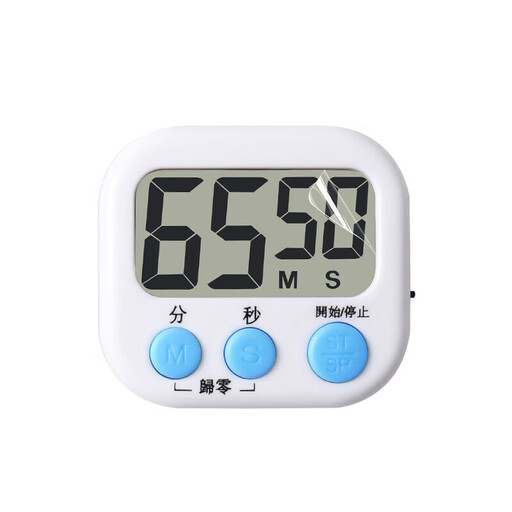
A compact electronic timer for keeping track of dough proving when you have limited worktop space.
No. Use the set time as a reminder to check your dough. According to King Arthur Baking, proving time varies depending on the dough and the conditions.
A magnetic model can hang away from the work surface if you have a suitable metal spot. Check beforehand that you can see the display or any light signal from there; the TFA and HENDI models reviewed also offer other ways to position them.
It depends on the model. According to TFA, two AAA batteries are not included with the reviewed 38.2049.02 and 38.2056.04 models; HEMA states that one AAA battery for the 80841225 is not included. HENDI states that a battery is included with the 582022.
According to ACM ConsuWijzer, if a product is faulty despite being used normally, you have a legal right to a remedy from the seller. How long this right applies depends on what you could reasonably expect from the product; two years is not a fixed cut-off in the Netherlands.
According to the Dutch Government, appliances that need batteries can be taken to designated collection points. Used batteries shouldn’t go in the bin; they can be returned to shops that sell batteries, among other places.