
Bakers with long proving times
You want to time a full proving period without having to keep restarting a short timer. Check the hour range, then assess the dough yourself when the alarm goes off.


For a long, uninterrupted proving period, a timer that measures hours is more practical; for shorter stages, a compact minute timer may be enough. Then check that the timer suits the space you have for storing or attaching it, and whether you really need to run several countdowns at once. Use the alarm as a reminder to check your dough, not as proof that it is ready.
You want to time a full proving period without having to keep restarting a short timer. Check the hour range, then assess the dough yourself when the alarm goes off.
You’re looking for a timer that doesn’t have to live on the worktop or in a cupboard. Check its dimensions and where you could attach or place it.
You want to time the dough and other preparations separately. Decide whether running simultaneous countdowns is worth the extra space a larger timer may take up.
Start with the longest period you want to time without interruption. Then check the space available and decide whether you want to time several tasks at once.
| What to consider | What to look for | Who is this important for? |
|---|---|---|
| Time range | Compare the longest proving stage with the maximum range for each countdown. TFA Dostmann specifies a maximum of 99 hours and 59 minutes for the 99HOURS; HENDI lists a maximum of 99 minutes and 59 seconds for model 582022. | If my dough needs to prove for longer than one short countdown, I don’t want to keep resetting the timer. That’s why around 33% of consumers prioritise a sufficient time range. |
| Space and placement | Check the dimensions and whether the surface you have in mind is magnetic. HENDI lists dimensions of 65 × 70 × 17 mm for model 582022, along with a magnet and stand; TFA Dostmann also lists a hanging option for the 99HOURS. | In a small kitchen, I want to be able to store or hang the timer rather than keep space free for it on the worktop. Around 27% of consumers prioritise saving space. |
| Simultaneous timers | Check whether you can run several countdowns at once, rather than just store them. TFA Dostmann specifies three timers up to 19:59:59 for the TRIPLE TIME XL; OXO lists three timers up to 100 hours on its US product page. | If my dough and other preparations will be ready at different times, I want to track them separately. Around 20% of consumers prioritise having multiple timers running at once. |
| Alarm and controls | Check the sound settings and whether there’s a visual alert. For the TFA Dostmann 99HOURS, the manufacturer lists loud, normal and off settings; the LED alert remains on when the sound is off. Two AAA batteries are not included. | When I’m not constantly looking at the timer, I want an alert that suits where I’m working. Around 20% of consumers focus most on the alarm and controls. |
A timer with a range of up to 99 minutes and 59 seconds may run out before a longer planned proving period is over.
Before you buy, compare the longest stage in your recipe with the maximum range for each countdown.
If the range is too short, you may need to reset the timer. Two AAA batteries are not included with the TFA Dostmann 99HOURS.
King Arthur Baking explains that kitchen conditions and the characteristics of the dough affect proving time, so the time you set doesn’t automatically tell you when the dough is ready.
Use the alarm as a reminder to assess the dough against the guidance for your recipe and stage of proving.
The TFA Dostmann 99HOURS has three memory settings; the TRIPLE TIME XL is the model that the manufacturer says can run three timers simultaneously.
If you want to track several stages side by side, check the model specifications specifically to confirm that simultaneous countdowns are possible.
A magnet is only helpful if the chosen surface is suitable and you can easily see or hear the timer from where you’re working.
Check the mounting spot and see whether a stand or hanging option would work better in your kitchen.
The 99HOURS 38.2049.02 is designed for one long countdown, while the TRIPLE TIME XL 38.2023 is made for running three countdowns at once.
The 582022 digital kitchen timer is a compact option for separate, shorter proving stages.
According to OXO’s product information, the Triple Timer is designed to run three long countdowns at once.
The TimeStick is a portable, single timer for anyone who wants to keep the alert with them rather than make space for a timer in a fixed spot.
These products include digital timers for individual stages and a mechanical alternative. Check the controls and time range listed for each model.
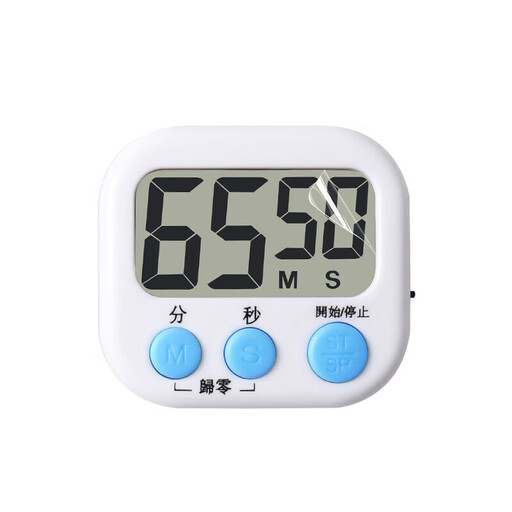 No image available
Could suit an individual proving stage if you’re looking for a digital timer with an alarm.
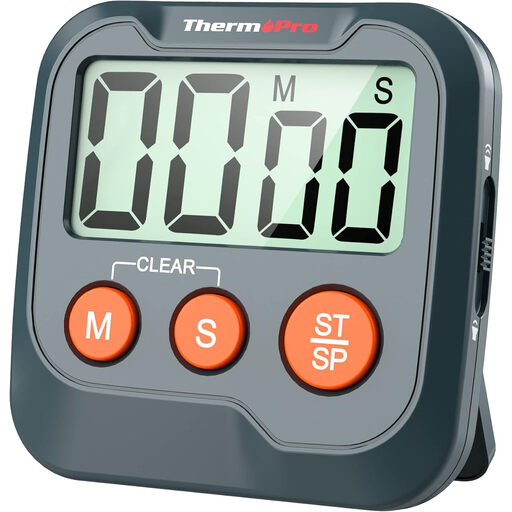 No image available
Suited to a short, individual proving stage when you want a countdown with an alarm.
The title lists a maximum range of 99 minutes and 59 seconds, adjustable volume, and a magnet, stand and hanging option. A longer proving period won’t fit into a single countdown.
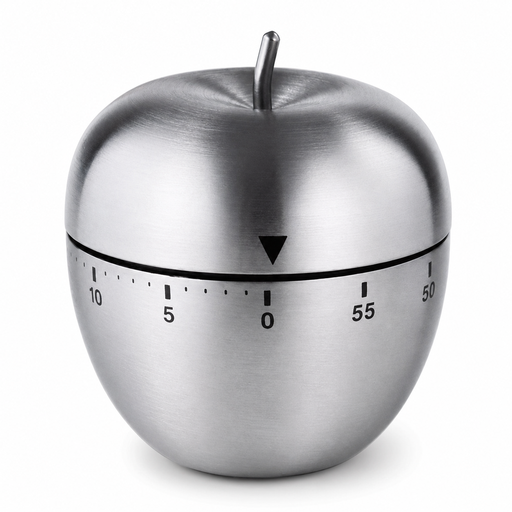 No image available
This is a mechanical timer, not a digital kitchen timer, so only choose it if that type of operation suits your needs.
The product name lists a battery-free design, stainless steel and egg and apple shape options. The description mentions an audible alarm.
No, the timer only tells you when the set time has been reached. King Arthur Baking points out that kitchen conditions and the characteristics of the dough affect proving time; assess the dough according to the guidance for your recipe and stage of proving.
Attach the timer only somewhere the magnet will hold and where you can notice the alert. The TFA Dostmann 99HOURS and HENDI 582022 mentioned above also have a stand; the TFA 99HOURS has a hanging option too.
Check the details for the specific model: according to TFA Dostmann, two AAA batteries for the 99HOURS are not included. The Dutch government says that used batteries must not go in general waste; you can take them to shops that sell batteries, among other places.
No, according to the Dutch government, the Netherlands does not have a fixed statutory warranty period. What you can expect from a product depends on factors including the product itself and the information provided at the point of sale; the seller must resolve problems with faulty products.
According to the official EU guidance, a CE mark is only required if the specific product falls under EU rules that require it. So don’t assume it’s necessary just because the product is described as ‘digital’; check the product and conformity information for the model.