
For weighing small amounts of spices
You weigh spices individually in small quantities and want to know which display increment applies to your portion. Beurer and Tanita list models with fine display increments, each within a specified range.


For small portions of curry spices, what matters most is the displayed increment at the weight you’re actually measuring; a fine display increment alone doesn’t prove that a scale is accurate. If you also want to weigh other ingredients in a bowl, check the tare function, the weighing capacity including the bowl, and whether there’s enough room for your dish.
You weigh spices individually in small quantities and want to know which display increment applies to your portion. Beurer and Tanita list models with fine display increments, each within a specified range.
You add several ingredients to the same bowl in turn and want to reset the scale to zero between each one. Models from brands including Inventum and Tanita feature a tare function.
You want to weigh larger quantities as well as spices. Compare the display increment for small portions with the stated capacity for heavier ingredients; Beurer, Inventum and Tanita list different specifications for their models.
| What to consider | What to look for | Best suited to |
|---|---|---|
| Reading small amounts | Check the display increment at the weight you want to measure, and make sure a small dish sits securely on the platform. | If I’m weighing small quantities of spices, I want to know which increment applies at that weight. Around 36% of consumers make weighing small amounts of spices their top purchase priority. |
| Weighing ingredients one after another | Check whether the scale has a tare function and whether the bowl, its contents and the way you use the scale will all stay within the maximum capacity. | If I’m adding ingredients to one bowl in turn, I don’t want to keep subtracting the bowl’s weight myself. Around 29% of consumers prioritise being able to weigh ingredients easily one after another. |
| Spices and larger ingredients | Compare the total weight, including the bowl, with the range in which the display increment you need applies. | If I want to use one appliance for both light spices and larger quantities, I need to assess both ranges side by side. Around 21% of consumers make versatility their top purchase priority. |
| Power and cleaning | Check the power supply and cleaning instructions for the exact model; a removable part doesn’t mean the whole scale is dishwasher-safe. | If I’m mainly considering power and care when choosing, I want to know what the particular version requires and which parts I can clean. Around 14% of consumers prioritise these considerations. |
A display increment and a measurement error are two different things. For the KD-321, Tanita lists separate measurement errors for each range as well as the display increments.
For your smallest portions of spices, check which increment applies and, if stated, what the measurement error is at that weight.
A higher maximum capacity doesn’t tell you how clearly the scale displays small quantities. The Inventum WS305B lists increments of one gram; on the Tanita KD-321, the increment varies depending on the mode and weight.
Compare both your smallest portion and the total weight of the bowl and its contents with the model’s specifications.
Brabantia lists a range starting at 1 g for the battery-powered Tasty+ and a range starting at 5 g for the separate dynamo version.
Check the full version name and stated range before you choose.
The information below comes from manufacturers’ product specifications, not independent testing. Focus on the figures that apply to your portions and the bowl you use.
Beurer describes the KS 36 as a compact precision kitchen scale suitable for weighing spices, among other things.
According to Tanita, the KD-321 combines a fine-weighing mode with a higher stated weighing capacity.
Inventum describes the WS305B as a digital kitchen scale for everyday cooking and weighing ingredients one after another.
According to Brabantia, the Tasty+ is available as a battery-powered digital version and as a separate digital dynamo version.
This selection includes digital kitchen and coffee scales. For each model, check whether the display increment, tare function and maximum capacity suit your spices, dish and other ingredients.
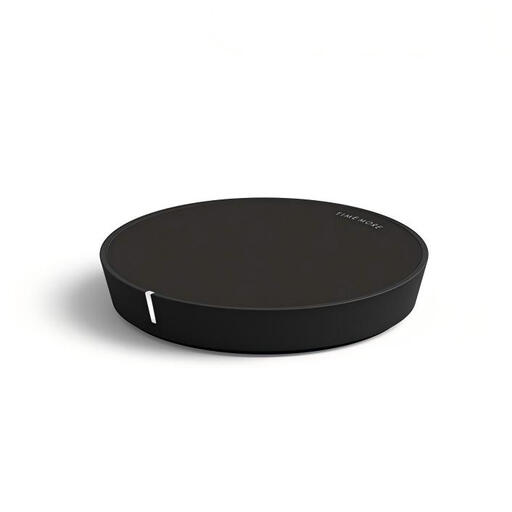 Image unavailable
This coffee scale is described as suitable for espresso and pour-over; check whether its display increment is suitable for small portions of spices.
The product name mentions a timer, water flow and coffee-to-water ratio functions, and switching between ounces and kilograms.
 Image unavailable
This model is described as suitable for espresso and pour-over. Check that its stated weighing range and display increment suit your portions of spices.
The product name mentions a timer, water flow and coffee-to-water ratio functions, and switching between ounces and kilograms.
 Image unavailable
The product name mentions a dual LED display, a 4-point sensor and a timer. Check the display increment and whether the display remains visible when you’re using a bowl.
 Image unavailable
The product name lists a display increment of 0,1 g, a capacity of up to 3 kg and a tare function. A fine increment doesn’t prove accuracy; also check which range applies to your portion.
The product name also mentions a timer, rechargeable power and a heat-resistant platform.
 Image unavailable
The product name describes a stainless steel version measuring 17 × 13 × 2 cm. Check that the platform is large enough for the bowl you use.
This model requires batteries, which aren’t included. Before choosing it for larger quantities, also check its stated capacity and tare function.
No. The display increment and measurement error are different specifications. For the KD-321 in fine-weighing mode, Tanita lists both the applicable increment and separate measurement errors for each range. For small portions, compare the details for the exact model and weight you’re measuring.
Place the dish on the scale and use the tare function to reset the reading to zero before adding an ingredient. Reset the reading to zero again before adding the next ingredient, and keep the total weight of the dish and its contents within your model’s maximum capacity.
Don’t assume that every weighing surface is designed for direct contact with food. The Netherlands Food and Consumer Product Safety Authority says that products intended to come into contact with food must comply with the relevant regulations. Check the intended use and cleaning instructions for your model, or use a suitable dish.
Government of the Netherlands guidance on approved measuring instruments concerns weighing for fair trade and doesn’t require scales to be calibrated and certified for this kind of private use in cooking. Don’t use a household scale to weigh goods for sale by weight without a separate assessment.
Don’t put used batteries in general waste; take them to a collection point, such as a shop that sells batteries. You can take an unwanted household appliance to a suitable retail or local authority collection point, among other options, in line with Government of the Netherlands guidance.