What should you look for?
Start by considering how participants will weigh ingredients: in their own bowl or in a bowl supplied with the scale. Then check that the display stays visible, the bowl is easy to clean and the total weight is within the maximum capacity.
| What to consider |
What should you look for? |
Who is this most relevant to? |
| Weighing consistent portions |
Check the scale increments and maximum capacity, including the bowl. If repeatability is essential, look at test results for the specific model. |
If I want to weigh the same recipe portion for each participant, I need to be able to assess the reading clearly. Around 36% of consumers prioritise consistent portions. |
| Quickly resetting to zero |
Try the tare function with your own bowl and check that the display remains visible and the controls are easy to reach. |
When weighing ingredients in successive rounds, I want to use the same bowl without having to subtract its weight myself. Around 29% of consumers prioritise being able to add ingredients quickly. |
| Cleaning between users |
Check which parts are removable and follow the cleaning instructions for the specific model. |
When several participants use the same weighing area, I want to know which parts I can clean after each preparation. Around 21% of consumers prioritise cleaning between users. |
| Workspace and ease of use |
Compare the platform with the base of your bowl and check which type of battery the model uses. |
On a small worktop, I want a scale that fits without my bowl obscuring the display. Around 14% of consumers value a suitable platform and ease of use above all. |
Scales at Joybuy
These Joybuy products are digital scales that may be suitable for weighing coconut. Check that the controls, bowl and maximum capacity of each model are right for your workshop.
 No image available
TIMEMORE Coffee Scale Basic 3.0
This scale may suit you if you prepare coffee as well as weigh coconut; the product name lists a timer, water flow function and switching between ounces and kg.
View at Joybuy
 No image available
5five digital kitchen scale, stainless steel, 17 x 13 x 2 cm
Its compact size may suit a small workspace. Check that your bowl does not cover the display, and keep the combined weight of the bowl and its contents within the stated maximum capacity of 5 kg.
View at Joybuy
 No image available
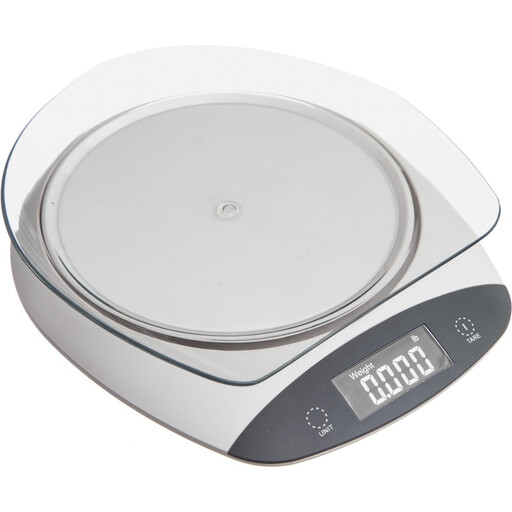
5five digital kitchen scale with removable bowl, white, 20.5 x 18 x 4.5 cm
The removable bowl may be useful if participants want to weigh coconut in a bowl supplied with the scale. Keep the combined weight of the bowl and its contents within the stated maximum capacity of 5000 g.
View at Joybuy
 No image available
Unique Bluetooth kitchen scale, 10 kg
The glass surface may be suitable for use with your own bowl; check that it does not cover the display. The product name lists a 10 kg capacity, several units of measurement and app integration.
View at Joybuy
 No image available
TIMEMORE Black Mirror Basic 2
The product name describes a pour-over coffee scale with a timer and water flow function. Its stated capacity is 2000 g; check that this and the controls suit the way you plan to use it with a bowl.
View at Joybuy
Frequently asked questions about kitchen scales for workshops
Does a reading in grams prove the scale measures accurately to within 1 g?
No. An increment of 1 g does not prove that the actual measurement error is no more than 1 g. The Consumentenbond assesses accuracy and consistency separately; check test results for the specific model if this level of accuracy is essential.
How do you use tare when weighing coconut in a bowl?
Place the empty bowl on the scale and use tare to reset the reading to zero before adding the coconut. Check that the combined weight of the bowl and its contents does not exceed your model’s maximum capacity.
Can you put a kitchen scale in the dishwasher after the workshop?
Not based on the product specifications listed here. Beurer says only that the removable bowl supplied with the KS 25 is dishwasher-safe; Brabantia advises wiping the glass surface of the Tasty+. Follow the cleaning instructions for the specific model and use clean equipment between preparations, as the Voedingscentrum recommends.
Does a scale for a cookery workshop need to be legally approved?
The information from the Rijksinspectie Digitale Infrastructuur does not indicate a general approval requirement for weighing recipe ingredients. The RDI outlines legal requirements for certain uses, including weighing goods to determine their selling price by weight. Consider this separately if you weigh goods for sale during the workshop; do not assume that an ordinary kitchen scale is suitable for this purpose.
Does a workshop organiser need a food safety plan?
According to the NVWA, businesses that prepare, process or sell food must follow an HACCP food safety plan or an applicable hygiene code. Whether this applies to a particular workshop depends on the activities; calling something a ‘workshop’ does not by itself determine whether it is a food business.


