
Vandaag of morgen in huis

Kwaliteit gegarandeerd

Welkomstaanbiedingen ontgrendelen: GRATIS bezorging | Tot 80% korting | Gratis 30 dagen JoyPlus-proefperiode
Download de app
A digital kitchen scale might seem like a simple device, but the differences between models become clear in everyday use. A display that's hard to read, limited capacity, or a missing tare function can make weighing unnecessarily difficult. For hobby bakers, meal preppers, coffee lovers, and anyone who wants to weigh portions, it pays to look beyond just the price.
A 5 kg kitchen scale may be suitable for most ingredients, but you should also pay attention to the graduation. A model that measures in 1 g increments is practical for flour, sugar and vegetables. For small amounts of coffee, herbs or baking powder, finer readability can be useful. The Sparoma NS-K44, for example, has a graduation of 0.5 g, while many other models measure in 1 g increments.
A nutrition scale with an app can calculate nutritional values based on a product database. However, the result depends on the ingredients selected, portion size and the database information available. According to the product information for Unique, the smart nutrition model contains a database with over 1.3 million entries and features for calorie and nutrition tracking. This makes it handy for keeping track of meals, but it doesn't replace checking labels or recipe information.
Glass and stainless steel are easy to clean, but each has its own considerations. A glass surface can break if dropped or exposed to sudden heat. Stainless steel can be practical for daily use, but fingerprints may show on some finishes. Also check whether the scale is splash-proof. Many models are only suitable for cleaning with a slightly damp cloth and should not be submerged.
Alongside the maximum capacity, also look at the minimum weight and the graduation. A model with 5 kg capacity is suitable for a bowl of ingredients, but a higher capacity doesn't automatically mean better measurements for small portions.
For normal cooking and baking, these values are practical:
A precision kitchen scale should also be placed on a flat, stable surface. A wobbly worktop can affect the reading.
A digital scale with tare function resets the display to zero after you place a bowl or container on it. This allows you to add multiple ingredients one after another without having to weigh them separately. Check that the button works clearly and that the function is retained after switching units.
Useful units include:
A kitchen scale with LCD display is usually easy to read in normal kitchen light. A larger VA or colour screen can show additional information, such as nutritional values or progress towards a daily goal. Also pay attention to the battery type. Models with AAA batteries are easy to replace; compact models often use a CR2032 coin cell.
Also check for:

Why this fits the profile: This model offers the basic functions that most households need: 5 kg capacity, 1 g increments, tare function and multiple units.
The specifications clearly state the capacity, graduation and tare function. So you don't have to rely on appearance alone.
Tempered glass surface, LCD display, automatic shut-off and a supplied CR2032 battery.
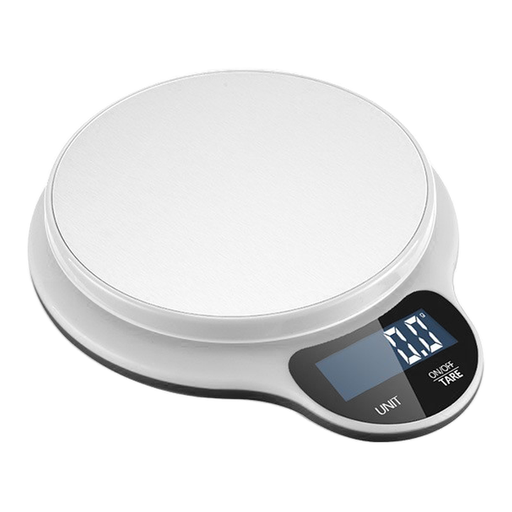
Why this fits the profile: The stated graduation of 0.5 g suits hobby bakers, coffee lovers and users who want to weigh portions repeatably.
The product information lists the graduation, tare function and units separately, so important details remain verifiable.
0.5 g increments, stainless steel platform, LCD display, automatic shut-off and overload warning.

Why this fits the profile: This model is aimed at meal preppers, fitness enthusiasts and users who want to track nutritional data alongside weight.
The product description distinguishes between weighing and nutritional analysis. The database calculation is therefore an extra feature, not a replacement for product labels.
4.54-inch VA colour screen, Bluetooth 5.4, 5 kg capacity and a stated database with over 1.3 million entries.

Why this fits the profile: The 10 kg capacity offers extra room for larger bowls, dough preparation and extensive meal prep.
The higher capacity is listed alongside the 1 g graduation and minimum load in the product specifications.
10 kg maximum capacity, 1 g increments, multiple units and Bluetooth pairing with a companion app.
We've put together a full, up-to-date list of products that fully meet these strict selection criteria and comply with current European safety regulations.
A Bluetooth kitchen scale also requires a compatible app and an active connection. Check beforehand whether the app works with your phone and whether you actually need the pairing. For baking and cooking alone, a standard model with tare is often sufficient.
The lifespan depends on use, storage and maintenance. Overloading, moisture and hard knocks can damage sensors or a glass surface. Store the scale in a dry place, use the correct battery type and don't exceed the maximum capacity.
Not always. A nutrition scale with an app is mainly useful when you regularly want to track calories or nutrients. For recipes, coffee and portions, a model with a clear display, tare function and suitable graduation is usually sufficient.
The running costs mainly consist of batteries. Automatic shut-off helps to limit consumption. Check at the time of purchase whether batteries are included and which type is needed, for example AAA or CR2032. A rechargeable function is not standard, so check this separately.
