What should you look for when weighing grains?
Weigh dry grains in grams and first choose a capacity that suits your portions. Then check that your bowl fits on the weighing platform and doesn’t obscure the display. Only after that, compare storage requirements and power options.
| What to consider |
What to look for |
Who is this important for? |
| Weighing portions |
Check that the scale measures in grams and that its capacity suits the portions you usually weigh. Weigh rice before cooking if you want to measure the dry amount. |
If I want to weigh dry grains per person, I look for grams and a suitable capacity. Portion size is the main reason for buying a scale for around 36% of consumers. |
| Weighing in a bowl |
Check whether the scale has a tare function and that the combined weight of the bowl and ingredients stays within its maximum capacity. |
Tare and sufficient capacity are useful if you weigh ingredients one after another in the same bowl. This is the main priority for around 29% of consumers. |
| Reading and repeating measurements |
Check how easy it is to read the display with your own bowl on the scale. If small differences in weight are crucial, look for an independent test of the exact model. |
If I want to see the reading clearly as I add ingredients and weigh them more than once, I look beyond the scale’s increments. Around 21% of consumers prioritise readability and repeatability. |
| Storage and power |
Compare the size with your available storage space and check whether the model uses batteries or has another power source. |
If you have limited cupboard space or would rather not replace batteries, these features may be worth considering. Storage or power supply is the main concern for around 14% of consumers. |
Kitchen scales at Joybuy
This selection includes digital kitchen scales for weighing portions in grams, including models with tare and versions with different stated capacities.
 No image available
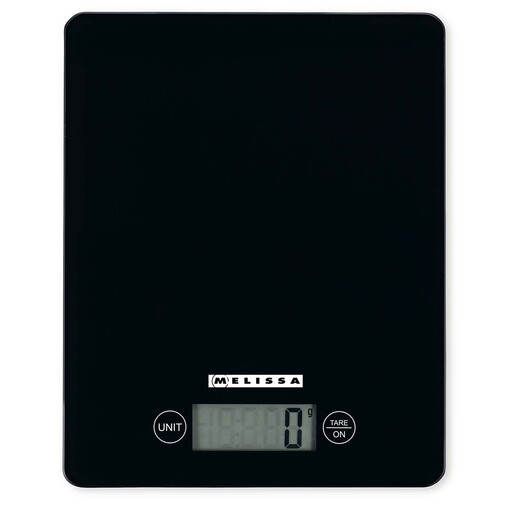
MELISSA digital kitchen scale, black
An option for weighing dry grains in grams and using a bowl, thanks to the stated tare function.
According to the product name: maximum capacity of 5 kg, 1 g increments, LCD display, tare, tempered glass and readings in grams, ounces, pounds and millilitres.
View at Joybuy
 No image available
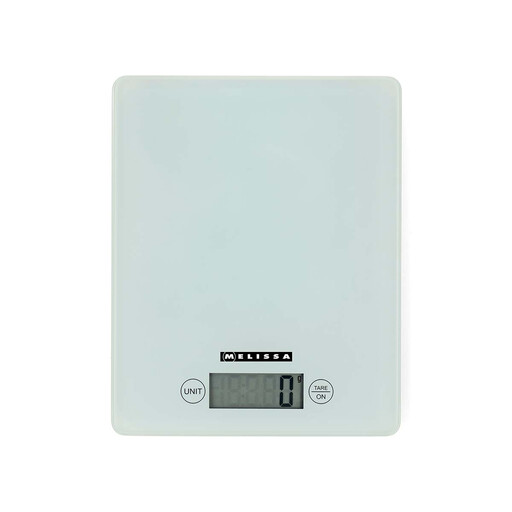
MELISSA digital kitchen scale, white
An option for weighing dry grains in grams and weighing ingredients in a bowl using tare.
According to the product name: maximum capacity of 5 kg, 1 g increments, LCD display, tare, tempered glass and readings in grams, ounces, pounds and millilitres.
View at Joybuy
 No image available
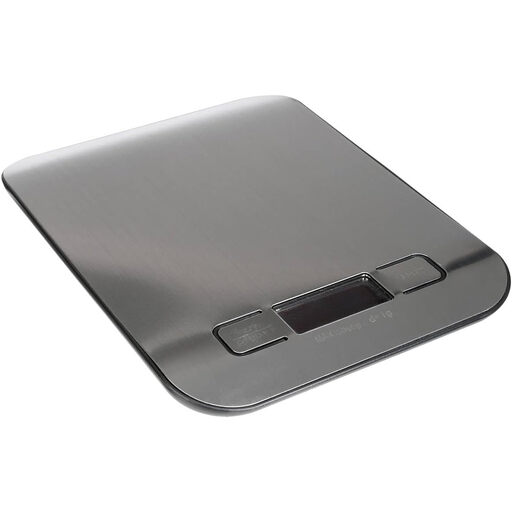
5five digital kitchen scale, stainless steel
A digital scale with a stainless steel finish. Before buying, check that the tare function you want and the maximum capacity suit your bowl and portions.
The product name lists stainless steel and dimensions of 17 × 13 × 2 cm.
View at Joybuy
 No image available
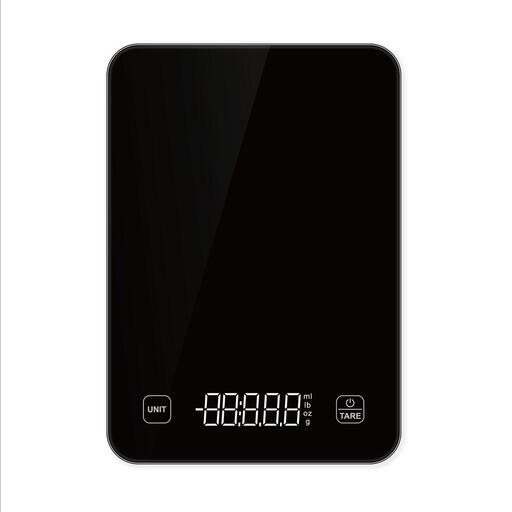
Unique Bluetooth kitchen scale, 10 kg
The stated capacity could be useful if your bowl and ingredients together weigh more than the maximum for a lower-capacity model. Check that the listed app features are compatible with your device.
The product name lists a capacity of 10 kg, Bluetooth, tempered glass and app integration.
View at Joybuy
 No image available
Unique Smart Nutrition kitchen scale, 5 kg
A model with a larger display could be a good fit if you want to see the reading clearly while weighing. Check that the listed app features are compatible before relying on them.
The product name lists a capacity of 5 kg and app synchronisation.
View at Joybuy
Frequently asked questions
Should I weigh rice before or after cooking for a shared meal?
Weigh it before cooking if you want to work out how much dry rice you need for a meal. According to the Netherlands Nutrition Centre, 100 g of uncooked rice weighs around 260 g after cooking. This is an estimate, not a fixed conversion for every dish.
How do I use tare with a bowl?
Place the scale on a flat surface, put the bowl on it and zero the reading. Add the grains, then zero the reading again if you want to weigh another ingredient. Keep the combined weight of the bowl and its contents below the maximum capacity.
Can I serve rice in the evening if I cooked it earlier in the day?
Yes, as long as you store the cooked rice safely. The Netherlands Nutrition Centre advises cooling cooked food quickly, refrigerating it within 2 hours and keeping it chilled for no more than 2 days, preferably at 4 °C. Heat rice thoroughly before serving it hot; rice kept warm for too long can pose a risk of Bacillus cereus.
In the Netherlands, am I only entitled to a standard two-year legal guarantee?
No. According to the Dutch government, there is no fixed statutory guarantee period in the Netherlands: you’re entitled to a product that works properly for as long as you can reasonably expect it to. If there’s a problem, contact the retailer; a manufacturer’s guarantee is separate.
Where can I take a used battery or an old electric kitchen scale?
According to the Dutch government, used batteries must not go in general waste and can be taken to a collection point. You can take an old household scale to your local council’s recycling centre, among other places. If you buy a similar new appliance, you can also use the take-back scheme for old products as a private customer.


