
Solo cook portioning cheese
You want to see how much cheese you’re using for one portion, without assuming that the increments shown on the display tell you how accurately the scale measures.


A flat digital scale with a tare function is a practical starting point if you’re weighing cheese in a small bowl. Just check that you can still see the display and buttons once the bowl is in place. A display that changes in 1 g increments doesn’t prove the scale is accurate to 1 g, so look for independent test information if you’re weighing very small amounts. If you’d rather not replace batteries, check the stated minimum weight too.
You want to see how much cheese you’re using for one portion, without assuming that the increments shown on the display tell you how accurately the scale measures.
You want to zero the empty bowl and read the weight of the cheese as you add it.
You’re looking for a flat scale that’s easy to put away and clean after use. Its dimensions and display position matter too.
Start with the amount you usually weigh, then check whether your bowl fits comfortably on the weighing surface without obscuring the display.
| What to consider | What should you check? | Who is this important for? |
|---|---|---|
| Small amounts | Check the display increments and weighing range. Look for independent test information if small differences are important. | If I want to portion cheese precisely, I don’t want to mistake the increments for proven measuring accuracy. Around 36% of consumers give weighing small amounts their highest priority. |
| Weighing in a small bowl | Check whether the scale has a tare function and whether you can still see the display and buttons with your bowl in place. | I want to zero the bowl and see how much cheese I’m adding as I go. Around 29% of consumers prioritise this convenience. |
| Storage and cleaning | Compare the dimensions of the weighing surface with your bowl, and follow the cleaning instructions for the exact model. | If I have limited storage space, I want to be able to put away and clean a flat appliance easily after cooking. Around 21% of consumers prioritise compactness and easy maintenance. |
| Power source | Check whether the model uses batteries or a dynamo, and what its stated minimum weight is. | I don’t want to replace batteries, but I also want to know whether the amount I usually weigh is above the minimum. Around 14% of consumers choose a scale mainly to avoid using batteries. |
A display that changes in 1 g increments doesn’t, by itself, show how accurately or consistently the scale measures small amounts. The Consumentenbond notes that many scales it tested struggle to distinguish differences of 1 g.
Use the increments as a product specification, not as a test result. Look for independent test information if small variations matter for your sauce.
For the Brabantia Tasty+, the manufacturer states that the battery version weighs from 1 g, while the dynamo version weighs from 5 g, even though both display 1 g increments.
Check the exact version and minimum weight before choosing, especially if you sometimes weigh less than 5 g.
A large bowl can cover the buttons or display on a flat model, making it harder to read the weight as you add ingredients.
Compare the size of your bowl with the weighing surface, and check that you can still use the tare function and see the display.
Beurer offers, among other products, a flat kitchen scale and a model with finer increments for smaller amounts.
The Tasty+ range includes a battery-powered version and a separate dynamo version for those who want to avoid batteries.
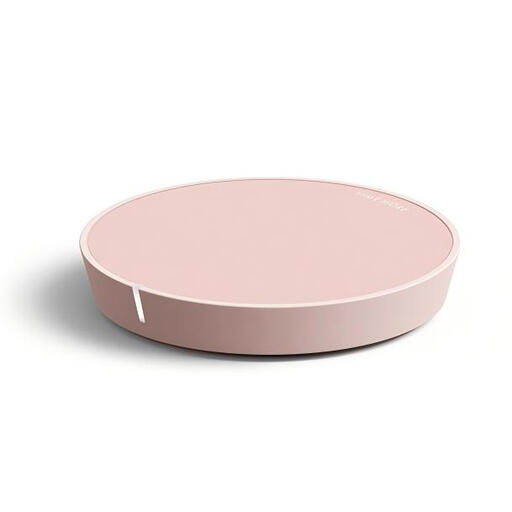
The Disc is a compact digital scale with a stainless steel platform and an Add & Weigh tare function.
This selection includes digital kitchen scales and coffee scales. For each model, check that its features, weighing surface and controls suit weighing cheese in your bowl.
 No image available
The listed tare function makes this model an option if you want to weigh cheese in a small bowl.
The product listing mentions a glass surface, LCD display, capacity up to 5 kg and 1 g increments. These increments are not an independent accuracy test; don’t immerse the scale or put it in the dishwasher.
 No image available
The product title describes this model as suitable for espresso and pour-over coffee. Check whether its coffee-focused features suit your use for weighing ingredients for sauce.
The title mentions a timer, water flow rate function, coffee-to-water ratio and switching between ounces and kg.
 No image available
According to the product title, this model is designed for espresso and pour-over coffee. Consider whether a coffee scale suits your cooking needs.
The title mentions a timer, water flow rate function, coffee-to-water ratio and switching between ounces and kg.
 No image available
The product description mentions use for cooking and baking, so this model is presented as suitable for kitchen tasks as well as coffee preparation.
The title mentions a timer, water flow rate function and switching between ounces and kg. Check whether the controls and features suit weighing cheese.
 No image available
The listed tare function could be useful if you’re weighing cheese in a container. Compare the dimensions with your own bowl.
The product description mentions an LCD screen, dimensions of 17 × 13 × 2 cm and a range of 1 to 5000 g. Batteries are not included; don’t immerse the scale in water.
No. The Consumentenbond assesses accuracy and repeatability separately, and reports that many scales it tested struggle to distinguish differences of 1 g. So don’t treat the stated increments as an independently measured margin of error.
Place the scale on a flat surface, put the empty bowl on it, then use the tare or zero button before adding cheese. Check that you can see and reach the display and buttons with the bowl in place.
It depends on the model. Salter states that the Disc’s platform is not dishwasher-safe and can be wiped clean. For any other scale, follow the manufacturer’s cleaning instructions.
For a consumer purchase in the Netherlands, the product must meet the standards you’re entitled to expect. If it develops a fault, contact the seller to discuss a solution. The Dutch government says there is no fixed statutory guarantee period. For online purchases from a business, you’ll also usually have a 14-day cooling-off period.