What should you look for when buying?
Start with your recipe and the bowl you want to use. Then compare the tare function, capacity and size of the weighing surface. Only look for finer weight increments if you also need them for other ingredients.
| What to consider |
What to look for |
Who is this important for? |
| Recipe portion |
Compare the weight increments with what you’re weighing, and allow for the weight of the bowl. |
If you want to weigh the walnuts precisely according to your recipe, the main thing is to check that the bowl and its contents stay within the maximum capacity. Around 36% of consumers prioritise the recipe portion. |
| Bowl and tare function |
Check whether the scale has a tare function and whether your bowl sits securely on it. |
If you want to add the walnuts to your own bowl, being able to zero the scale is useful, and the bowl’s weight will count towards the maximum. Around 29% of consumers give bowl use and the tare function top priority. |
| Display and storage |
Check that you can see the screen clearly with your bowl in place and that the scale fits your workspace. |
If space is limited, you’ll want to put the scale away easily after baking and be able to read it while weighing. Around 21% of consumers focus mainly on workspace and readability. |
| Power supply |
Check whether the model uses batteries or generates its own power, and look at the stated minimum weight if you’ll be weighing small portions. |
If you don’t want to use batteries, a dynamo model could suit you, as long as the extra step fits the way you use it. Around 14% of consumers make the power supply their main consideration. |
Products at Joybuy
The product names below mainly describe digital coffee scales; one explicitly mentions use in the kitchen, for baking and cooking. Before buying, check that the model is suitable for your bowl and for weighing walnuts for a cake recipe.
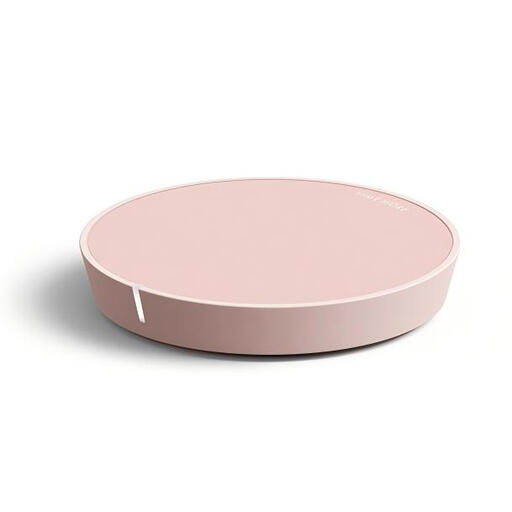 No image available
TIMEMORE Coffee Scale DOT with timer
The product name is aimed at espresso and pour-over coffee; check that your bowl sits securely on the scale.
The name mentions a timer, a coffee-to-water ratio, water flow and switchable ounce and kilogram units.
View at Joybuy
 No image available
TIMEMORE Coffee Scale Basic 3.0
The product name mentions espresso and pour-over coffee. Check that the scale and any bowl you use are suitable for weighing walnuts.
The name mentions a timer, water flow, a coffee-to-water ratio and switchable ounce and kilogram units.
View at Joybuy
 No image available
TIMEMORE Coffee Scale Basic 2.0 Electronic, White
The product name mentions use in the kitchen, for baking and cooking. Check that there’s enough space for the bowl you want to use with your recipe.
The name mentions a timer, water flow and switchable ounce and kilogram units.
View at Joybuy
 No image available
Digital kitchen scale with dual LED display and timer
The product name describes a digital kitchen scale. Check that it has enough space for the bowl you use.
The name mentions a dual LED display, a 4-point sensor and a timer.
View at Joybuy
 No image available
Digital Coffee Scale 0.1 g Precision, up to 3 kg
The product name states a capacity of up to 3 kg and 0.1 g increments. A small displayed increment is not, in itself, proof of measuring accuracy.
The name also describes a rechargeable kitchen scale with a timer, heat-resistant platform and tare function. Check that your bowl fits on the platform.
View at Joybuy
Frequently asked questions
How do I weigh walnuts in my own bowl?
Place a stable bowl on a scale with a tare function, zero the display and add the walnuts. First check that the bowl and its contents together are within the maximum capacity. Beurer explicitly lists a bowl and tare function for the KS 25; Brabantia lists a zero-and-add function for the battery-powered Tasty+.
Does a 0.1 g increment mean the scale measures accurately to 0.1 g?
No. A displayed increment of 0.1 g does not, in itself, prove that the measurement error is no more than 0.1 g. Beurer lists this weight increment for the KS 36; also compare the maximum capacity and weighing surface with what you want to weigh.
Can I put the whole kitchen scale in the dishwasher?
Don’t assume that you can. Brabantia says to wipe the glass surface of the battery-powered Tasty+. For other parts and models, follow the relevant instructions.
Can I use a home kitchen scale to weigh goods for sale at a market?
Not based on recipe specifications alone. The Dutch Authority for Digital Infrastructure distinguishes between household use and weighing for trade; different accuracy requirements apply to scales used to determine a sale price.
Where can I take used batteries?
Take used batteries to a collection point, such as a shop or supermarket that sells batteries. According to the Dutch Government, they must not be put in the bin.


