If you want to see the elapsed extraction time, choose a model with a confirmed stopwatch or count-up function; a countdown timer works differently, as you set a duration in advance. If you’re short on worktop space, compare the fixing options and dimensions, then choose a silent or audible alarm to suit your kitchen.
Who is a coffee timer for?
Manual coffee maker
Want to track the elapsed time from a start point of your choice, for example, when making espresso? Check that the specific model has a stopwatch or count-up function. Hama lists this function for the 00002953; TFA Dostmann lists it for the 38.2022.01.
Coffee maker with limited worktop space
Want to read the display without putting the timer on the worktop? Compare the magnet, stand or other fixing options with the spot where you plan to use the timer. HENDI lists a magnet and stand for model 582022; Hama lists several placement options for the 00002953.
Coffee maker in a shared kitchen
Want to avoid a loud end-of-timer signal? Check whether the specific model has a silent or vibration mode. Hama lists several alarm modes for model 00002950; don’t assume that other models from the same brand have these features.
What should you look for when choosing one?
| What to consider |
What to look for |
Who is this important to? |
| Tracking elapsed time |
Check whether the specific model has a stopwatch or count-up function, and how to start and stop it. |
If you want to see how much time has passed since you started brewing, a countdown isn’t the same thing. Around 36% of consumers prioritise tracking elapsed time when making this choice. |
| Worktop space and visibility |
Compare the fixing options and dimensions, and consider whether the display will remain visible from the spot you choose. |
If you want to keep your worktop clear, find a spot where the timer can be securely attached and easily read. Around 29% of consumers prioritise saving space. |
| A suitable end-of-timer signal |
Check whether silent, vibration or audible alarm options are available for the specific model. |
In a shared or quiet kitchen, you may not want a loud signal, but you still need to notice the timer while doing other things. Around 21% of consumers prioritise a quiet or adjustable alarm. |
| Easy to set |
Check the steps for setting the timer, which battery type it needs and whether a battery is included. |
If you mainly want to set a duration in advance and hear a signal when it’s up, ease of use and battery information may matter more than extra features. Around 14% of consumers prioritise a simple countdown. |
How to avoid common buying mistakes
-
Confusing a countdown timer with a stopwatch
Setting a duration doesn’t automatically show you how much time has passed since you started.
If you want to track extraction time, look for an explicitly listed stopwatch or count-up function for the specific model.
-
Assuming every magnet will save space
A magnet is only useful if you have a suitable spot where the display stays visible while you’re brewing.
Decide where the timer will go first, then compare the magnet, clip, hanging option or stand.
-
Assuming different models have the same features
Features vary by model: Hama lists an audible alarm for the 00002953 and silent and vibration modes for the 00002950.
Compare full model numbers and check the alarm modes for the specific version you’re considering.
Brands to compare
Hama
Hama offers several digital timer models with a range of placement and alarm options.
- According to Hama, model 00002953 combines count-up and countdown functions with several placement options.
- Hama lists several alarm modes for model 00002950, including silent and vibration modes.
- These features belong to different models. Check the full model number, and don’t assume a timer has a feature just because it’s made by this brand.
TFA Dostmann
According to TFA Dostmann, model 38.2022.01 is a compact stopwatch with a magnet and memory function.
- The manufacturer lists a maximum set time of 99 minutes and 59 seconds.
- Check for yourself whether the timer will be easy to read in the spot you’ve chosen.
HENDI
The HENDI 582022 is a digital countdown timer with a magnet and stand.
- HENDI lists dimensions of 65 × 70 × 17 mm and a countdown of up to 99 minutes and 59 seconds.
- Don’t choose this model expecting it to show elapsed time: a stopwatch function isn’t confirmed in the model specifications.
Joybuy timers
These Joybuy timers are designed for setting a duration in advance. Check that the features of each model suit the way you make coffee.
 No image available
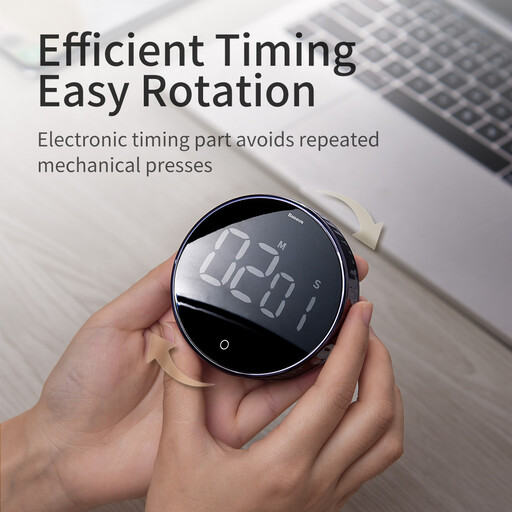
Baseus Heyo Rotation Countdown Timer, Black
A good choice if you want to set a duration in advance; the product name identifies it as a countdown timer. Check whether you also need a stopwatch function.
Joybuy
 No image available
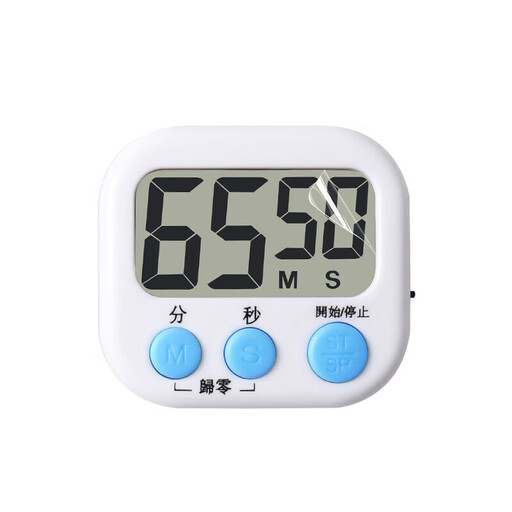
BJ Small-Sized White Electronic Timer
A good fit if you’re looking for a small electronic timer. Check that the controls and any fixing options suit the spot where you make coffee.
Joybuy
Frequently asked questions
Should I use a count-up or countdown timer for espresso?
If you want to see how much time has passed since you started, choose a model with a confirmed stopwatch or count-up function. The Specialty Coffee Association includes time in its historical definition of espresso; this doesn’t mean there’s one universal setting for every coffee or machine.
How can I position a timer without losing worktop space?
Use a magnet only on a suitable surface and somewhere you can see the display. HENDI lists a magnet and stand for model 582022; Hama also lists a clip and hanging option for model 00002953.
What should I do with a flat battery or a timer I no longer need?
According to the Dutch Government, you can take used batteries to shops and supermarkets that sell batteries. For unwanted appliances that need mains electricity or batteries, you may be able to use a take-back scheme when buying a similar new appliance.
What are my rights when buying online, or if the timer breaks too soon?
For a standard product bought online, ACM ConsuWijzer says you usually have a statutory 14-day cooling-off period after delivery; check which exceptions apply. The seller must also offer an appropriate solution if a product breaks sooner than you could reasonably expect with normal use.
Does a digital timer need a CE mark?
A CE mark is only required when the applicable EU product rules say it is for that specific product. Such rules may apply to electrical and electronic equipment; check the particular model rather than assuming the requirement based on its product name alone.


