
Manual coffee brewer
You want to see the elapsed time during a single brew and restart the timer easily. According to their product specifications, the TFA Dostmann 38.2054.01 and IKEA LJUNGPIPARE have timer functions.


For a single manual brew, a simple timer with a stopwatch function is a good choice if you want to read the elapsed time; make sure the display stays visible while you pour. Choose a countdown alarm to be alerted at a preset time, multiple timers for tasks happening at the same time, or coffee scales with a timer if you also want to track the amount. These recommendations are based on the stated features, not on a measured comparison of accuracy or coffee flavour.
You want to see the elapsed time during a single brew and restart the timer easily. According to their product specifications, the TFA Dostmann 38.2054.01 and IKEA LJUNGPIPARE have timer functions.
You want an alert when a set stage is complete, or you’re keeping track of several tasks at once. According to OXO, the OXO Triple Timer has three timers and individual beep patterns.
You want to track both time and quantity during the same manual brew. According to Hario, the Hario V60 Drip Scale combines weighing with a timer.
First decide whether you want to see the elapsed time, need an alarm at a set time, or also want to weigh your coffee as you pour. Then choose the controls and placement that suit your brewing setup.
| What to consider | What to look for | Who is this important for? |
|---|---|---|
| Reading the elapsed time | Check for a stopwatch or count-up function, and make sure you can see the display while pouring. According to TFA, the TFA Dostmann 38.2054.01 has large digits, a stand and a magnet. | If I’m tracking one brew, I want to read the elapsed time at a glance and restart the timer easily. Around 50% of consumers prioritise being able to read the elapsed time. |
| An alarm at a set stage | Check whether the timer can count down and whether the alarm volume suits your household. Separate timers are particularly useful when you’re tracking tasks at the same time. | If I want to be alerted at a particular time, I don’t want to have to keep looking at the display. Around 30% of consumers prioritise an alarm at a set time. |
| Combining time and quantity | Check that your chosen model has both a timer and weighing function, and that it suits your brewing setup. According to Hario, the Hario V60 Drip Scale counts up to 99 minutes and 59 seconds. | If I also want to track the quantity while pouring, it’s useful to have both functions on one device. Around 20% of consumers prioritise timing and weighing at the same time. |
A product description that only mentions an alarm when the timer reaches zero doesn’t confirm that you can track the total elapsed extraction time.
Look for a stopwatch or count-up function explicitly in the specifications.
Scales with a built-in timer serve a different need from a standalone timer. You don’t need the weighing function if you don’t want to measure quantities while brewing.
Before you buy, decide whether you want to track time and quantity on the same device.
According to TFA, batteries aren’t included with the TFA Dostmann 38.2054.01. IKEA states that one AAA battery for the IKEA LJUNGPIPARE is sold separately.
Check whether a battery is included with each model and what type it needs. The Dutch government advises against putting used batteries in general waste.
The 38.2054.01 is a standalone timer that counts up or down for a single manual brew.
The Triple Timer is designed for situations where different tasks need their own timers at the same time.
The V60 Drip Scale is designed for anyone who wants to track time and quantity when making manual pour-over coffee.
The LJUNGPIPARE combines a clock with timer and stopwatch functions.
The Basic 2.0 is a coffee scale with a timer for anyone who wants to track other brewing details as well as quantity.
This selection includes coffee scales with timers for tracking time and quantity, as well as standalone timers for a set stage or elapsed time.
 No image available
Ideal if you want to track time and quantity together while making coffee.
The product name lists a timer, coffee-to-water ratio, water flow rate and conversion between ounce/kg units.
 No image available
Ideal if you want to track time and weight on one coffee scale when making espresso or pour-over coffee.
The product name lists a timer, coffee-to-water ratio, water flow rate and conversion between ounce/kg units.
 No image available
Ideal if you want to track time and weight on a coffee scale while making coffee.
The product name lists a timer, water flow rate display and conversion between ounce/kg units.
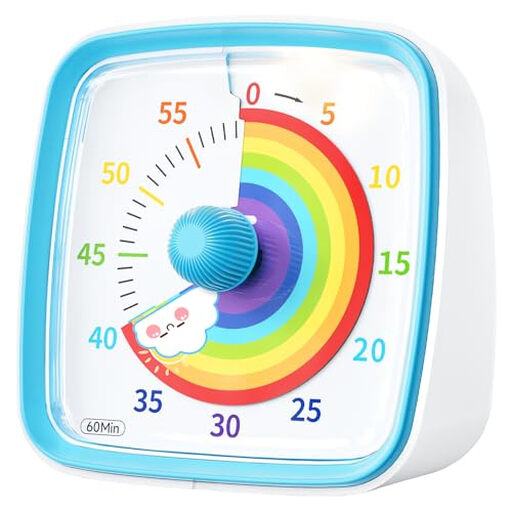 No image available
Ideal if you want to time a set brewing stage without an audible countdown alarm.
The product information lists a silent countdown function and a timer setting of up to 60 minutes.
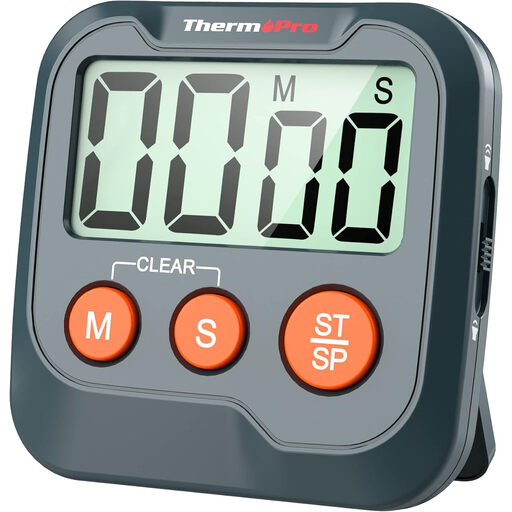 No image available
Ideal if you want to track the elapsed time of a brew and place the display somewhere visible.
The product name lists a stopwatch, a maximum of 99 minutes and 59 seconds, and adjustable volume. The product description mentions a large LCD display, stand and magnet.
Choose a timer that counts up if you want to keep track of the elapsed time, and a countdown function if you want an alert after a preset stage. According to TFA, the 38.2054.01 supports both functions.
Position the timer so you can see the display without disrupting your brewing setup. TFA lists a stand and magnet for the 38.2054.01; IKEA lists a magnet for the LJUNGPIPARE.
Check each model: IKEA states that one AAA battery for the LJUNGPIPARE is sold separately, while TFA says batteries for the 38.2054.01 aren’t included. The Dutch government advises against putting used batteries in the bin.
According to ACM ConsuWijzer, for a standard online product purchase you usually have a statutory cooling-off period of up to 14 days after delivery; check which exceptions apply to your purchase. There is no fixed statutory guarantee period for every timer in the Netherlands: ACM ConsuWijzer says it depends on what you could reasonably expect from the product.
It depends on whether the specific product falls under EU rules that require a CE mark. The European Commission lists electrical and electronic equipment as a possible category, but without details of a particular model, that doesn’t allow a definitive conclusion about it.