
Vandaag of morgen in huis

Kwaliteit gegarandeerd

Welkomstaanbiedingen ontgrendelen: GRATIS bezorging | Tot 80% korting | Gratis 30 dagen JoyPlus-proefperiode
Download de app
Digital bathroom scales may seem like a simple product, but there are big differences between models. Do you just want to check your weight, or are you looking for smart scales with an app, multiple user profiles and body composition analysis? Comparing the right specifications in advance can help you avoid a disappointing purchase.
Many households run into the same problems: scales that give unreliable readings on a soft bath mat, an app that’s difficult to connect or features that sound more impressive than they are in practice. Read on to find out which points are worth checking and which type of digital bathroom scales will suit your needs.
A clear LCD or LED display is useful, but the surface you place the scales on can have a big impact on the reading. Carpet, uneven tiles or a damp floor can make the scales less stable. Always place them on a hard, flat, dry surface and, ideally, leave them in the same spot.
Body fat scales can use bioelectrical impedance analysis (BIA) to calculate information such as BMI, body fat percentage, muscle mass and body water. However, these readings depend on factors including hydration, the time of day and contact with the sensors. Use them mainly to track trends under similar conditions. They are not a medical diagnosis.
According to information provided by the brands concerned, some models can show several body measurements. This is a claim by the brand about how the product works, not a guarantee of a medical or clinical measurement.
Bathroom scales with Bluetooth usually need a smartphone nearby. Check that the app is compatible with your iOS or Android device, how many user profiles it supports and whether you need to open the app and sync your reading manually. According to the product description, a Wi-Fi model may send data automatically, but check in advance that it supports 2.4 GHz networks and review the app’s privacy settings too.
For families, 180 kg bathroom scales are often a practical choice. Don’t just check the maximum capacity; look at the weighing increments too. A display showing 0.05 kg can show readings in 50-gram increments. On some models, this changes to 0.1 kg above a certain weight.
A smaller increment doesn’t mean every reading is accurate to that level. Weigh yourself under the same conditions and look at how your readings change over several days.
A large display is handy if you want to read your weight without bending down. Step-on or tap-on activation means you don’t have to press a button first. Also check:
Battery-powered scales are easy to position. The RENPHO Elis Solar 2 lists solar cells as its power source, while other models use AAA batteries. Actual battery life depends on use and lighting conditions, so treat battery-life claims as product specifications provided by the brand.
Many digital bathroom scales have a platform made from tempered glass. It’s easy to clean, but the surface can become slippery when wet. Never step on the scales with wet feet, and don’t use them if the glass is cracked.
Body composition analysis requires clean, dry feet and good contact with the electrodes. According to the safety information for the products concerned, users with a pacemaker, defibrillator or other implanted electronic medical device should avoid the BIA function. In this case, choose a basic weight-only measurement and follow medical advice if needed.
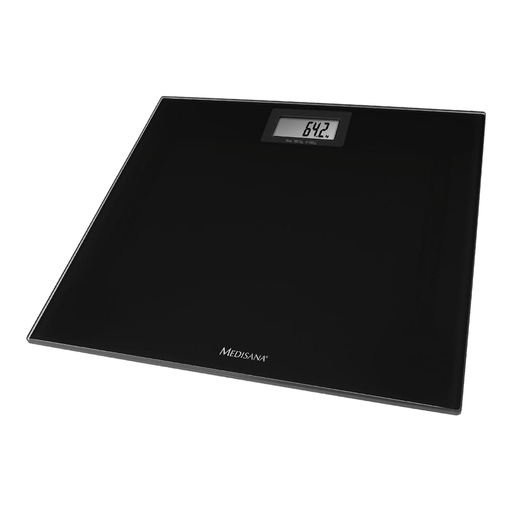
Why it suits this profile: These digital bathroom scales are designed for everyday weighing, without an app or body composition analysis. That makes them straightforward to use as a first purchase.
There are no complex app features to set up first. The manufacturer lists step-on and tap-on activation, an LCD screen and automatic shut-off after 10 seconds.
Maximum capacity of 180 kg, readings in kg, lb and st, plus a large LCD display.
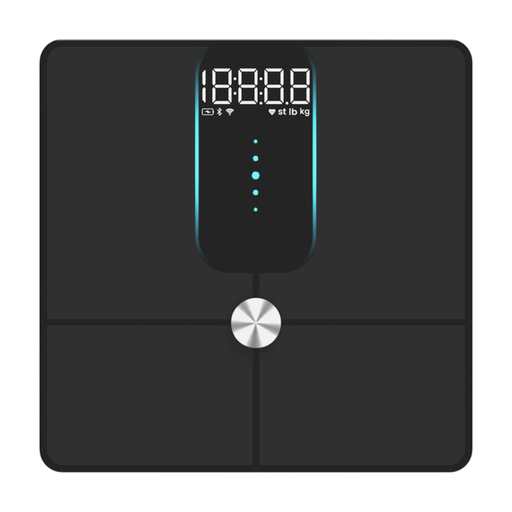
Why it suits this profile: This model is designed for users who want to track plenty of data and value automatic syncing.
The product information lists both Bluetooth and Wi-Fi, and says the scales can sync with an app. Check compatibility and privacy settings in advance.
Supports 25 measurements, has a capacity of 180 kg and features an ITO-coated glass platform with no visible electrodes.
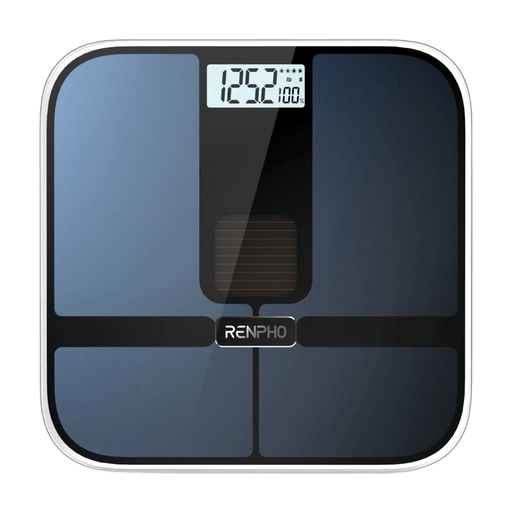
Why it suits this profile: These smart scales are a good fit for households and sportspeople who want to combine multiple profiles and Bluetooth tracking with an alternative to disposable batteries.
The product description mentions automatic user recognition and connection to the RENPHO Health app. Solar power reduces reliance on disposable batteries.
BIA technology, 13 listed body measurements, Bluetooth and support for multiple users.
We’ve put together a complete, up-to-date list of products that meet these strict selection criteria and the applicable European safety regulations.
A regular routine is important if you want to get useful readings from scales for weight management:
Digital scales generally show smaller increments, such as 0.05 or 0.1 kg. However, their reliability in practice also depends on the surface, where they’re placed and how you weigh yourself. Analogue scales may suit you if you don’t want to use batteries or an app.
It varies depending on the model, battery type and how often you use the scales. Automatic shut-off helps save power. Check whether batteries are included and whether the product uses two or three AAA batteries. For models with solar cells, performance also depends on the amount of available light.
Not necessarily. A basic digital model is enough if you only want to measure your weight. Scales with an app are most useful if you want to keep a record of your readings over time, need multiple user profiles or want to combine your weight with other values calculated by the product. Treat these values as a guide, not a substitute for professional medical advice.
