
Vandaag of morgen in huis

Kwaliteit gegarandeerd

Welkomstaanbiedingen ontgrendelen: GRATIS bezorging | Tot 80% korting | Gratis 30 dagen JoyPlus-proefperiode
Download de app
A digital bathroom scale might seem simple: you step on it and read your weight. Yet models vary greatly in how they work, their weight capacity and the measurements they offer. A cheap digital bathroom scale may be perfectly adequate for daily weighing, while a smart scale with an app is more appealing if you want to track trends over time.
When making your purchase, don't just focus on a sleek glass design or a long list of body measurements. The surface you place it on, the maximum weight capacity and how body analysis actually works will often have a bigger impact on your experience.
A display that shows readings in increments of 0.05 kg sounds precise. In reality, carpet, an uneven bathroom floor, damp feet and a change in posture can all affect the result. An electronic scale should therefore always be placed on a hard, flat and dry surface.
For consistent readings, it helps to weigh yourself at the same time each day, for example in the morning. Treat a single measurement as a snapshot and focus on the trend over several readings.
A body fat scale typically uses bioelectrical impedance analysis, also known as BIA. The scale calculates an estimate of body fat, muscle mass and body water based on electrical resistance. These values can change depending on hydration levels, skin contact and the time of measurement.
According to the product information, these features are intended for monitoring and reference purposes, not for diagnosis or treatment. If you have a pacemaker, defibrillator or any other implanted electronic medical device, do not use BIA functions without seeking medical advice first. With some models, it is recommended to measure weight only.
A bathroom scale with Bluetooth can send data to an app, but check beforehand which app is required and whether your phone is supported. Bluetooth typically works when your phone is nearby. A model with Wi-Fi can sync data automatically via a 2.4GHz network, but often requires more setup.
Also consider privacy, multiple users and whether you really need to track 13, 24 or 25 measurements. For many households, a clear display and simple operation matter more than a long list of metrics.
First, check the maximum capacity. Many models in this selection support 180 kg, while the Beurer BF915 goes up to 200 kg according to the product information. Choose a model that gives you enough margin and never exceed the stated load.
The measurement increment might be 0.05 kg or 0.1 kg, for example. On various smart models, the increment changes to 0.1 kg above 100 kg. This is relevant when you are looking for a scale for multiple family members.
An LED display with high contrast is practical in low light. An LCD screen is often easy to read and is used in various models from Sparoma and Medisana. Pay attention to activation: some models start as soon as you step on them, while others also respond to a tap.
Also check whether batteries are included. The Sparoma AD-26 uses two AAA batteries which, according to the product information, are not supplied. Other models come with batteries or, like the RENPHO Elis Solar 2, use solar cells as described in the product details.
Tempered glass is common on a glass bathroom scale. The material can be sturdy, but it remains fragile if dropped or knocked hard. Do not use the scale if the glass is cracked.
A bathroom is not automatically the ideal location. Electronic models must not be submerged and some product instructions warn against high humidity. Place the device on a dry floor, do not step onto the platform with wet feet and clean it with a soft, dry or slightly damp cloth.
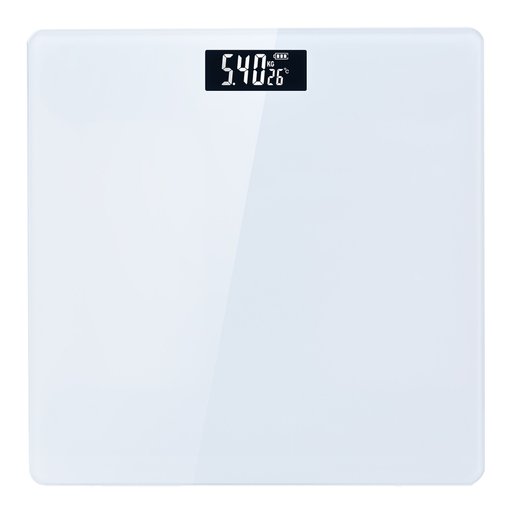
Why this fits the profile: This digital bathroom scale is designed for daily weighing without an app or setup. The scale supports kg and lb and has a capacity of 180 kg.
The features are kept straightforward: no promised body analysis or mandatory app. The 4 mm glass platform and LCD display are suited to simple home use.
Measurement increments of 0.05 kg, capacity of 180 kg and a switchable kg/lb display. Please note: two AAA batteries are not included.
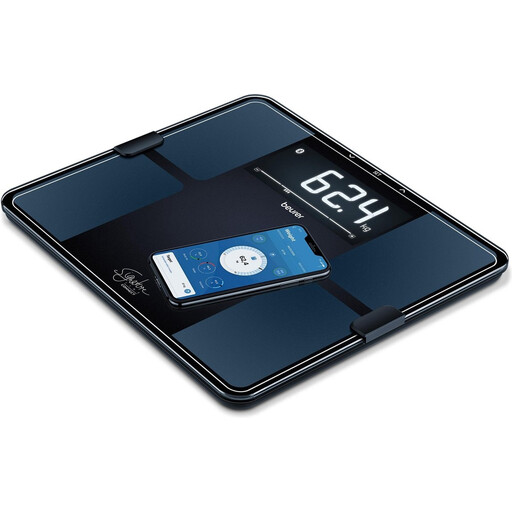
Why this fits the profile: The BF915 combines body analysis, Bluetooth and support for eight users. That makes it a good fit for families and athletes who want to store measurements in an app.
The product information clearly states which data is calculated and how syncing works via the HealthManager Pro app. The BIA results remain intended as a reference.
Maximum capacity of 200 kg, illuminated display with 45 mm digits and automatic data transfer within Bluetooth range.
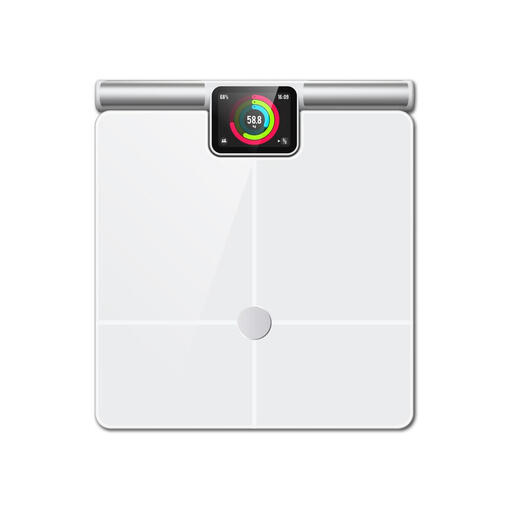
Why this fits the profile: This model is aimed at users who want comprehensive body analysis and automatic syncing. It features eight electrodes, a handle and both Wi-Fi and Bluetooth.
The connection technology and number of parameters are specified. The measurements are not a medical assessment; use the scale on a dry, flat surface.
56 listed body parameters, a 3.36-inch TFT colour screen and a capacity of 180 kg with a measurement increment of 0.05 kg below 100 kg.
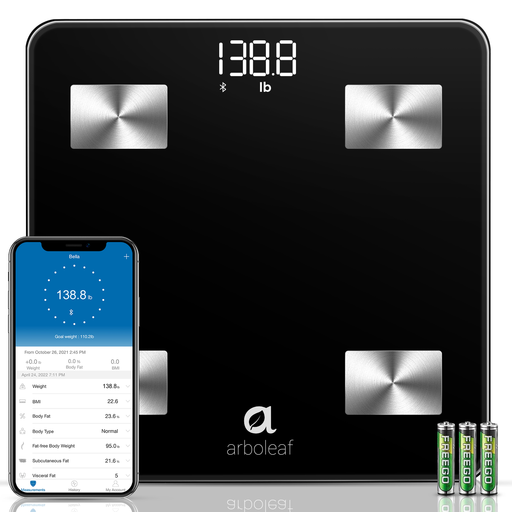
Why this fits the profile: The scale offers Bluetooth syncing with the Arboleaf app and, according to the product information, supports an unlimited number of user profiles.
The product description specifically mentions 14 body measurements, Bluetooth and automatic recognition. If you only want to weigh yourself, you can easily ignore the app features.
6 mm tempered glass, a clear LED display, four sensors and support for weight, BMI, body fat and muscle mass.
We have put together a full, up-to-date list of products that fully meet these strict selection criteria and comply with current European safety regulations.
Place the scale on a hard, flat and dry floor, ideally in the same spot each time. Avoid carpet and uneven tiles. Step gently onto the centre of the platform and stand still. For body analysis, bare, dry feet are usually required.
The lifespan depends on battery usage, moisture, load and how it is handled. Clean the surface without using too much water, do not drop the device and do not use it if the glass is damaged. Remove the batteries if you are not using a model for an extended period, unless the manual advises otherwise.
In addition to the purchase price, the main costs are batteries and possibly an app. Check whether batteries are included and whether a paid subscription is needed for the basic functions. Bluetooth models typically use your phone for syncing; a Wi-Fi scale may require extra setup time.
