What should you look for when choosing?
First decide when you want to eat the biscuit and what portion you’re used to. Then compare the nutritional information and ingredients on the pack you’re buying.
| What to consider |
What to check when buying |
Who it matters to |
| Stomach comfort and timing |
Check the portion size and the amount of fat and fibre. Avoid a large portion just before running. |
If I’m going running soon, I don’t want to eat a large or unfamiliar snack that might feel heavy. Around 36% of consumers prioritise stomach comfort and timing above all else. |
| Carbohydrates per portion |
Compare carbohydrates per 100 g and, if listed, per biscuit. |
When planning a snack around training, I want to know how many carbohydrates are in the portion I’ve chosen. Around 29% of consumers prioritise being able to plan their carbohydrate intake. |
| Allergens and dietary requirements |
Read the latest ingredients and allergen information; don’t assume something is gluten-free because it’s labelled vegan or lactose-free. |
If I need to avoid certain ingredients, the label determines whether I can choose this biscuit. For around 21% of consumers, this check is the top priority. |
| Portions to keep at home |
Check the pack size and the number of biscuits or portions in the pack. |
If I want to take a biscuit as a snack more often, I want to know how many individual portions a pack contains. Around 14% of consumers prioritise planning their supplies. |
Biscuits to consider on Joybuy
These products let you compare a classic digestive with speculoos and speculaas biscuits. Consider the portion, timing and ingredients of each biscuit individually; its name doesn’t automatically make it suitable for fuelling while you run.
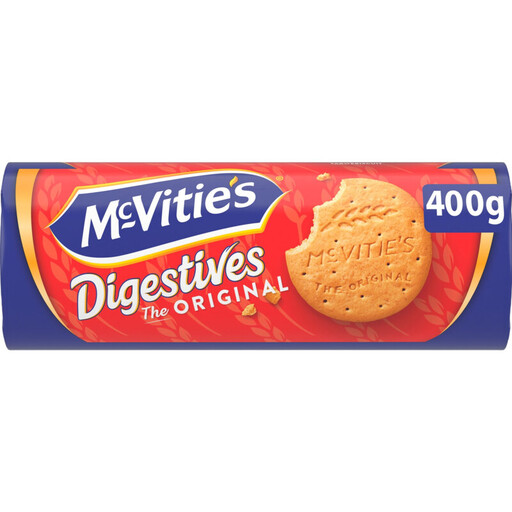 Image unavailable
McVitie's Digestives Original, 400 g
A digestive to consider as a measured biscuit portion around a training session, provided the timing and portion work for you.
For this Original variety, Jumbo lists 9.3 g of carbohydrates per 14.7 g biscuit, and 21.3 g of fat and 3.7 g of fibre per 100 g. Check the current packaging for wheat and possible traces of milk.
View on Joybuy
 Image unavailable
Lotus Biscoff Speculoos, 250 g
A speculoos biscuit to compare with digestives if you prefer this type of biscuit.
For the 250 g pack, Albert Heijn lists approximately 32 biscuits. The nutritional values per 100 g are 73 g of carbohydrates, 38 g of sugars and 1.3 g of fibre. For an accurate portion calculation, check the nutritional information on the pack and look out for wheat and soya.
View on Joybuy
 Image unavailable
Hellema Smoeltjes Speculaas Cookies, 8 biscuits, 200 g
A speculaas option if you’re considering a different type of biscuit as a snack alongside digestives.
The product name lists 8 biscuits and 200 g. To plan a portion, check the nutritional information and ingredients on the current pack; don’t use the number of biscuits to estimate the nutritional value per biscuit.
View on Joybuy
Frequently asked questions
Can I eat a digestive just before a running session?
You could, if you’re used to eating a small portion and know how it sits with you. Voedingscentrum advises against large portions and foods high in fat, protein or fibre just before exercise. So consider the label and when you’ll eat it, not just the name ‘digestive’.
Can digestive biscuits replace food during a long training session?
No. A biscuit isn’t a complete food and hydration plan for a long effort. If you do want to take one with you, try it during training to see whether your chosen portion is practical to eat and suits you.
Is a vegan digestive also gluten-free?
Not automatically. Albert Heijn labels AH Digestive as vegan, but also lists wheat and possible traces of other gluten-containing cereals. Check the current packaging if you need to avoid gluten.
Which allergens should I check in these biscuits?
Check the ingredients and allergen information for anything you need to avoid. For the product varieties discussed here, wheat, other gluten-containing cereals, milk and soya may be relevant. The Netherlands Food and Consumer Product Safety Authority explains how allergens are listed on labels.


