
If you want a biscuit with your coffee
You want a sweet biscuit that you can serve without any toppings. Jumbo stocks digestives in its biscuit range.


Choose a digestive if you want to serve a sweet biscuit with your coffee without any preparation; Jumbo includes its digestives in its biscuit range. If you want something to top, choose a cracker. For both types of product, compare the nutritional information per 100 g and check the ingredients and allergens on the packaging.
You want a sweet biscuit that you can serve without any toppings. Jumbo stocks digestives in its biscuit range.
You’re looking for a crisp base for sweet or savoury toppings. A thin wholegrain cracker, such as Bolletje’s Lichte Crackers Volkoren, is suited to this use.
You want to compare ingredients, fibre, sugars, salt and allergens. Read the nutritional information per 100 g and check the current packaging for allergen details.
First decide whether you want a biscuit to enjoy on its own or a base for toppings. Then compare the packaging on the points that matter to you.
| What to consider | What to check when buying | Who it matters to |
|---|---|---|
| A biscuit with your coffee | Check that you’re choosing a digestive biscuit and compare the nutritional information per 100 g. Albert Heijn states that AH Digestive contains 16 g of added sugars per 100 g. | If I want to serve something without toppings, I’m looking for a sweet biscuit to enjoy on its own. This would be the main reason for buying for around 40% of consumers. |
| Room for toppings | Choose a cracker whose shape and flavour go well with your toppings; include those toppings when comparing nutritional values for the occasion. | For a coffee break with sweet or savoury toppings, I mainly want a crisp base. Around 30% of consumers would put this use first. |
| Nutritional information and allergens | Compare fibre, sugars, fat and salt per 100 g, and read the ingredients and allergen information on the current label. | When the ingredients are the deciding factor for me, I want to assess the whole label, not just the product name. This would be the top priority for around 30% of consumers. |
For this choice, a digestive is a biscuit to enjoy with your coffee; if you want something to top, look for a cracker as your base.
Before choosing a pack, decide whether you want to serve something on its own or add your own toppings.
The words digestive and wholegrain don’t tell you how sugars, fat, fibre and salt compare across the full label.
Compare the nutritional information per 100 g, then consider your portion and any toppings.
Ingredients vary between varieties. For Lichte Crackers Volkoren, Bolletje lists wheat, barley and sesame, among other ingredients.
If you have an allergy or need to avoid certain ingredients for another reason, always check the allergen information on the packaging.
Bolletje’s Lichte Crackers Volkoren is a thin cracker that you can top.
Albert Heijn stocks both AH Digestive and AH Luchtige crackers volkorenmeel.
Jumbo stocks products including Krokante Digestive Biscuit and Digestive Volkoren in its biscuit range.
Lidl lists a 400 g plain digestive for anyone looking for a biscuit to enjoy with coffee.
ALDI describes Biscotto Digestive Biscuits as wheat biscuits to enjoy with coffee or tea.
These products offer two ways to serve something with coffee: a digestive as a biscuit to enjoy on its own, or crackers as a base for toppings. When choosing a cracker, compare the variety and the information on the packaging.
 Image unavailable
A rye cracker to consider if you want something to top with your coffee instead of serving a biscuit.
Compare the nutritional information and check the allergens on the current packaging.
 Image unavailable
This digestive is a good choice if you want a biscuit to enjoy with coffee or tea, with no toppings to prepare.
Compare sugars, fat and salt per 100 g, and bear in mind the portion you plan to serve.
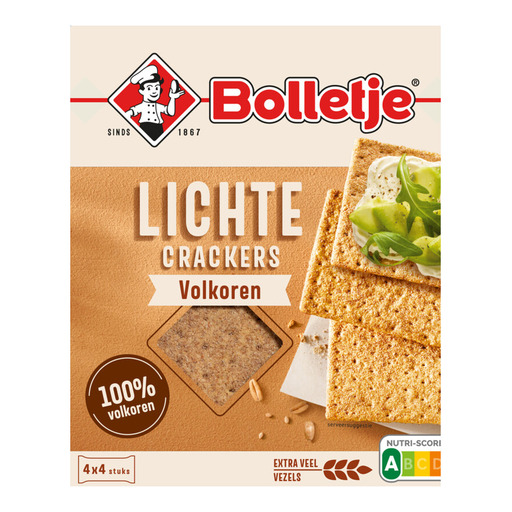 Image unavailable
These thin crackers are designed as a base for toppings. Bolletje says its Lichte Crackers Volkoren are made from 100% wholegrain cereals.
If you need to avoid certain ingredients, check the label: Bolletje lists wheat, barley and sesame for this variety.
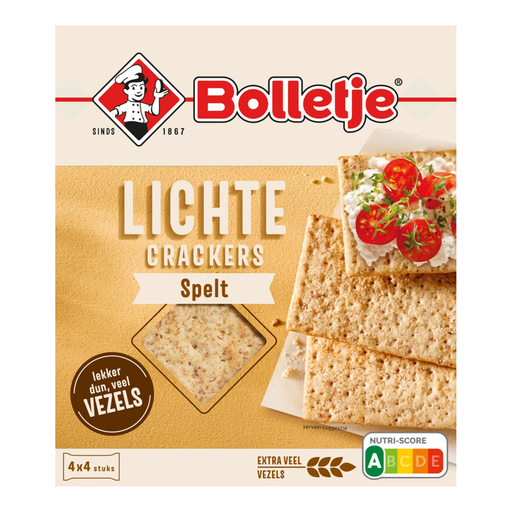 Image unavailable
A spelt variety to consider if you want a cracker to top rather than a digestive to serve.
If the grains and allergens matter to your choice, check the current label.
 Image unavailable
These crackers are a good fit for a coffee break when you want to choose your own sweet or savoury toppings.
If you want to compare fibre content, check the value per 100 g on the current packaging rather than relying on a claim alone.
No. For this choice, a digestive is a biscuit to enjoy with coffee, while a cracker can be used as a base for toppings. Jumbo places its digestives in the biscuit category.
Not if you’re looking for a biscuit to enjoy on its own. If you want something to top or to compare the grain content, a wholegrain cracker is an option; be sure to check the rest of the nutritional information and the ingredients too.
Read the allergen information on the packaging for the specific variety. The Netherlands Food and Consumer Product Safety Authority states that allergen information for prepacked products must appear on the label. Don’t assume the ingredients based solely on the words digestive or cracker.
Use a product page to compare varieties in advance, but check the pack you actually buy before using it. Ingredients, nutritional values and allergen information can change.