What should you look for when choosing?
First decide what part the biscuit will play at Sunday breakfast: a small addition, a particular flavour or a product that meets a dietary requirement. Then compare the current packaging of the varieties that fit the bill.
| What to consider |
What to check before buying |
Who it matters to |
| Your whole breakfast |
Think about what you’ll serve alongside the biscuit and how many biscuits you’ll have. |
If the biscuit is only a small part of my breakfast, I want to leave room for other breakfast foods too. Around 36% of consumers prioritise the overall make-up of their breakfast. |
| Fibre and ingredients |
Compare fibre and sugars per 100 g, and check the ingredients list to see what type of flour is used. |
If I’m choosing a biscuit for its fibre content because it’s called a ‘digestive’, I want to know what it actually contains. For around 29% of consumers, comparing labels is their first concern. |
| Flavour and sharing |
Choose between plain, chocolate and speculoos; if you’re sharing, consider the pack size too. |
When sharing coffee or tea, I mainly want to choose a flavour we’ll enjoy serving. Flavour is the top priority for around 21% of consumers. |
| Allergens and dietary requirements |
Read the current allergen information and, if necessary, look for a product explicitly labelled gluten-free. |
If I need to avoid an ingredient, suitability comes before the flavour I want. For around 14% of consumers, this check is their first requirement when buying. |
Brands to compare
These brands and own-label ranges offer different biscuits to compare. The features mentioned apply to the specific varieties, not the entire range.
McVitie's
Classic Digestive Original, alongside milk and dark chocolate varieties.
- McVitie's Netherlands lists 3.6 g of fibre per 100 g for Original and 30% milk chocolate for Digestive Milk.
- Nutritional values vary by variety; don’t use the values for Original as a guide to a chocolate digestive.
Lotus Biscoff
Speculoos for those looking for a caramelised flavour rather than a classic digestive.
- Lotus Bakeries describes Biscoff as crunchy and caramelised.
- The listing for the 250 g pack of Lotus Biscoff speculoos biscuits names wheat and soya; if you have an allergy, check the current packaging.
Albert Heijn
An own-label range that includes Digestive, wholemeal Digestive made with wheat flour, and a variety named Digestive 0% Sugar.
- The different product names make it easier to search for a plain, wholemeal or differently formulated variety.
- Albert Heijn points out that product information can change; check the current packaging against any specific nutritional or dietary requirement.
Jumbo
Own-label options include plain and wholemeal digestives, plus a separate milk chocolate variety specifically labelled gluten-free.
- Jumbo lists both Krokante Digestive Biscuit 400 g and Digestive Volkoren 400 g.
- A gluten-free product name for one variety doesn’t mean another is suitable; always read the label for the specific product.
Biscotto (ALDI)
An own-label option for those looking for a plain digestive.
- ALDI Netherlands describes Biscotto Digestive Biscuits as crunchy wheat biscuits and lists a 400 g pack containing approximately 27 biscuits.
- To compare fibre, sugars and allergens, use the information on the packaging of the variety you choose.
Sondey (Lidl)
An own-label range with plain digestives and a dark chocolate variety.
- Lidl lists Digestives naturel in a 400 g pack and also shows Sondey Digestives pure chocolade.
- Compare the nutritional information and ingredients for the plain and chocolate varieties on their respective packaging.
Biscuits for different tastes
These Joybuy products suit three Sunday breakfast choices: a plain digestive, a chocolate digestive or Lotus Biscoff as a speculoos alternative. Check the packaging if nutritional values or allergens are important to your choice.
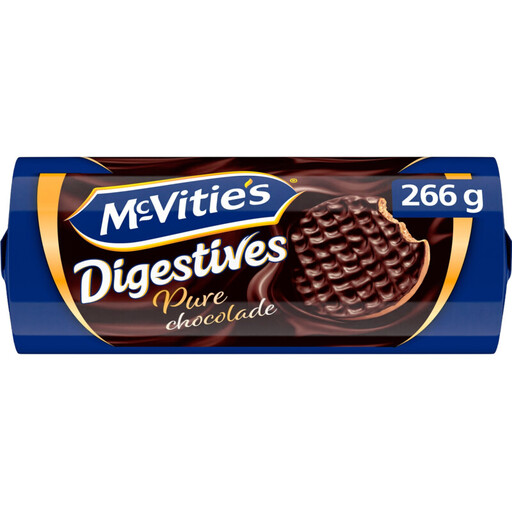 Image unavailable
McVitie's Digestives with Dark Chocolate, 266 g
For anyone who fancies a digestive with dark chocolate alongside coffee or tea. The pack contains 266 g. If you need to avoid wheat, milk or soya, check the current ingredients and allergen information.
View on Joybuy
 Image unavailable
Lotus Biscoff Speculoos Cookie, 250 g
For anyone who prefers caramelised speculoos to a classic digestive. The product listing for this 250 g pack gives 1.3 g of fibre and 38.1 g of sugars per 100 g, and names wheat and soya. If you have an allergy, check the current packaging.
View on Joybuy
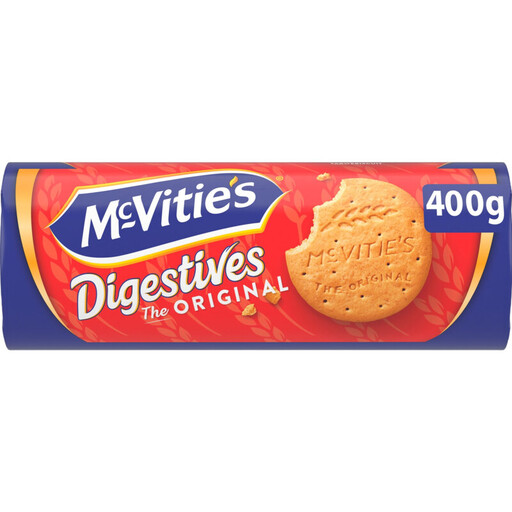 Image unavailable
McVitie's Digestive Original, 400 g
For anyone looking for a plain digestive without a chocolate coating. This pack contains 400 g. To compare fibre and sugars, check the information on the current label. If you have an allergy, also check for wheat and possible traces of milk.
View on Joybuy
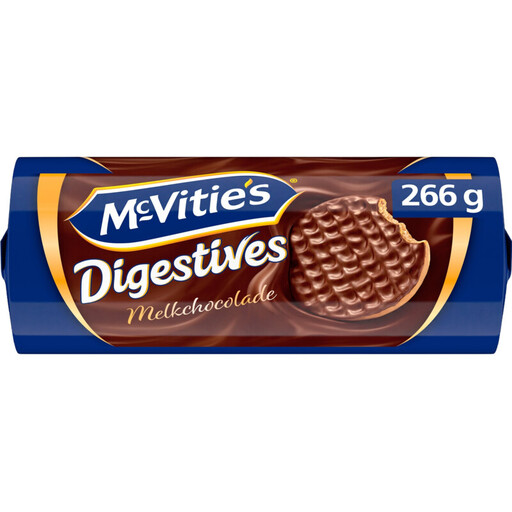 Image unavailable
McVitie's Digestives Milk Chocolate, 266 g
For anyone who wants to serve a digestive with milk chocolate. This pack contains 266 g. To compare sugars, check the current nutritional information. If you have an allergy, read the information for milk, soya and wheat.
View on Joybuy
Frequently asked questions
Does ‘digestive’ tell you anything about what a biscuit does?
No. Don’t assume the name says anything about its effect on your digestion. Check the ingredients and fibre per serving; the Netherlands Nutrition Centre recommends getting fibre from a variety of foods.
How do I compare a plain digestive with a chocolate variety?
Compare the nutritional information on a like-for-like basis, such as per 100 g, then consider the serving you eat. McVitie's Netherlands lists 16.5 g of sugars and 3.6 g of fibre per 100 g for Digestive Original, compared with 29.5 g of sugars and 3.0 g of fibre for Digestive Milk. These figures apply to these two varieties from the manufacturer; check the current label on the pack you’re buying.
Can I choose a regular digestive if I need to avoid gluten?
Don’t assume that a regular digestive is gluten-free. According to the manufacturer, McVitie's Digestive Original contains wheat. If necessary, look for a variety explicitly labelled gluten-free and check the allergen information on the current packaging.
Which allergens should I look out for in these biscuits?
Check the ingredients that are relevant to you, including cereals containing gluten, milk and soya. The allergens present vary by variety; the Netherlands Food and Consumer Product Safety Authority says allergens must be clearly listed on the labels of prepacked foods.
How should I store an opened pack of digestive biscuits?
Keep the pack in a dry place and seal it well, and follow any instructions on the packaging. The Joybuy product description for McVitie's Digestive Original also recommends storing it somewhere cool if possible.


