
If you want a biscuit with your coffee
You can enjoy a digestive on its own. When comparing varieties, check the portion size and the sugars, fat and fibre listed on the label.


If you want a biscuit with your coffee that you can eat without toppings, choose a digestive. If you want to add your own sweet or savoury toppings, melba toast is a better fit. Compare nutritional values per 100 g and per portion within your chosen product type, and always check the exact variant for allergens.
You can enjoy a digestive on its own. When comparing varieties, check the portion size and the sugars, fat and fibre listed on the label.
Melba toast is a toasted bread base for sweet or savoury toppings. So your choice of toast also depends on what you want to put on it.
Check the packaging of the exact variant. A digestive labelled gluten-free may still contain other allergens, while regular melba toast and digestives may contain gluten-containing cereals.
First decide whether you want a biscuit to eat on its own or toast for your own toppings. Then compare products within that category by portion size, nutritional values and ingredients.
| What to consider | What should you check? | Who is this important to? |
|---|---|---|
| A biscuit you can eat straight away | Check the stated portion size and compare sugars and fat per 100 g. | If I want something to eat with my coffee straight away, I look for a biscuit that doesn’t need any toppings. Around 33% of consumers prioritise a biscuit that’s ready to eat. |
| Toast to top yourself | Consider the shape of the toast and its salt content per 100 g. | I want to decide for myself whether my toast is sweet or savoury, so I prefer a base I can add toppings to. That’s the main priority for around 33% of consumers. |
| Fibre within your chosen product category | Compare fibre per 100 g in similar varieties, and check the portion size too. | When I’m choosing between two digestives or two types of melba toast, I want to be able to see the difference in fibre. Around 25% of consumers give this comparison top priority. |
| Gluten and other allergens | Read the ingredients and allergen information on the exact packaging; don’t rely on a label such as ‘gluten-free’ alone. | If I need to avoid certain ingredients, checking the allergen information takes priority over taste or product type. This is the main priority for around 9% of consumers. |
A digestive is a biscuit you can eat on its own; melba toast is a toasted base for toppings. That difference determines what you need for your coffee break.
First choose between a biscuit to eat without toppings and toast you can top yourself. Only then compare varieties within that product category.
Jumbo’s product information lists 5.8 g of fibre per 100 g for its Volkoren Digestive and 3.1 g for its Krokante Digestive. The wholemeal variety also lists 19.3 g of sugars per 100 g, so one figure doesn’t tell the whole story.
Read the full nutritional information per 100 g, then consider how much you eat at a time.
According to the product information, Schär Digestive Landtaler, which is labelled gluten-free, contains soya and may contain lupin and egg.
With every purchase, check the allergen information on the exact packaging against the ingredients you need to avoid.
According to the Voedingscentrum, bakers in the Netherlands aren’t required to use baker’s salt. So the product type or a general mention of salt doesn’t tell you whether iodised baker’s salt has been used.
Check the specific ingredient information or ask the manufacturer if the type of salt used matters to your choice.
An option if you’re looking for plain melba toast as a base for your own toppings.
Offers regular and wholemeal digestives that you can compare within the same product category.
A melba toast option if you’re looking for a base to add your own toppings to and want to compare varieties.
A digestive option if you’re specifically looking for a biscuit labelled gluten-free.
A brand to explore if you’re considering other crunchy products as well as melba toast and digestives.
These Joybuy products suit anyone choosing melba toast as a crunchy base for their own toppings. If you’re looking for a digestive to eat on its own, that’s a different product choice.
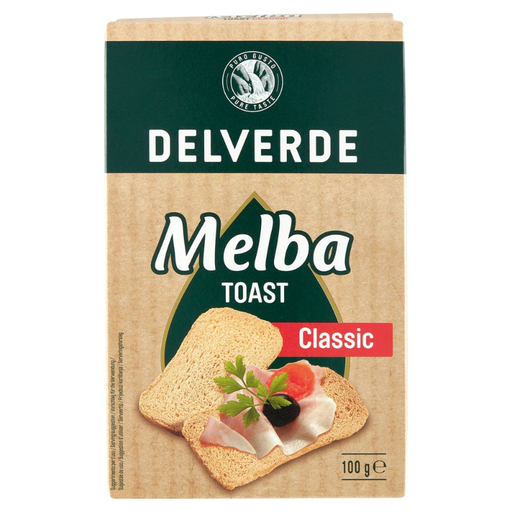 No image available
Melba toast for anyone who wants to choose their own sweet or savoury toppings.
100 g pack. If you have an allergen restriction, check the current packaging for wheat and barley, and for possible traces of sesame, soya and mustard. Check the units shown with the nutritional values before comparing products per 100 g.
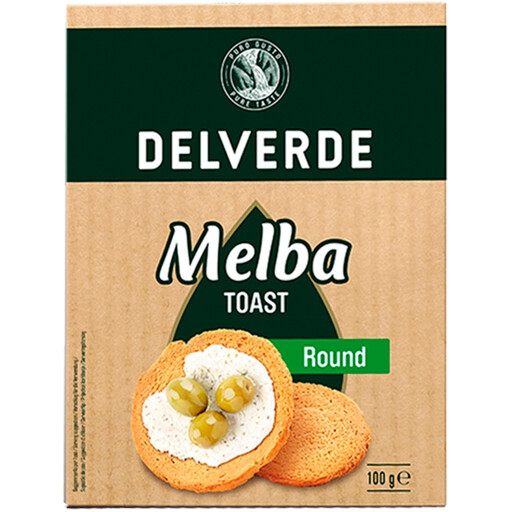 No image available
The round variety is a good fit if you want to add your own toppings to melba toast.
100 g pack. If you have an allergen restriction, check the current packaging for wheat and barley, and for possible traces of sesame, soya and mustard. Check whether the nutritional values are given per 100 g or per portion.
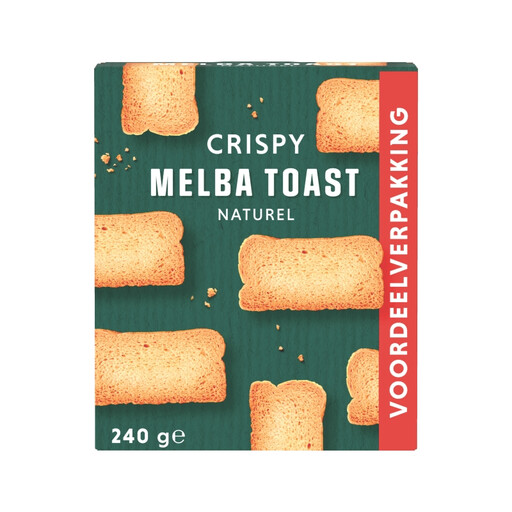 No image available
Melba toast for a coffee break when you want to choose your own toppings.
240 g pack. The ingredients information lists wheat and barley, while another allergen statement contradicts this. Don’t assume the product is allergen-free: check the packaging before buying, especially if you need to avoid certain ingredients. Also check the units shown with the nutritional values before comparing them.
No. Melba toast is a toasted base you can add toppings to; a digestive is a biscuit you can eat with coffee without any toppings. So choose based on what you want to serve first, then compare varieties.
No, don’t assume that. Albert Heijn’s product information lists wheat and barley, among other ingredients, for AH Melba Toast Naturel. Check the allergen information on the exact variety every time you buy it.
No, you can’t tell from the product type. According to the Voedingscentrum, bakers in the Netherlands aren’t required to use baker’s salt. Check the ingredient information or ask the manufacturer which type of salt is used in the specific product.
Seal the pack well and keep the contents dry. Jumbo recommends storing its digestive in an airtight biscuit tin or a well-sealed pack; Albert Heijn recommends keeping melba toast in a closed tin after opening.