Choose a plain digestive if you’re after a classic biscuit to enjoy with your afternoon coffee. If you’re looking for a wholemeal option, check the fibre content and ingredients; if you’re considering a sugar-free variety, check the sugars, sweeteners and warnings. A chocolate digestive is a different flavour choice, while Lotus Biscoff is a speculoos biscuit, not a digestive.
Who are the different varieties for?
Fans of a plain biscuit with coffee
If you’re after a classic digestive to enjoy with your afternoon coffee, you can compare own-brand and branded options by pack size, ingredients and nutritional values. Albert Heijn, Jumbo and ALDI offer examples of plain digestives.
Shoppers keeping an eye on fibre
If a wholemeal base matters to you, compare the ingredients list and the amount of fibre per 100 g. Jumbo’s product information shows which details are available for its Digestive Volkoren; the word ‘wholemeal’ alone doesn’t tell you how much sugar or salt it contains.
Shoppers looking to avoid added sugar
If you’re considering a digestive with no added sugar, check the sweeteners used and any warnings on the packaging too. Albert Heijn lists polyols for AH Digestive 0% sugar and includes a warning about excessive consumption.
What should you look for when choosing?
First decide what kind of biscuit you’d like with your coffee. Then compare the ingredients, nutritional values per 100 g and serving size within that category.
| What to consider |
What to check when buying |
Who is this important for? |
| Plain digestive |
Check the pack size and compare the ingredients and nutritional values of plain varieties. |
I want a familiar biscuit to reach for at several coffee breaks, without choosing chocolate or sweeteners. For around 40% of consumers, a plain digestive is the priority. |
| Wholemeal and fibre |
Check the wholemeal flour in the ingredients list and compare fibre per 100 g. |
If I’m specifically looking for a wholemeal base, I don’t want to rely on the product name alone. Around 30% of consumers prioritise wholemeal and fibre. |
| Added sugar |
Read the information about sugars and sweeteners, including any warnings about polyols. |
I want to avoid added sugar, but I also want to know which sweeteners the biscuit contains. Around 20% of consumers prioritise this when choosing. |
| A distinctive flavour |
Check whether you’re choosing a chocolate digestive or another type of biscuit, and compare serving size, sugars and saturated fat. |
With my coffee, I’m mainly after chocolate or a caramelised flavour; it matters to me whether it’s still a digestive. Around 10% of consumers put this flavour preference first. |
Common mistakes
-
Assuming every digestive is high in fibre
According to Albert Heijn’s product information, AH Digestive contains 3.2 g of fibre per 100 g; Jumbo lists 5.8 g per 100 g for Digestive Volkoren. So the biscuit’s name doesn’t tell you how much fibre it contains.
Compare fibre per 100 g and check which types of flour are listed in the ingredients.
-
Taking ‘0% sugar’ to mean ‘nothing else to consider’
Albert Heijn lists polyols for AH Digestive 0% sugar and warns that excessive consumption may have a laxative effect. The claim on the front of the pack doesn’t replace the full nutritional information.
Check the serving size, sweeteners and warning on the current packaging too.
-
Treating a chocolate digestive as the same as a plain one
Jumbo lists 27.4 g of sugars and 12.9 g of saturated fat per 100 g for its Digestive Biscuit Pure Chocolade. A chocolate coating changes both the flavour and nutritional values of that variety.
Compare the values per 100 g and per biscuit before choosing between varieties.
-
Skipping the allergen information
The digestives reviewed contain wheat; Jumbo’s chocolate variety also lists milk and soya. According to the Netherlands Food and Consumer Product Safety Authority, allergen information for prepacked foods appears on the label.
Read the current packaging before eating, including any ‘may contain’ statements.
Brands to consider
Albert Heijn
The own-brand range includes a plain digestive and AH Digestive 0% sugar.
- Albert Heijn lists 3.2 g of fibre and 16 g of sugars per 100 g for its plain AH Digestive.
- For AH Digestive 0% sugar, Albert Heijn lists polyols and a warning about excessive consumption. Check the current packaging.
Jumbo
The own-brand range includes plain, wholemeal and dark chocolate digestives.
- Jumbo lists 5.8 g of fibre per 100 g for Digestive Volkoren, with wholemeal wheat flour, wheat flour and wheat flakes among the ingredients.
- For Digestive Biscuit Pure Chocolade, Jumbo lists 27.4 g of sugars and 12.9 g of saturated fat per 100 g; compare this variety separately.
McVitie's
McVitie's Original Digestives are an option if you’re specifically looking for this brand’s plain biscuit.
- Jumbo lists a pack of McVitie's Digestives Original containing 2 × 400 g.
- For this variety, compare the ingredients and nutritional information on the current packaging, including saturated fat.
Lotus Biscoff
Lotus Biscoff is a speculoos biscuit with a caramelised flavour: an alternative to enjoy with coffee, not a type of digestive.
- Lotus Bakeries describes Biscoff as a biscuit to enjoy with coffee.
- Don’t compare Biscoff as though it were a wholemeal or sugar-free digestive; it’s a different type of biscuit.
Biscotto (ALDI)
Biscotto Digestive Biscuits are wheat biscuits in ALDI’s range.
- ALDI describes a 400 g pack containing approximately 27 biscuits.
- Check the current packaging to compare ingredients, nutritional values and allergens.
Sondey (Lidl)
Sondey is a Lidl biscuit brand; Lidl lists plain Digestives as a 400 g store product.
- Lidl’s listing gives a specific pack size for anyone looking for plain digestives.
- Check the pack label for ingredients, nutritional values and allergens.
Digestives and a coffee-time biscuit alternative at Joybuy
This selection includes a plain digestive, two chocolate digestives and Lotus Biscoff as a separate speculoos alternative to enjoy with coffee. Choose the type of biscuit first, then check the nutritional information and allergens on the packaging of your chosen variety.
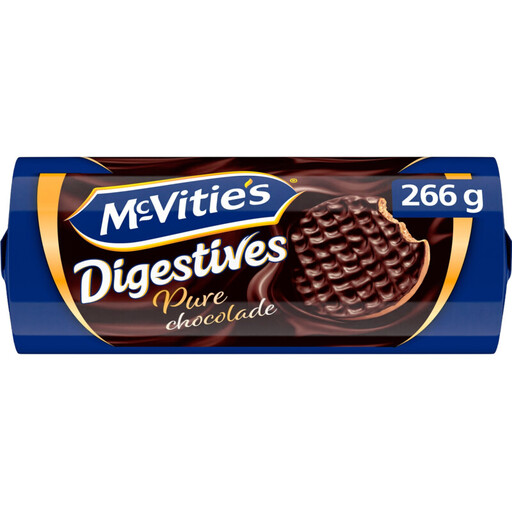 Image unavailable
McVitie's Digestives with dark chocolate, 266 g
For anyone looking for a digestive with dark chocolate to enjoy with coffee. Compare the nutritional information and allergens for this variety on the packaging.
View at Joybuy
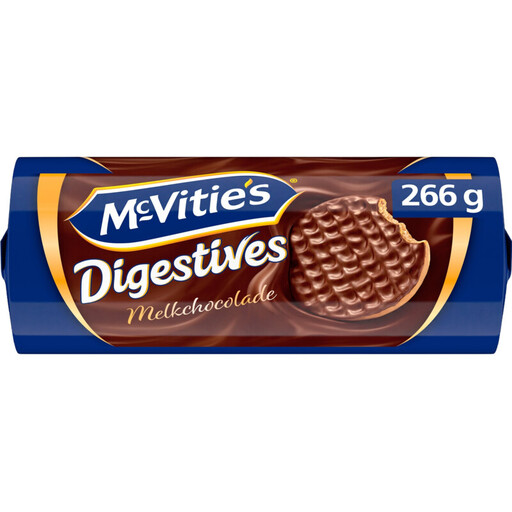 Image unavailable
McVitie's Digestives with milk chocolate, 266 g
For anyone who prefers milk chocolate to dark chocolate with a digestive. Check the packaging for the nutritional information and allergens for this variety.
View at Joybuy
 Image unavailable
McVitie's Digestive Original, 400 g
For anyone who wants a plain digestive without a chocolate coating to enjoy with their afternoon coffee. The pack contains 400 g; compare the information on the packaging if you’re choosing based on nutritional values.
View at Joybuy
 Image unavailable
Lotus Biscoff speculoos biscuits, 250 g
For anyone who’d like a caramelised speculoos biscuit with their coffee instead of a digestive. This pack contains 250 g; consider its nutritional values separately from those of other types of biscuit.
View at Joybuy
Frequently asked questions
Does a wholemeal digestive always contain more fibre?
You can’t tell from the name alone. Jumbo lists 5.8 g of fibre per 100 g for Digestive Volkoren, compared with 3.2 g per 100 g for Albert Heijn’s plain AH Digestive. For other packs, check the values and ingredients again.
What should I look for in a digestive labelled ‘0% sugar’?
As well as the claim, read the full nutritional information and any warnings. Albert Heijn lists polyols for AH Digestive 0% sugar and warns that excessive consumption may have a laxative effect.
How should I store an opened pack of digestives?
Store the biscuits in a cool, dry, dark place in a tightly sealed container, as recommended by Voedingscentrum for biscuits. Follow the instructions on the packaging too, and check the smell, taste and crispness after opening.
Where can I find allergen information for digestives?
Read the label on the pack you’re planning to use. According to the Netherlands Food and Consumer Product Safety Authority, allergen information for prepacked foods is shown on the label. Check both the ingredients and any ‘may contain’ statements.


