
Parents making a biscuit base together
You’re looking for a biscuit that children can help crush, mix and press into a tin, under supervision, to make a tart or simple dessert. Verkade uses Digestive Original this way in a recipe for a biscuit base.


For a crumb base that children can help make, a plain digestive without a coating is a practical choice: Verkade describes a recipe that uses Digestive Original, crushed, mixed with butter and pressed into a tin. Consider a wholemeal option if fibre is a priority for your household, but look at the rest of the nutritional information too. If your baking project needs to be gluten-free, check the allergens in both the biscuits and the other recipe ingredients.
You’re looking for a biscuit that children can help crush, mix and press into a tin, under supervision, to make a tart or simple dessert. Verkade uses Digestive Original this way in a recipe for a biscuit base.
You want to be able to choose between a standard and a wholemeal option for the same baking project. Fibre, sugars, fat and salt per 100 g give you a better basis for comparison than the word ‘digestive’ alone.
You’re baking for a child or guest who needs to avoid gluten or another allergen. You’ll need to check not just the biscuits, but also the other ingredients and any contact between ingredients during preparation.
First, check that the ingredients are suitable for everyone who’ll be eating. Then look at how many biscuits the recipe calls for and, if it matters to your choice, compare the nutritional information per 100 g.
| What to consider | What to check when buying | Who it matters to |
|---|---|---|
| A crumb base that works | Check whether the recipe calls for plain biscuits without a coating and how many grams you’ll need. Verkade describes crushing Digestive Original and pressing it into a base with butter. | If children are helping to crush and press the biscuits, I want a straightforward recipe and enough biscuits at home. For around 42% of consumers, a practical biscuit base is the top priority. |
| Nutritional information | Compare fibre, sugars, saturated fat and salt per 100 g on the current packaging. Albert Heijn and Jumbo list more fibre per 100 g for their wholemeal digestives than for their own standard versions. | For the same baking project, I want to see how a wholemeal option compares nutritionally, rather than relying on the product name. This comparison is the top priority for around 33% of consumers. |
| Gluten and other allergens | Read the label on your chosen biscuits and check the other recipe ingredients too. Jumbo states that Schär Digestive Landtaler is gluten-free, but contains soya and may contain lupin and egg. | If a child or guest needs to eat gluten-free or has another allergen requirement, I need to adapt the whole recipe. This is the most important consideration for around 25% of consumers. |
The name doesn’t tell you how a particular biscuit measures up nutritionally. A higher fibre content describes just one aspect of the product.
Before choosing between standard and wholemeal, compare the nutritional information per 100 g on the packaging, including fibre, sugars, saturated fat and salt.
Jumbo lists soya as an ingredient in the gluten-free Schär Digestive Landtaler and says it may contain lupin and egg. So, if other allergens matter too, the ‘gluten-free’ label isn’t enough on its own.
Check the full ingredients and allergen information for the biscuits, butter, toppings and other parts of the dessert.
For a crumb base, you want to be able to crush the biscuits as described in the recipe. Albert Heijn and Jumbo advise storing their digestives in a dry place and keeping them well sealed after opening.
Seal the pack well after use and follow the storage instructions on the packaging.
When several children are eating together, ingredients in both the biscuits and the dessert topping may be relevant to allergies. You should also consider contact between different ingredients during preparation.
Discuss the ingredients in advance, keep the packaging and separate ingredients and utensils where necessary.
Albert Heijn sells a standard digestive and a wholemeal version, both in 400 g packs.
Jumbo offers a standard and a wholemeal digestive in 400 g packs; both are different products from the gluten-free Schär biscuit in its range.
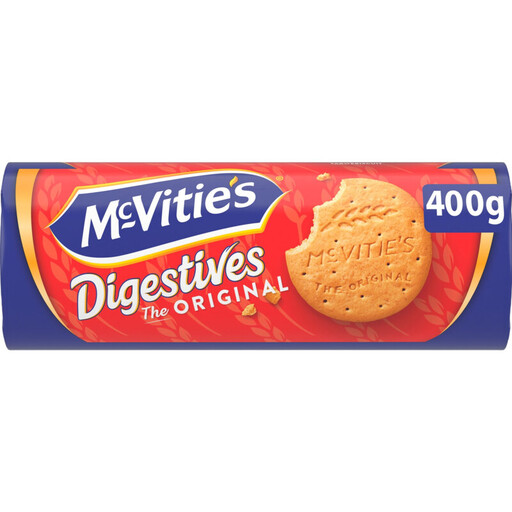
McVitie's Digestives Original is a classic wheat biscuit in a 400 g pack.
Digestive Landtaler is a gluten-free biscuit in a 150 g pack, which Jumbo also describes as a possible biscuit base for a quark tart or cheesecake.
ALDI describes Biscotto Digestive Biscuits as wheat biscuits in a 400 g pack, containing around 27 biscuits.
Verkade uses Digestive Original in one of its own recipes as the base for a pressed biscuit crust.
This Joybuy product suits anyone looking for a classic wheat digestive for a baking project with children. For a biscuit base, follow the quantities and method in your recipe, and check the allergens before serving it to everyone.
 No image available
A classic choice for a biscuit base when gluten-free isn’t a requirement.
400 g pack. Jumbo lists 3.7 g of fibre per 100 g for Digestives Original. The product contains wheat and may contain milk; check the current label before use.
Plain digestives without a coating work well in a recipe where the biscuits are crushed and pressed into a base. Verkade describes this method using Digestive Original and butter. An adult should use the food processor and handle the hot butter; children can help mix and press the crumbs under supervision.
Seal the pack well and store the biscuits as directed on the packaging. Albert Heijn and Jumbo advise keeping their digestives in a dry place and sealing the pack well after opening.
No. A higher fibre content alone doesn’t tell you everything about a product. Albert Heijn and Jumbo list more fibre per 100 g for their wholemeal digestives than for their standard versions; also compare sugars, fat and salt on the labels of the options you’re considering.
Before you start, check which ingredients and allergens matter to everyone who’ll be eating, and consider the whole cake, not just the biscuits. Discuss the ingredients, keep the packaging and watch out for contact between ingredients and utensils during preparation.