
Student looking for a pack to last through several study sessions
You want to know how many biscuits or portions a pack contains, and whether the size suits the times you fancy a snack.


Before choosing a study snack, compare classic digestives per 100 g for saturated fat, sugars, fibre and salt; don’t rely on the name ‘digestive’ alone. Product information from Albert Heijn, Jumbo and McVitie’s shows that these values vary from one biscuit to another. Then consider the pack size and check the ingredients and allergens on the pack you buy.
You want to know how many biscuits or portions a pack contains, and whether the size suits the times you fancy a snack.
You want to compare similar digestives side by side for saturated fat, sugars, fibre and salt per 100 g, rather than relying only on wording on the front of the pack.
Before eating, you want to check which cereals and allergens are listed on the current pack. The name ‘digestive’ doesn’t tell you whether a biscuit is suitable for your dietary requirements.
First decide what matters most to you: a practical pack size, nutritional value, availability or ingredients. Then compare the nutritional values of similar biscuits per 100 g, as recommended by the Netherlands Nutrition Centre.
| What to consider | What should you check? | Who is this most important for? |
|---|---|---|
| Pack size and portions | Check the pack weight and the stated number of biscuits or portions. Find out how to store the pack once opened. | If I want a biscuit during several study sessions, I want to know how long one pack will last me. Around 36% of consumers put this practical planning first. |
| Nutritional value | Compare saturated fat, sugars, fibre and salt per 100 g for similar products. | I want to choose a digestive based on the full nutrition table, not just one prominent claim. For around 29% of consumers, this comparison is their main concern. |
| Availability | Check whether you can get the pack you’ve chosen through the retailer where you do your shopping. | When I shop for my study days, I don’t want to count on a biscuit I can’t find there. Availability comes first for around 21% of consumers. |
| Ingredients and allergens | Read the ingredients, allergens and any warnings about the possible presence of other allergens on the current pack. | If I need to avoid certain ingredients, I must be able to check what’s listed on this specific pack before eating it. For around 14% of consumers, this check is their primary buying requirement. |
A claim about fibre doesn’t tell you anything about the rest of the nutritional values on its own. Lotus Bakeries lists 4,7 g of fibre, as well as 35,5 g of sugars and 7,3 g of saturated fat per 100 g for Lotus Biscoff 6 Grains; this speculoos-style biscuit is not a classic digestive, either.
Read the full nutrition table and ingredients list before comparing it with another biscuit.
A portion on the label won’t necessarily be the same size for every product. As a result, values per portion may suggest a difference that is partly down to the portion size chosen.
Compare products per 100 g first, then decide how many biscuits you’d like to have as a portion.
Ingredients and allergen information can change. This is especially important if you need to avoid wheat, milk or other ingredients.
Use a product page to help you make your choice, but read the information on the current pack before eating the biscuits.
AH Digestive is a classic own-brand digestive, sold in a 400 g pack.
Jumbo Krokante Digestive Biscuit is a classic own-brand option in a 400 g pack.
Digestives Original is worth considering if you’re specifically looking for a classic branded digestive.
Biscoff 6 Grains is a speculoos-style alternative made with grains, rather than a classic digestive.
Biscotto is the name on the Digestive Biscuits that ALDI sells in a 400 g pack.
This classic branded digestive is a good choice if you’re looking for McVitie’s Original and want to take pack size and nutritional values into account. If you have dietary requirements, always check the current label.
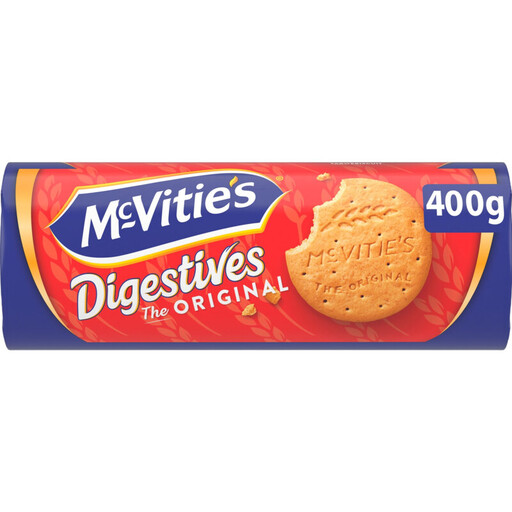 Image unavailable
A classic digestive for anyone looking for a pack to last through several study sessions and wanting to compare nutritional values per 100 g.
The pack contains 400 g; the product information gives one 14,7 g biscuit as a portion. Per 100 g, it lists 3,7 g of fibre, 15,1 g of sugars, 10,1 g of saturated fat and 1,3 g of salt.
Contains wheat; may contain milk. Check the allergen information on the current pack before eating.
Compare the nutritional values of similar products per 100 g. The Netherlands Nutrition Centre recommends using this basis when comparing labels. Then check the portion size shown on each pack and how much you’d like to have yourself.
No, the name alone doesn’t tell you how much sugar, fibre, salt or saturated fat a biscuit contains. Read the nutrition table and consider the values together, rather than treating a single claim on the packaging as decisive.
Yes, if those ingredients are relevant to you: the classic digestives mentioned list wheat, and some products also note the possible presence of milk. Check the current ingredients and allergen information on every pack; don’t rely on the brand name or a previous purchase.
Follow the storage advice on the packaging and seal the pack well after opening. The product information for the digestives mentioned recommends storing them in a cool, dry place; check the instructions on the pack you’re using.