
Student stocking up
Wants to have biscuits at home for coffee, tea or visitors after moving in, and pays attention to how much is in a pack. A larger pack also needs somewhere suitable to be stored and sealed properly once opened.


A standard 400 g pack of digestive biscuits is a sensible choice when you’re moving into student accommodation and want biscuits at home for coffee, tea or visitors. If you’d rather have a smaller pack, are keeping an eye on nutritional values or need to avoid gluten or other allergens, choose according to your needs and check the current packaging. A fibre claim or the name ‘digestive’ alone doesn’t give you a complete picture of the nutritional value or allergens.
Wants to have biscuits at home for coffee, tea or visitors after moving in, and pays attention to how much is in a pack. A larger pack also needs somewhere suitable to be stored and sealed properly once opened.
Needs to avoid gluten or other allergens. The product name isn’t enough: you’ll need to check the ingredients and allergen information on the current packaging of the specific variety you choose.
Wants to compare fibre, sugars, fat and salt in digestive biscuits. Nutritional information per 100 g helps you compare varieties, without treating a single claim on the front of the pack as a judgement on the whole product.
First, decide why you want to keep or take digestive biscuits with you. If ingredients or allergens are your main concern, check them before choosing between pack sizes and flavours.
| What to consider | What to check when buying | Who it matters to |
|---|---|---|
| Stocking up and pack size | Check the pack size and whether you can seal it properly once opened. For example, Jumbo lists a standard 400 g digestive biscuit. | If I want to keep biscuits in my room for coffee, tea and visitors, I look for a pack that suits how I’ll use them. Around 37% of consumers put this need to stock up first. |
| Nutritional value | Compare fibre, sugars, saturated fat and salt per 100 g; also check the ingredients for the specific variety. | If you’re choosing between plain and chocolate varieties, you may want to know what changes beyond the flavour. For around 27% of consumers, nutritional profile is the top consideration. |
| Gluten and allergens | Read the current allergen information and, if necessary, look for an explicit gluten-free label. Jumbo lists wheat and gluten in its crunchy digestive biscuits. | If I need to avoid certain ingredients, the variety I choose must meet that requirement; the name ‘digestive’ tells me nothing about it. This is the first priority for around 18% of consumers. |
| Portions and storage | Compare a standard pack with individually wrapped portions and read the storage instructions. Jumbo lists McVitie's To Go Original as 6 × 29,4 g. | If I’m taking biscuits with me or slowly finishing an opened pack, the packaging matters too. Around 18% of consumers prioritise this convenience. |
The name doesn’t indicate whether a product is suitable for a particular dietary requirement. For example, Jumbo lists wheat and gluten in its crunchy digestive biscuits, with the possible presence of barley, oats and rye.
If you need to avoid gluten strictly, look for an explicit gluten-free label and check the other allergens on the current packaging too.
A fibre claim doesn’t tell you how much sugar, fat or salt a biscuit contains. This is especially relevant when comparing plain varieties with chocolate ones.
Read the ingredients and compare the nutritional information per 100 g. The Netherlands Nutrition Centre recommends checking the back of the pack too.
Jumbo’s Crunchy Digestive biscuits come with instructions to seal the pack properly after opening and store it in a dark place. A large pack is less convenient if you don’t have somewhere suitable to store it.
Seal the pack properly after use or keep the biscuits in an airtight tin.
These brands offer different varieties of digestive biscuits. Always compare the packaging and label of the product you’re actually choosing.
Own-brand digestive biscuits, including a 400 g crunchy variety and a wholemeal variety.
Digestives Original, chocolate varieties and a To Go pack with individually wrapped portions.
Digestive Landtaler Gluten Free for anyone specifically looking for gluten-free digestive biscuits.
ALDI’s own brand, with 300 g and 400 g packs of digestive biscuits.
Lidl’s own brand, with a standard 400 g digestive biscuit and a listed milk chocolate variety.
This selection includes a pack of McVitie's Original for keeping in stock and a smaller pack of dark chocolate digestive biscuits. If nutritional values or allergens affect your choice, check the current label for both varieties.
 Image unavailable
A 400 g pack for anyone who wants to keep digestive biscuits in their student accommodation. If you need to avoid allergens, check the current packaging before choosing this variety.
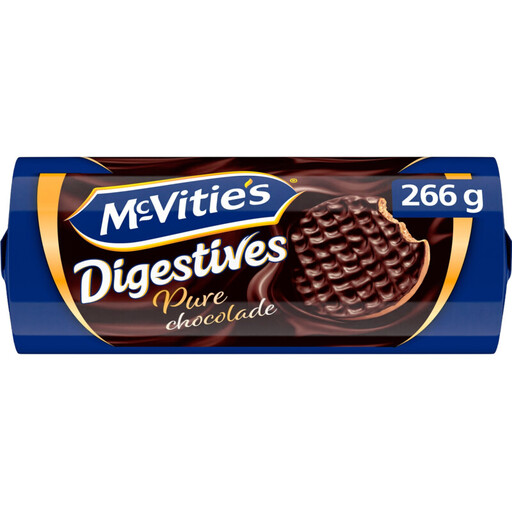 Image unavailable
For anyone who likes digestive biscuits with dark chocolate and is looking for a 266 g pack. Check the current packaging for nutritional information and allergens for this variety.
No, the name doesn’t give you a complete picture of the nutritional value. Compare the ingredients and nutritional information per 100 g, including fibre, sugars, saturated fat and salt, especially if you’re choosing between plain and chocolate varieties.
Seal the pack properly after opening. Jumbo also advises storing its crunchy digestive biscuits in a dark place; an airtight biscuit tin is another way to keep an opened pack sealed.
No, check the current packaging of the variety you’ve chosen before eating it. Albert Heijn says that ingredients and allergen information can change, so don’t rely solely on an older product listing.
Check the allergen information on the product’s current packaging. The Netherlands Food and Consumer Product Safety Authority says that businesses must inform consumers about allergens present in their products; also look out for statements about the possible presence of other allergens.