When choosing a digestive biscuit for your morning break, it comes down to what matters most to you on the label. Compare fibre, sugars, saturates and salt per 100 g, then consider the portion size. Jumbo Digestive Volkoren lists more fibre than AH Digestive, while AH Digestive 0% suiker has less sugar but contains polyols. If you need to avoid gluten, look for a clear gluten-free label.
Who are these options for?
Label comparers
You’re looking for a standard digestive biscuit to enjoy with coffee or tea, and want to compare the nutritional information per 100 g as well as portion sizes. This helps you see what differences in fibre, sugars or saturates mean for your choice.
Shoppers keeping an eye on sugar
You want to know how much sugar a digestive biscuit contains. If you’re considering a 0% sugar option, you’ll also check the polyols and the warning on the packaging.
Shoppers who need to avoid gluten
You need a clear gluten-free label. Also check the ingredients and allergen information on the current packaging; the word ‘digestive’ in a product name tells you nothing about this.
What should you look for when choosing?
First, decide which feature matters most for your morning break. Then compare digestive biscuits per 100 g and consider how many biscuits you want your portion to include.
| What to look for |
What to check when buying |
Who is this important for? |
| Fibre |
Compare fibre per 100 g: Jumbo Digestive Volkoren lists 5,8 g and AH Digestive 3,2 g per 100 g. Check the portion size too. |
If I’m looking for a standard digestive biscuit with more fibre, I want to see what the wholemeal option offers without overlooking the other nutritional information. Around 36% of consumers prioritise fibre above all else. |
| Sugars |
Check sugars, energy and polyols per 100 g. AH Digestive 0% suiker lists 0,3 g of sugars and 14 g of polyols per 100 g, and carries a warning about excessive consumption. |
If reducing sugar is my priority, I want to know what other characteristics a 0% sugar option has. For around 29% of consumers, limiting sugar is the most important consideration. |
| Flavour and variety |
Compare a plain digestive biscuit separately from a chocolate variety, checking sugars and saturates per 100 g. |
With coffee or tea, I might mainly be choosing between a plain biscuit and a chocolate variety, rather than making nutrition my first consideration. Taste comes first for around 21% of consumers. |
| Gluten-free label |
Check for a gluten-free label and read the ingredients, allergen information and any precautionary allergen information on the current packaging. |
If I need to avoid gluten, a digestive biscuit must first of all suit my diet; taste comes second. For around 14% of consumers, gluten-free is the most important buying requirement. |
Common mistakes
-
Assuming ‘digestive’ is a nutritional claim
The name doesn’t tell you how much sugar, saturates, salt or fibre a biscuit contains. Even with a wholemeal variety, it’s worth comparing the full nutritional information.
Compare the same values per 100 g, then check the portion size on the packaging.
-
Confusing ‘0% sugar’ with calorie-free
Albert Heijn lists 465 kcal and 14 g of polyols per 100 g for AH Digestive 0% suiker. The packaging warns that excessive consumption may have a laxative effect.
As well as the sugar value, check the energy and polyol values, and follow the warning on the packaging.
-
Assuming plain, chocolate and gluten-free varieties are all the same
The McVitie's white chocolate variety reviewed lists 27 g of sugars and 12,9 g of saturates per 100 g. Schär Digestive Choc is labelled gluten-free, but also lists 27 g of sugars and 13 g of saturates per 100 g. These figures apply to these specific varieties.
Compare the exact flavour you want to buy, and consider a gluten-free label separately from the nutritional information.
-
Relying only on the online product description
Ingredients and allergen information can change. This is particularly important if you need to avoid certain ingredients.
Before eating, check the current packaging, including the allergen and any precautionary allergen information.
Brands compared
Albert Heijn
AH Digestive and AH Digestive 0% suiker let you compare a standard variety with a lower-sugar option.
- AH Digestive lists 1,8 g of saturates per 100 g; the 0% sugar variety lists 0,3 g of sugars per 100 g.
- AH Digestive 0% suiker contains polyols and carries a warning that excessive consumption may have a laxative effect.
Jumbo
Jumbo Digestive Volkoren is worth considering if fibre is your main priority in this biscuit category.
- The product information lists 5,8 g of fibre per 100 g.
- The same variety lists 19,3 g of sugars and 1,15 g of salt per 100 g, and contains wheat and gluten.
McVitie's
Digestives Original is the brand’s plain variety; chocolate varieties need to be compared separately.
- For Original, the product information gives a serving size of one biscuit and 3,7 g of fibre per 100 g.
- Original lists 10,1 g of saturates and 1,3 g of salt per 100 g. The white chocolate variety reviewed has different nutritional values.
Schär
Digestive Choc is labelled gluten-free and wheat-free; check the packaging for other allergens too.
- The gluten-free label makes this variety relevant if you need to avoid gluten.
- This chocolate variety lists 27 g of sugars and 13 g of saturates per 100 g.
Sondey (Lidl)
Lidl describes Sondey Digestives naturel as a 400 g pack that is only available in store.
- A plain option if you want to choose a digestive biscuit in store.
- Check the pack’s label to compare nutritional values and allergens with other varieties.
Biscotto (ALDI)
ALDI describes Biscotto Digestive Biscuits as crisp wheat biscuits, with around 27 biscuits in a 400 g pack.
- The pack size and stated number of biscuits can help you work out whether the portion size suits you.
- Check the pack’s label for nutritional or allergen comparisons.
Lotus Biscoff
Lotus Bakeries describes Lotus Biscoff Original as speculoos. It’s an alternative if that’s the type of biscuit you’re looking for, rather than a digestive variety.
- A different option if you’d rather have speculoos than a digestive biscuit with your coffee.
- Lotus Bakeries lists 38,1 g of sugars and 1,3 g of fibre per 100 g; don’t compare this product as if it were a wholemeal digestive biscuit.
Digestive biscuits for a classic morning break
If you’re looking for a classic plain digestive biscuit to enjoy with coffee or tea, you can assess this variety based on its stated serving size and nutritional values. If you want a lower-sugar option or need a gluten-free label, you’ll need to use different criteria.
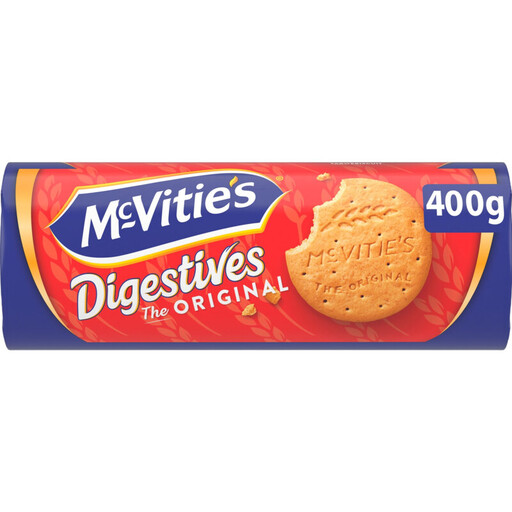 Image unavailable
McVities Digestive Original 400 g
A plain digestive biscuit for anyone looking for a classic biscuit to enjoy with coffee or tea.
For Digestive Original, the product information gives one 14,7 g biscuit as a serving. Per 100 g, it lists 3,7 g of fibre, 15,1 g of sugars, 10,1 g of saturates and 1,3 g of salt.
If you have allergies or follow a diet that means you need to avoid certain ingredients, check the current label; this variety contains wheat and gluten and may contain milk.
View at Joybuy
Frequently asked questions
How do I compare two digestive biscuits for my morning break?
First compare the nutritional information per 100 g, then check the serving size per biscuit. Fibre, sugars, saturates, salt and allergens can help you assess the differences between the specific varieties.
Can I eat as many 0% sugar digestive biscuits as I like?
No: 0% sugar doesn’t mean a biscuit contains no energy. Albert Heijn lists 465 kcal and 14 g of polyols per 100 g for AH Digestive 0% suiker; the packaging warns that excessive consumption may have a laxative effect.
Are standard digestive biscuits gluten-free?
Don’t assume they are: the standard varieties reviewed contain wheat or gluten. If you need to avoid gluten, look for a clear gluten-free label and check the current ingredients and allergen information; Schär Digestive Choc is labelled gluten-free and wheat-free.
Where can I find the allergens in a packaged digestive biscuit?
Check the allergen information on the current packaging. The Netherlands Food and Consumer Product Safety Authority says that packaged foods must list 14 allergens on the label; also check any precautionary allergen information if it’s relevant to your choice.
How should I store an opened pack of digestive biscuits?
Seal the pack securely or use an airtight biscuit tin. Albert Heijn recommends storing AH Digestive in a sealed tin after opening; follow the storage advice on the pack you buy.


