Before choosing, check which allergens are relevant to your child and what food rules apply at school. The standard digestives reviewed contain wheat, while a gluten-free option may contain other allergens. The Netherlands Nutrition Centre recommends options such as fruit, snack vegetables and wholemeal bread products for the school break. So choose a digestive biscuit as a considered treat, then compare the ingredients, nutritional information and portion size of the different options.
Who is this choice relevant to?
Parents checking for allergens
If you need to check before packing whether ingredients such as wheat, milk or soya are suitable for your child and comply with the rules in their class. The Food Allergy Foundation recommends discussing food rules with the school in advance.
Parents comparing nutritional information
If you want to compare a standard or wholemeal digestive with a chocolate version, and consider fibre, sugars, saturated fat and where the biscuit fits into the lunchbox.
Parents buying for several lunchboxes
If pack size and storage after opening matter to you, while you still keep an eye on the ingredients and allergens in each product.
What should you look for when choosing?
Start with allergens and school rules. Then decide whether the biscuit is an occasional treat. Only after that do differences in packaging and flavour become relevant.
| What to consider |
What to check when buying |
Who it matters to |
| Allergens and school rules |
Read the current allergen information, including ‘may contain’ warnings, and ask what rules apply in the class. For a gluten-free option, check for other allergens too. |
If my child needs to avoid certain ingredients, I want to know before packing whether both the biscuit and the class rules are suitable. This check comes first for around 36% of consumers. |
| Its place in the school break |
Decide whether you’re looking for a treat or something for a daily break. Compare the nutritional information per 100 g and per portion for different biscuits. |
For a typical school day, I want to choose what to pack for the break first and not treat a biscuit as a replacement. Around 29% of consumers prioritise this consideration. |
| Packaging and storage |
Check the pack size and storage advice after opening. Even with a larger pack, check the ingredients in each product. |
When packing several lunchboxes, I want to choose a pack that I can store properly after opening. This matters most to around 21% of consumers. |
| Flavour and variety |
Compare standard, chocolate and 0%-sugar options for ingredients, allergens and nutritional information. If they contain sweeteners, read the usage warning too. |
If a biscuit is a treat, I want to choose the right variety without overlooking differences on the label. The variety is the deciding factor for around 14% of consumers. |
Common mistakes
-
Assuming standard digestives are gluten-free
The standard McVitie’s, AH and Jumbo digestives reviewed contain wheat. This makes them unsuitable if wheat or gluten needs to be avoided.
Read the current label and, if gluten-free is essential, choose only a product that is explicitly labelled gluten-free.
-
Confusing gluten-free with allergen-free
The Schär Digestive Landtaler reviewed contains soya and may contain lupin and eggs.
Compare the full allergen information with the ingredients your child needs to avoid, and discuss food rules with the school if necessary.
-
Treating a chocolate version as the same as a standard digestive
The McVitie’s dark chocolate version reviewed contains milk, soya and wheat. Jumbo and Albert Heijn’s product information also lists higher levels of sugars and saturated fat per 100 g for this version than for the Original reviewed.
Compare both labels and choose chocolate as a considered flavour option, rather than relying on the word ‘digestive’ alone.
-
Assuming ‘0% sugar’ means you can eat as much as you like
The AH Digestive 0% sugar reviewed contains polyols. Albert Heijn states that excessive consumption may have a laxative effect.
Read the usage warning and consider the other ingredients, allergens and portion size too.
Brands compared
McVitie’s
The Original and dark chocolate version reviewed show how products can differ within the same digestive range.
- With the Original, you can check the nutritional information for a standard digestive without a chocolate coating.
- According to Albert Heijn’s product information, the Original contains wheat and may contain milk. For the chocolate version reviewed, Jumbo lists milk, soya and wheat.
AH
The AH products reviewed include a standard digestive, a wholemeal version and Digestive 0% sugar.
- For the wholemeal version reviewed, Albert Heijn lists 37% wholemeal wheat flour and 6 g of fibre per 100 g.
- The wholemeal version contains wheat. The 0%-sugar version reviewed carries a warning about excessive consumption of polyols.
Jumbo
A supermarket own-brand option for comparing a standard digestive by packaging, ingredients and allergens.
- The Jumbo Krokante Digestive Biscuit reviewed comes in a 400 g pack.
- According to Jumbo, this product contains wheat and gluten. It may also contain barley, oats and rye.
Schär
The Digestive Landtaler reviewed is an explicitly gluten-free option to consider when gluten-free is essential.
- Jumbo describes the Schär Digestive Landtaler reviewed as gluten-free.
- The product contains soya and may contain lupin and eggs.
Verkade
The digestive with dark chocolate reviewed is a flavour option, not a like-for-like replacement for a standard biscuit.
- The chocolate coating sets the version reviewed apart from a standard digestive.
- For the Verkade Verk digestive puur reviewed, Albert Heijn lists milk, soya and wheat as allergens.
Digestives on Joybuy
These products illustrate two choices for a school lunchbox: a standard digestive without a chocolate coating, and a dark chocolate version as a treat. Check the current label and school rules for both.
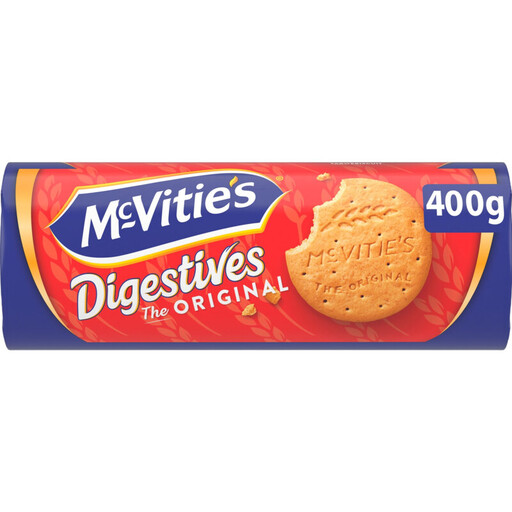 No image available
McVitie’s Digestive Original 400 g
A standard digestive for anyone who doesn’t want a chocolate version. For the Original reviewed, Albert Heijn lists wheat and cereals containing gluten; milk may be present. Check the current label before packing it.
View on Joybuy
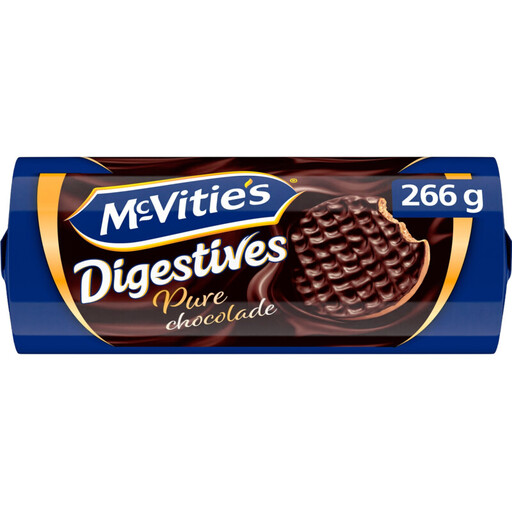 No image available
McVitie’s Digestives with dark chocolate 266 g
A chocolate option for a considered treat. For the version reviewed, Jumbo lists wheat, milk and soya. Compare the portion and current label with a standard digestive before packing it.
View on Joybuy
Frequently asked questions
Can you pack a digestive biscuit for school?
That depends on the rules at the school and in the class. Before packing, check the rules for food and allergens. The Food Allergy Foundation advises parents to discuss arrangements with the school in advance when their child has a food allergy.
Are standard digestives gluten-free?
No. The standard McVitie’s, AH and Jumbo digestives reviewed contain wheat. If gluten-free is essential, choose a product that is explicitly labelled gluten-free and check for other allergens too.
Is a gluten-free digestive suitable for every food allergy?
No. According to Jumbo, the Schär Digestive Landtaler reviewed contains soya and may contain lupin and eggs. Read the current label with your child’s specific allergens in mind.
Is a digestive suitable for a daily school break?
It’s best to choose a digestive as a considered treat rather than as a replacement for your usual break-time food. For the school break, the Netherlands Nutrition Centre recommends options such as fruit, snack vegetables, a wholemeal or brown bread sandwich, and wholemeal crispbread.
How should I store an opened pack for future lunchboxes?
Store the biscuits in a cool, dry place and seal the pack properly after opening. Follow the storage advice on the pack you buy too.


