Choose a plain digestive as the classic option to serve with coffee and tea, and add a wholemeal variety if you’d like to give your guests a choice. If someone has asked for sugar-free or gluten-free biscuits, choose a product clearly labelled as suitable and check the current packaging. Wholemeal doesn’t automatically mean less sugar, and gluten-free doesn’t mean free from other allergens.
Who are these choices relevant to?
Anyone setting out a classic coffee table
You’re looking for a digestive to serve with coffee and tea. When choosing a pack, it’s also worth considering how many other snacks you’ll have on the table and whether the biscuits can be stored properly once opened.
Anyone catering for a dietary requirement or allergy
You have a guest for whom gluten or another allergen is a concern, for example. Even if you choose a separate biscuit that’s clearly labelled, you’ll still need to check the full ingredients and allergen information.
Anyone wanting to offer more than one type of biscuit
You’d like to serve something with a different flavour alongside the digestives, such as Lotus Biscoff speculoos. This adds variety, but doesn’t replace a biscuit chosen specifically to meet a dietary requirement.
What should you look for when choosing?
First decide whether you’re looking for a standard biscuit for the plate or need to meet a specific dietary requirement. Then choose between wholemeal, a different flavour or an additional variety.
| What to consider |
What to check when buying |
Who is this most important for? |
| A classic selection |
Check the pack size and the number of biscuits, if stated; adjust the quantity to suit the other snacks. |
If I mainly want to serve a familiar biscuit with coffee and tea, not every biscuit needs to be a special variety. For around 33% of consumers, this classic option comes first. |
| Dietary requirements and allergens |
If someone needs gluten-free biscuits, look for an explicit gluten-free label and read the full allergen information on the packaging as well. |
If a guest needs to avoid an allergen, I don’t want to rely on the name of a biscuit. For around 25% of consumers, suitability is the most important factor. |
| Wholemeal and fibre |
Compare the fibre per 100 g and check whether wheat is listed in the ingredients. |
I want to be able to serve a wholemeal digestive, but I don’t expect it to be gluten-free or sugar-free as a result. Around 25% of consumers give this variety the highest priority. |
| Flavour variety |
Choose a second type of biscuit to complement the selection, and check its ingredients and nutritional information separately. |
Alongside digestives, I’d like to offer guests a distinctly different flavour without using it as a substitute for a dietary option. For around 17% of consumers, variety is the main consideration. |
Common mistakes
-
Assuming wholemeal means gluten-free
The wholemeal digestives described by Albert Heijn and Jumbo contain wheat. So a wholemeal label doesn’t mean a biscuit is suitable for someone who needs to eat gluten-free.
If needed, choose a product explicitly labelled gluten-free and check the current packaging for other allergens too.
-
Assuming ‘0% sugar’ means ‘fewer calories’
Albert Heijn lists 465 kcal per 100 g for AH Digestive 0% sugar and 460 kcal per 100 g for AH Digestive wholemeal. The 0% variety contains polyols; the product page warns that excessive consumption may have a laxative effect.
If energy content matters to your choice, compare the nutritional information per 100 g and read the warning on the packaging.
-
Treating speculoos as an equivalent substitute
Lotus Biscoff Original is speculoos, not a digestive. Lotus Bakeries lists wheat flour and soya flour as ingredients in Original.
Serve speculoos as an additional flavour option; if a guest has a specific dietary requirement, choose a suitable biscuit separately.
-
Relying only on online product information
Ingredients and allergen information can change. That’s why the packaging of the pack you’re serving matters when you have guests with allergies.
Before serving, check the ingredients, allergens and any warnings about possible cross-contamination on that pack.
Brands and supermarket own-label options
Albert Heijn huismerk
Albert Heijn’s own-label range includes wholemeal and 0% sugar digestives.
- AH Digestive wholemeal lists 6 g of fibre per 100 g.
- The wholemeal and 0% sugar varieties described contain wheat. The 0% variety contains polyols and carries a warning that excessive consumption may have a laxative effect.
Jumbo huismerk
Jumbo describes a plain and a wholemeal digestive, both in 400 g packs.
- Jumbo lists 5.8 g of fibre per 100 g for the wholemeal variety and 3.1 g per 100 g for the plain variety.
- Both varieties described contain wheat and are not gluten-free options.
Biscotto (ALDI)
ALDI lists Biscotto Digestive Biscuits in a 400 g pack containing around 27 biscuits.
- The stated number of biscuits can help you plan how many to put out for your drinks party.
- Check the ingredients and allergen information on the packaging before serving these biscuits to guests with dietary requirements.
Lidl
Lidl offers plain Digestives as a 400 g own-label product.
- A plain variety to consider if you’re looking for a standard digestive for the table.
- Check the pack label in store for ingredients, nutritional information and allergens.
Schär
Schär Digestive Landtaler is a biscuit labelled gluten-free.
- A separate option to consider if a guest eats gluten-free.
- The variety described by Jumbo contains soya and may contain lupin and egg; check the label for the guest in question.
Lotus Biscoff
Lotus Biscoff Original is speculoos, offering a different flavour alongside digestives, for example with coffee.
- Adds variety without needing to replace the classic digestives with another variety.
- Lotus Bakeries lists wheat flour and soya flour in Original. It isn’t a substitute for a gluten-free or sugar-free biscuit someone has requested.
Digestives and speculoos for a drinks party on Joybuy
These products include a plain digestive as a classic option, a digestive with dark chocolate and speculoos for a change of flavour. If someone has a specific dietary requirement, always check the packaging of the product you choose.
 No image available
McVities Digestive Original 400 g
A plain digestive to serve with coffee or tea.
400 g pack. If you have guests with allergies, check the current packaging; this biscuit contains wheat and gluten and may contain milk.
View at Joybuy
 No image available
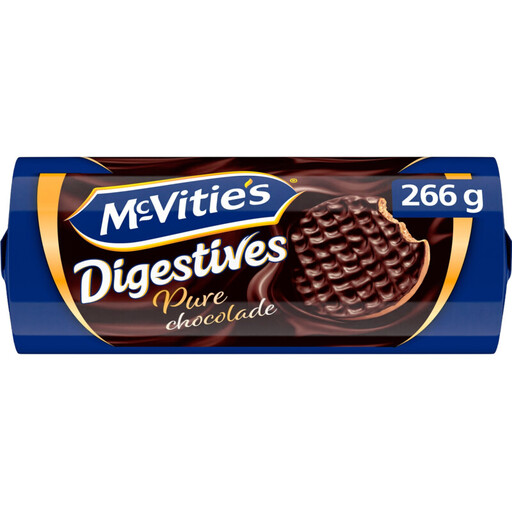
McVitie's Digestives with Dark Chocolate 266 g
A digestive with dark chocolate to add a different flavour alongside a plain variety.
266 g pack. The product information lists wheat, milk and soya; check the current packaging before serving these biscuits to guests with allergies.
View at Joybuy
 No image available
Lotus Biscoff speculoos 250 g
Speculoos offers a different flavour alongside digestives; it isn’t a substitute for a biscuit chosen to meet a dietary requirement.
250 g pack. The product information lists wheat and soya among the ingredients, but doesn’t always list soya in the same way under allergens. Check the current packaging before serving these biscuits to guests with allergies.
View at Joybuy
Frequently asked questions
How many digestive biscuits should I put out for a small birthday drinks party?
Use the number of biscuits in the pack and the rest of the food you’re serving to work out how many you need, rather than looking only at the pack’s weight. ALDI lists around 27 biscuits in a 400 g pack of Biscotto Digestive Biscuits; the number may vary between products.
Can a guest who eats gluten-free have a wholemeal digestive?
Not just because it says ‘wholemeal’. The wholemeal digestives described by Albert Heijn and Jumbo contain wheat. Choose a biscuit explicitly labelled gluten-free and check the current packaging for other allergens too.
Does a digestive with 0% sugar also have fewer calories?
The ‘0% sugar’ label doesn’t tell you that. Albert Heijn lists 465 kcal per 100 g for AH Digestive 0% sugar and 460 kcal per 100 g for AH Digestive wholemeal. So if energy content matters to your choice, compare the nutritional information and read the warning about excessive consumption of polyols on the 0% variety.
How can I let guests check the allergen information?
Keep the current packaging with the biscuits so guests can read the ingredients and allergen information. The Netherlands Food and Consumer Product Safety Authority explains how allergens are listed on labels for prepacked foods; also check for any warnings about possible cross-contamination.


