Who might the differences matter to?
The same digestive can go well with a cup of tea, but fibre, added sugar or allergens may influence different people’s choices.
A tea drinker keeping an eye on fibre
You’re looking for a familiar biscuit to enjoy with your tea, but also compare fibre, types of flour and sugars per 100 g or per biscuit. The Netherlands Nutrition Centre points out that, for older people, the overall diet matters; a biscuit is no substitute for nutritious grain foods.
A shopper looking to limit added sugar
You look beyond the claim on the front of the pack, checking the nutritional information, sweeteners and portion size too. Albert Heijn states that AH Digestive 0% sugar contains polyols and carries a warning that excessive consumption may have a laxative effect.
A tea drinker who needs to check for gluten or allergens
You check the ingredients and allergens for each variety before choosing a biscuit. A gluten-free digestive may still contain other allergens: according to Jumbo’s product information, Schär Digestive Landtaler contains soya and may contain lupin and egg.
What should you look for when choosing?
If you need to avoid gluten or a specific allergen, start with the ingredients. Otherwise, compare the nutritional information per 100 g as well as the stated portion size: they answer different questions.
| What to consider |
What to check before buying |
Who might this matter to? |
| Fibre and types of flour |
Compare fibre per 100 g and check how much wholemeal flour and white flour are listed in the ingredients. Jumbo states that Digestive Volkoren contains 5,8 g fibre per 100 g. |
With my afternoon tea, I want to choose a biscuit whose fibre and types of flour I can compare; this is a priority for around 40% of shoppers. |
| Sugars and sweeteners |
Check sugars and added sugars separately, along with the sweeteners used and any warnings. AH Digestive 0% sugar lists 0,3 g sugars per 100 g and contains polyols. |
If I want to limit added sugar, I also want to know what the biscuit contains instead; around 30% of shoppers give this their highest priority. |
| Gluten and other allergens |
Check the current ingredients, highlighted allergens and any ‘may contain’ statements. Gluten-free does not mean free from other allergens. |
A biscuit needs to suit the ingredients I have to avoid; for around 20% of shoppers, this suitability is the first thing they consider. |
| Classic biscuit and portion size |
Check the weight of one biscuit and compare the nutritional values per 100 g between varieties. According to Jumbo, one McVitie's Digestives Original biscuit is a 14,7 g portion. |
I’m mainly looking for a familiar, crunchy digestive to have with my tea, and want to know what one biscuit means as a portion; this is the deciding factor for around 10% of shoppers. |
A higher fibre content doesn’t make a digestive a substitute for other grain foods. The rest of the diet matters when choosing food for older people too: the Netherlands Nutrition Centre suggests that eating fewer biscuits and, for example, more bread and dairy could be one consideration as part of the overall diet.
Relevant brands and own-label options
These product ranges show the differences you may find on a label; always compare the specific variety rather than relying on the brand name.
McVitie's
Digestives Original is a classic wheat digestive, sold in a 400 g pack.
- Jumbo lists 3,7 g fibre and 15,1 g sugars per 100 g; one biscuit counts as a 14,7 g portion.
- The Original variety contains wheat and may contain milk. Compare chocolate varieties separately with the plain digestive.
Jumbo
Digestive Volkoren is a 400 g own-label variety made with ingredients including wholemeal wheat flour, wheat flour and wheat flakes.
- The product information lists 5,8 g fibre per 100 g and 37,3% wholemeal wheat flour.
- The same variety lists 19,3 g sugars per 100 g, contains wheat and gluten, and may contain barley, oats and rye.
Albert Heijn
AH Digestive 0% sugar is a variety for shoppers who are primarily looking at added sugars.
- Albert Heijn lists 0 g added sugars, 0,3 g sugars and 5,7 g fibre per 100 g.
- The variety contains wheat and the polyols maltitol and isomalt. The packaging warns that excessive consumption may have a laxative effect.
Schär
Digestive Landtaler is a gluten-free digestive, sold in a pack of 3 × 50 g.
- Jumbo’s product information lists 7,4 g fibre per 100 g and describes this variety as lactose-free.
- The product contains soya and may contain lupin and egg. So even when choosing a gluten-free product, read the full allergen information.
Biscotto (ALDI)
ALDI lists Biscotto Digestive Biscuits as wheat biscuits in a 400 g pack containing around 27 biscuits.
- The pack size and estimated number of biscuits give you a starting point for working out your preferred portion.
- Check the nutritional information and ingredients on the packaging for your chosen variety to find out about fibre, sugars and allergens.
Sondey (Lidl)
Lidl has a range of Sondey biscuits and also lists a product called Digestives naturel.
- The name Digestives naturel gives you a specific product to look for in the biscuit aisle.
- Check the packaging of the specific digestive for ingredients, nutritional values and allergens; don’t assume these details from the range name.
A digestive for a classic coffee break
This Joybuy pick is a plain wheat digestive to enjoy with your tea or coffee. Compare the label with other varieties if fibre, added sugars or avoiding gluten is your main priority.
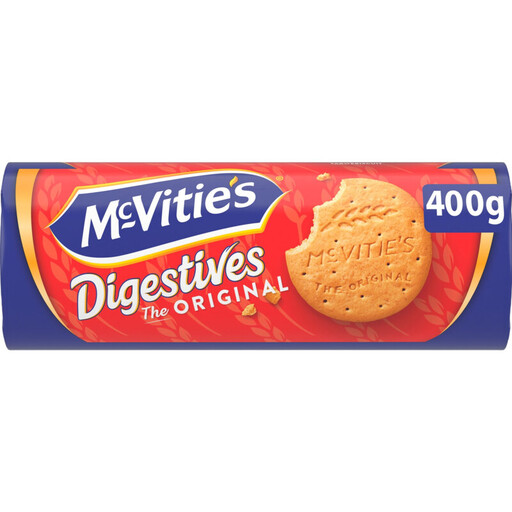 Image unavailable
McVitie's Digestives Original 400 g
A plain digestive for anyone looking for a classic wheat biscuit to enjoy with their afternoon tea or coffee.
According to the product information for this Original variety, one biscuit is a 14,7 g portion. The nutritional values list 3,7 g fibre and 15,1 g sugars per 100 g.
Contains wheat and gluten and may contain milk. The ingredients list both wheat flour and wholemeal wheat flour; check the current packaging if the types of flour or allergens are important to your choice.
View at Joybuy
Frequently asked questions
Is a digestive with a cup of tea a substitute for other grain foods?
No. Think of a digestive as a biscuit to enjoy with your tea, not as a substitute for bread or other grain foods. The Netherlands Nutrition Centre stresses the importance of the overall diet for older people and suggests that eating fewer biscuits could be one way to make room for, for example, more bread and dairy.
How can I compare digestives made with wholemeal flour?
Check both the ingredients list and the fibre content per 100 g. For example, Jumbo Digestive Volkoren lists both wholemeal wheat flour and wheat flour. So, if you’re comparing the types of flour in two biscuits, don’t rely on the word ‘wholemeal’ in the product name alone.
What should I look for in a digestive labelled 0% sugar?
Check what the claim on the packaging means, then read the sugars, ingredients and warnings too. AH Digestive 0% sugar lists 0 g added sugars, contains polyols and warns that excessive consumption may have a laxative effect.
Is a gluten-free digestive also free from other allergens?
No. Gluten-free tells you nothing by itself about other allergens. According to Jumbo, Schär Digestive Landtaler contains soya and may contain lupin and egg; check the allergen information on the pack you buy.
How should I store an opened pack of digestives?
Follow the storage instructions on the specific pack. For its Digestive Volkoren, Jumbo advises sealing the pack well after opening and storing it in a dark place; for McVitie's Digestives Original, Jumbo says to store in a cool, dry place.


