
People buying biscuits for a shared tin
You’re looking for a classic digestive as a staple and want to know whether it’s worth adding another flavour. Consider how you’ll keep the biscuits sealed once the pack has been opened, too.


For a shared office biscuit tin, a classic digestive makes a practical staple. Add a chocolate variety or a separately packaged gluten-free option if colleagues need one. Check the current label of each variety for ingredients, allergens and nutritional information. Store opened biscuits in a cool, dry, dark place in a tightly sealed container.
You’re looking for a classic digestive as a staple and want to know whether it’s worth adding another flavour. Consider how you’ll keep the biscuits sealed once the pack has been opened, too.
A gluten-free option should be clearly kept apart from ordinary wheat biscuits. For other allergens, you’ll still need to check the label on that specific pack.
You don’t want to rely on terms such as ‘digestive’ or ‘wholemeal’. Instead, you want to compare the nutritional information per 100 g, serving sizes and ingredients of specific varieties side by side.
First decide which biscuits will be the shared staple and whether anyone needs a separate dietary option. Then compare wholemeal or chocolate varieties by checking their individual labels.
| What to consider | What to check when buying | Who it matters to |
|---|---|---|
| Classic staple and stock | Choose a classic digestive and compare the net weight with how often the tin needs topping up. | If I’m putting biscuits out for several colleagues, I want to start with a classic variety that I can replenish as needed. Around 29% of consumers prioritise having this kind of staple in stock. |
| Allergens and dietary options | Read the current allergen label and keep any gluten-free variety that’s needed clearly separate. | If a colleague needs to avoid an ingredient, I want to make sure I know which biscuit came from which pack. For around 29% of consumers, finding a suitable allergen-aware or dietary option is their main concern. |
| Nutritional information and serving size | Compare the nutritional information per 100 g and the stated serving size for the specific varieties. | When choosing between classic, wholemeal and chocolate digestives, I want to compare the figures on a like-for-like basis. Around 24% of consumers prioritise this comparison. |
| Flavour variety | Consider milk and dark chocolate as different varieties, and check their ingredients separately. | If there are already classic digestives in the tin, I might want to add a chocolate flavour without treating it as a replacement for everyone. Around 18% of consumers prioritise variety. |
The product name doesn’t tell you anything about its effect on digestion. For McVitie’s Digestives with milk chocolate, Jumbo explicitly states that the biscuit ingredients don’t contain substances that aid digestion.
Choose based on flavour, ingredients and the nutritional information on the pack.
Ingredients and allergens vary between products. For example, Albert Heijn lists milk, soya and wheat for Verkade Verk digestive dark chocolate.
For each pack, compare sugars, saturated fat, fibre and salt per 100 g, as well as the stated serving size and allergens.
Without clearly identifiable packaging, colleagues can’t tell which biscuit goes with which label. This distinction is especially important when it comes to allergens.
Keep the gluten-free variety separate and make sure its current label is available. Check for allergens other than gluten, too.
Biscuits can lose their quality once opened. The Netherlands Nutrition Centre recommends storing them in a cool, dry, dark place in a tightly sealed container.
Top up the tin in smaller quantities and seal the rest of the pack straight away.
If opened biscuits go soft or stale, some may end up uneaten.
Digestives in a classic variety and chocolate varieties.
Own-brand options include a crunchy digestive and Digestive Wholemeal, both listed as 400 g.
Digestive Landtaler is a separate gluten-free option.
Verk digestive dark chocolate is a chocolate variety to compare by its ingredients.
A classic 400 g digestive to compare with other products.
This selection includes a classic digestive for your staple supply and two chocolate varieties to offer alongside it if you wish. Always check the label on the pack you’ve chosen before serving.
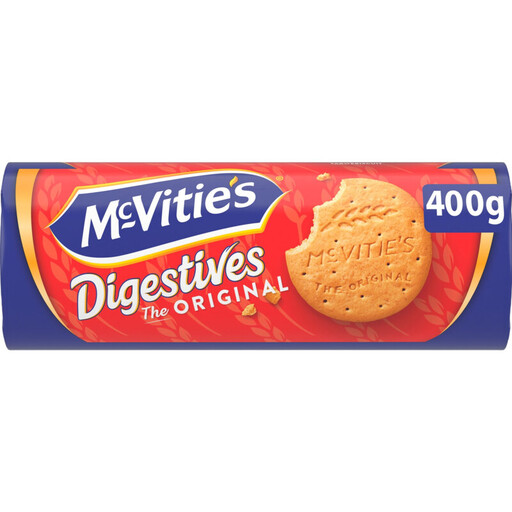 Image unavailable
A classic wheat digestive as a staple for the shared biscuit tin.
Contains wheat and gluten and may contain milk. Check the current label before offering the biscuits to colleagues.
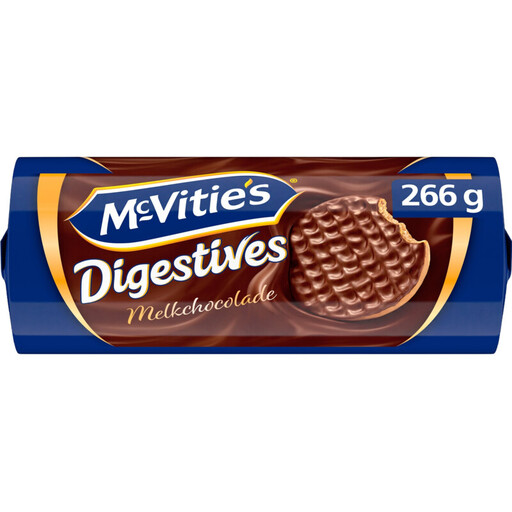 Image unavailable
A digestive topped with milk chocolate, to serve alongside a classic variety.
Contains milk, soya, wheat and gluten. Keep the pack clearly identifiable by the tin so colleagues can check the label.
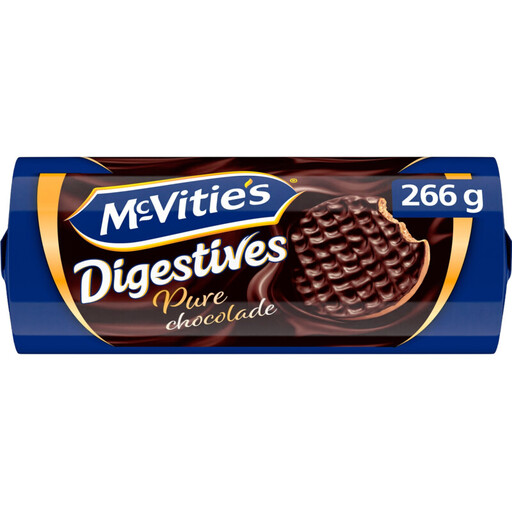 Image unavailable
A digestive topped with dark chocolate for anyone who’d like to offer that flavour alongside the classic variety.
Contains milk, soya, wheat and gluten. Read the current label before putting these biscuits in a shared tin.
No. The name alone doesn’t say anything about its effect on digestion. For McVitie’s Digestives with milk chocolate, Jumbo says the biscuit ingredients don’t contain substances that aid digestion. Choose based on the ingredients, nutritional information and flavour.
Keep the current label for each variety somewhere easy to read, so colleagues can check which allergens are in each biscuit. The Netherlands Food and Consumer Product Safety Authority stresses the importance of clear allergen labelling on prepacked foods. Keep classic and special-diet varieties clearly separate.
No. A gluten-free label doesn’t tell you whether other allergens are present. Check the full label for the specific product, including any warnings about cross-contamination.
Store them in a cool, dry, dark place in a tightly sealed container, as recommended by the Netherlands Nutrition Centre. Put only the amount you need in the tin and seal the rest of the biscuits securely after opening.
According to the Netherlands Nutrition Centre, ‘best before’ relates to quality. After this date, check the condition of an unopened pack and its contents. Once opened, follow the storage instructions on the pack and look out for any loss of quality.