
For serving with coffee or tea
If you want to put biscuits out for everyone to share, a larger pack of plain digestive biscuits could be a good fit. Albert Heijn and Jumbo sell regular digestive biscuits in 400 g packs.


For a Mother’s Day coffee or tea moment, plain digestive biscuits are a good choice if there are no specific dietary requirements. Compare wholemeal varieties by their fibre content, and lower-sugar options by their full nutritional information. If someone needs to avoid gluten, choose a product explicitly labelled gluten-free and check the packaging for other allergens too.
If you want to put biscuits out for everyone to share, a larger pack of plain digestive biscuits could be a good fit. Albert Heijn and Jumbo sell regular digestive biscuits in 400 g packs.
If fibre, sugar or salt will influence your choice, look beyond the name of the biscuit. The Voedingscentrum recommends comparing similar products per 100 g, as values per serving can give a different impression when serving sizes vary.
If you need a gluten-free option, an explicit label on the product matters more than the word ‘digestive’. Also check the current label for any other allergens that are relevant to the recipient.
For your Mother’s Day get-together, first check whether gluten or other ingredients limit your choice. Then compare the type of digestive biscuit and, if nutritional values matter, like-for-like products per 100 g.
| What to consider | What to check before buying | Who it matters to |
|---|---|---|
| Biscuits to share | Check the pack size and how to store the biscuits once opened; regular varieties from Albert Heijn and Jumbo are available in 400 g packs. | I want to put something on the table for guests to enjoy with coffee or tea. For around 40% of consumers, ease of serving would be the main priority. |
| Comparing nutritional values | Compare similar digestive biscuits per 100 g for the values that matter to you, such as fibre, sugars, saturated fat and salt. | I don’t want to rely only on ‘wholemeal’ or the front of the pack; I want to see how the nutritional values compare. This would be the main consideration for around 30% of consumers. |
| Gluten and other allergens | If needed, look for an explicit gluten-free label and check the ingredients and warnings for other allergens too. | I’m buying for someone who avoids gluten and don’t want to assume that every digestive biscuit is suitable. For around 20% of consumers, checking for gluten and allergens would be their first concern. |
| Sugars and sweeteners | As well as checking the sugars, read the pack for any polyols and usage warnings. | I’m looking for a lower-sugar option, but want to know which sweeteners it contains before giving it to someone. This would guide the choice for around 10% of consumers. |
The regular digestive biscuits from Albert Heijn and Jumbo, as well as the wholemeal variety mentioned, contain wheat or gluten. So the word ‘digestive’ doesn’t mean a biscuit is suitable for someone who avoids gluten.
If you need a gluten-free option, choose a product with an explicit gluten-free label, then check the current packaging for any other relevant allergens.
Albert Heijn lists AH Digestive 0% suiker as containing 0.3 g sugars, 14 g polyols and 465 kcal per 100 g. The product information also warns of a possible laxative effect if consumed in excess.
If you’re considering this variety, check the nutritional information and ingredients together. A claim about sugar doesn’t tell you how much energy the product provides.
It’s difficult to compare values per serving when manufacturers use different serving sizes.
Follow the Voedingscentrum’s advice and compare the nutritional values per 100 g for similar digestive biscuits.
ALDI’s product page for Biscotto and Lidl’s for Sondey say these biscuits are sold in store. If you want to pick them up for a particular Mother’s Day occasion, local availability matters.
Check your local store’s range before you set off, and read the physical label if ingredients or allergens will influence your choice.
A wasted trip to the shop costs extra time.
Albert Heijn sells a regular AH Digestive in a 400 g pack, as well as AH Digestive 0% suiker in a 400 g pack.
Jumbo sells Krokante Digestive and Digestive Volkoren, both in 400 g packs.
Schär Digestive Landtaler is sold as a gluten-free biscuit in a pack of 3 × 50 g.
ALDI describes Biscotto Digestive Biscuits as crunchy wheat biscuits, with around 27 biscuits in a 400 g pack.
Lidl lists Sondey Digestives in a 400 g pack.
These three McVitie's varieties are suited to serving as digestive biscuits: a plain Original in a 400 g pack and two chocolate varieties in 266 g packs. If gluten or other ingredients limit your choice, check each variety individually against its current label.
 Image unavailable
A plain digestive biscuit to serve with coffee or tea.
400 g pack. Check the current label if wheat, gluten or milk is a concern for the recipient.
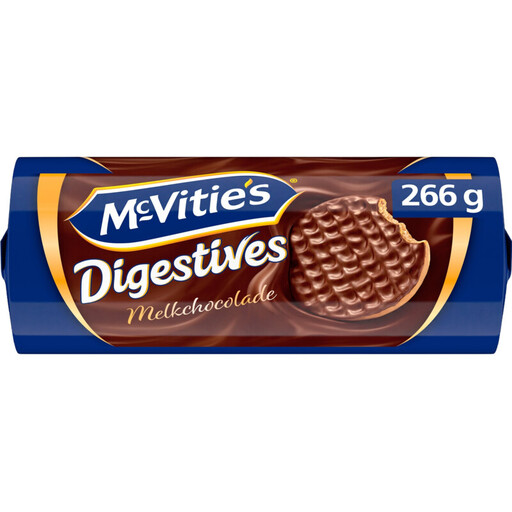 Image unavailable
A digestive biscuit covered in milk chocolate, for anyone who’d like a chocolate option to serve.
266 g pack. Check the current label for milk, soya and wheat if these ingredients are relevant.
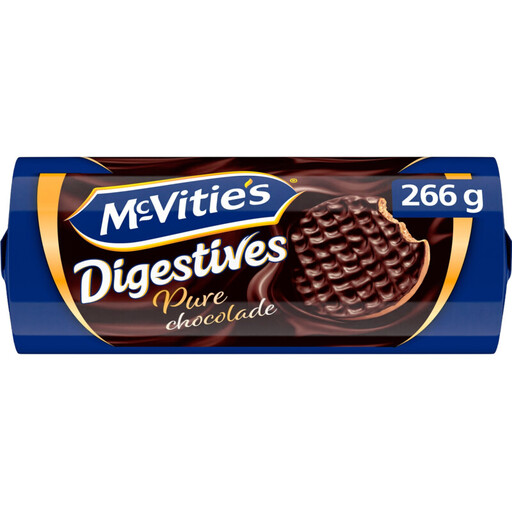 Image unavailable
A digestive biscuit with dark chocolate, ideal if you’d like to serve a chocolate option with coffee or tea.
266 g pack. Check the current label for wheat, milk and soya if these ingredients are relevant.
No. The regular digestive biscuits mentioned from Albert Heijn and Jumbo contain wheat, and Jumbo also lists gluten. If you need a gluten-free option, look for an explicit gluten-free label and check the packaging for any other relevant allergens.
You can’t tell that from the ‘0% sugar’ label. Albert Heijn lists AH Digestive 0% suiker as containing 0.3 g sugars, 14 g polyols and 465 kcal per 100 g, as well as a warning about a possible laxative effect if consumed in excess.
Compare similar digestive biscuits per 100 g, as the Voedingscentrum recommends. Then look at the values that matter to you, such as fibre, sugars, saturated fat or salt; serving sizes can vary between manufacturers.
Check the ingredients and allergens on the current packaging of the exact variety you’re buying. The Netherlands Food and Consumer Product Safety Authority explains how allergens are listed on labels for prepacked foods; a gluten-free label on its own says nothing about other allergens.
Seal the pack securely or use an airtight biscuit tin. Albert Heijn recommends using a sealed tin after opening; Jumbo advises keeping its digestive biscuits tightly sealed in a dark place. Follow the instructions on the pack you buy.