Who is this choice relevant to?

Parents keeping allergens in mind

You’re looking for a biscuit that suits the allergens a child needs to avoid and the school’s rules. The Netherlands Food and Consumer Product Safety Authority states that allergen information must appear on the label of pre-packed products, so check the packaging you’re actually sending in.

Families looking for a classic digestive

You’d like to put a standard digestive in the lunchbox now and again, and compare the type of biscuit, portion size and nutritional information with other options.

Parents comparing nutritional values

You’re focusing on fibre or added sugars. Be sure to check the other ingredients and allergens too: wholemeal and no added sugar do not mean gluten-free.

What should you look for when choosing?

Start with allergens and the school’s rules. Then compare the type of digestive and the nutritional information that matters to you.

What to consider What to check before buying Who it matters to
Allergens and school rules Read the current allergen information and any warnings about the possible presence of other allergens. Ask the school what rules it has for food brought in from home. If my child needs to avoid certain ingredients, I want to know before packing whether this particular biscuit is suitable and whether it can be brought into school. For around 40% of consumers, this check comes first.
Classic digestive Check the type of biscuit and the pack contents; don’t assume that biscuits in a large pack are individually wrapped. I’m looking for a standard digestive to put in the lunchbox now and again, without a preference for wholemeal or lower sugar as my starting point. Around 30% of consumers give this the highest priority.
Fibre or added sugars Compare fibre, sugars and any polyols per 100 g and per portion. For products containing polyols, also read the warning on the label. When choosing between options, I mainly want to understand the difference in fibre or added sugars without overlooking allergens. This is the most important consideration for around 20% of consumers.
Portion size and packaging Decide how many biscuits you want to pack and check whether the packet can be resealed securely after opening. For several school days, I want to be able to divide the biscuits into portions easily at home and store the rest. This matters most to around 10% of consumers.

Common mistakes

  • Assuming ‘digestive’ means ‘gluten-free’

    The standard Albert Heijn and Jumbo digestive biscuits compared here contain wheat or gluten. Other allergens may also matter in a gluten-free digestive.

    Don’t use the biscuit type as an allergen filter: check the current ingredients, allergen information and any warnings relevant to the child.

  • Treating wholemeal or no added sugar as general dietary advice

    The wholemeal options compared here still contain wheat. Albert Heijn states that AH Digestive 0% Sugar contains polyols and warns that excessive consumption may have a laxative effect.

    Compare the nutritional information per 100 g and per portion, and read the usage warning before choosing an option.

  • Confusing Lotus Biscoff with a digestive

    Lotus Biscoff is a speculoos biscuit, which is a different type of biscuit. According to the ingredient information from Lotus Bakeries, the Original version contains wheat and soya.

    Choose Biscoff only if you specifically want this type of biscuit. Don’t use it as a substitute when you need a digestive or a product without those allergens.

Brands compared

Albert Heijn

The own-label range includes standard and wholemeal digestives, as well as AH Digestive 0% Sugar.

  • According to Albert Heijn, the standard AH Digestive contains 3,2 g of fibre per 100 g, while the wholemeal version reviewed contains 6 g per 100 g.
  • The versions reviewed contain wheat. The 0% sugar version contains polyols and carries a warning against excessive consumption.

Jumbo

The own-label range includes standard and wholemeal digestives; Jumbo also lists a gluten-free Schär digestive.

  • Jumbo lists 3,1 g of fibre per 100 g for Krokante Digestive and 5,8 g per 100 g for Digestive Volkoren.
  • The two own-label options mentioned contain wheat or gluten and are not a substitute for a product labelled gluten-free.

McVitie's

McVitie's Digestive Original is a classic wheat digestive in a 400 g pack.

  • Joybuy’s nutritional information lists 3,7 g of fibre and 15,1 g of sugars per 100 g for this option.
  • The product information lists wheat and possible traces of milk; check the current pack if these allergens need to be avoided.

Schär

Schär Digestive Landtaler is labelled gluten-free and comes in a pack of 3 × 50 g.

  • This product label makes it a targeted option when you need a gluten-free digestive.
  • According to Jumbo, the product contains soya and may contain lupin and egg; gluten-free does not mean free from other allergens.

Lotus Biscoff

Biscoff is a speculoos biscuit, not a digestive. Lotus Bakeries also lists a Pocket Pack containing 8 × 2 biscuits.

  • The individually wrapped portions can be handy if you specifically want to pack this type of biscuit.
  • The ingredient information for Biscoff Original lists wheat and soya; don’t consider it a gluten-free digestive.

Sondey (Lidl)

Lidl lists Sondey Digestives in a 400 g pack.

  • This own-label option can be compared by biscuit type and pack size.
  • Check the ingredients and allergens on the pack before choosing these digestives if you have a dietary restriction.

Biscotto (ALDI)

ALDI describes Biscotto Digestive biscuits as crunchy wheat biscuits in a 400 g pack containing around 27 biscuits.

  • The stated number of biscuits makes it easier to plan portions from the pack.
  • Wheat biscuits aren’t suitable if wheat needs to be avoided; check the pack for any other relevant allergens too.

Classic digestive biscuits on Joybuy

This classic digestive is suited to anyone without a wheat or gluten restriction. Compare the current label with the child’s needs and the school’s rules.
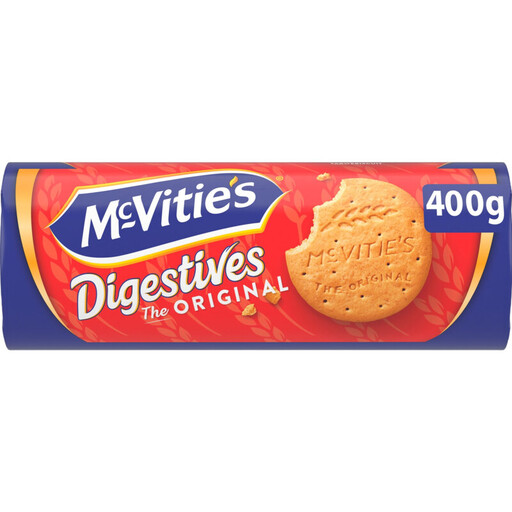
McVitie's Digestive Original 400 g

McVitie's Digestive Original 400 g

A standard digestive for anyone who doesn’t need to avoid wheat or gluten and would like to pack a biscuit now and again.

The pack contains 400 g. According to Joybuy’s product information, this option contains 3,7 g of fibre and 15,1 g of sugars per 100 g.

Contains wheat and gluten and may contain milk. Check the current label and the school’s rules before packing it.

View on Joybuy

Frequently asked questions

Can a standard digestive be packed if a child needs to eat gluten-free?

Not if you mean the standard AH, Jumbo or McVitie's digestives discussed here: their product information lists wheat or gluten. Look for a product labelled gluten-free and check its current label for any other relevant allergens too.

Is a gluten-free digestive also free from other allergens?

No, the gluten-free label doesn’t guarantee that. For Schär Digestive Landtaler, Jumbo lists soya as an ingredient and lupin and egg as possible allergens. Read the full allergen information for the child’s specific dietary restriction.

Where can I find allergen information on a pre-packed packet of biscuits?

On the packet’s label: the Netherlands Food and Consumer Product Safety Authority states that allergen information for pre-packed products must appear there. Check the packaging you buy, even if you’ve already read an online product description.

Is a digestive a sensible everyday school snack?

Don’t automatically make a digestive the everyday snack. The Netherlands Nutrition Centre lists fruit and vegetables among the snack options for children aged 4 to 12; think of a biscuit as part of everything else you pack.

Can I rely on an old product description when choosing for an allergy?

Check the packet’s label again when you buy it. Albert Heijn warns that ingredients, nutritional values and allergen information can change; an old description is no substitute for the current packaging.
