What matters when choosing?
First decide whether ingredients, sugar, allergens or flavour are your main priority. Then compare only the varieties that meet that requirement, using the same quantity.
| What to consider | What to check when buying | Who it matters to |
|---|
| Ingredients and fibre |
Compare fibre, sugars, saturated fat and salt per 100 g; also check the amount per biscuit. |
If I have a biscuit regularly during my morning break, I want to judge plain and wholemeal varieties on more than their names. Around 33% of consumers put the ingredients first. |
| Sugar and sweeteners |
Check the sugar content, ingredients and warnings; compare energy per 100 g and per serving too. |
I’m looking for a lower-sugar option, but I want to know which sweeteners I’m choosing. For around 27% of consumers, sugar is the most important factor. |
| Allergens and dietary suitability |
Check the ingredients, highlighted allergens and any ‘may contain’ statement on the current pack. |
If I need to avoid an ingredient, the label comes before flavour or nutritional values. For around 20% of consumers, suitability is the first requirement. |
| Flavour and snack portion |
Choose between plain and chocolate, and check how much one biscuit weighs according to the pack. |
With coffee or tea, I mainly want a flavour that suits the moment, without losing sight of the portion size. Flavour and portion size come first for around 20% of consumers. |
Brands compared
These brands offer different types and flavours of biscuits. The nutritional information listed applies to the specific varieties, not all their products.
McVitie's
Original is a classic digestive; Dark Chocolate adds a layer of dark chocolate.
- McVitie's Netherlands lists 3.6 g of fibre, 16.5 g of sugars and 10.1 g of saturated fat per 100 g for Original.
- Dark Chocolate contains 4.2 g of fibre per 100 g, but also 27.6 g of sugars and 12.8 g of saturated fat. So compare more than just one nutritional value.
Albert Heijn
AH Digestive 0% sugar is an option to compare with regular digestives if sugar is your main consideration.
- Albert Heijn lists 0.3 g of sugars and 5.7 g of fibre per 100 g for this variety.
- This variety contains polyols and carries a warning that excessive consumption may have a laxative effect. Check the information on the current pack.
Jumbo
Jumbo Digestive Wholemeal is a wholemeal variety whose ingredients you can compare with those of other digestives.
- Jumbo lists 5.8 g of fibre per 100 g.
- The same variety contains 19.3 g of sugars and 1.15 g of salt per 100 g. The product contains wheat and gluten.
Biscotto
ALDI's Biscotto Digestive Biscuits are wheat biscuits for anyone looking for a classic digestive.
- ALDI lists a 400 g pack containing around 27 biscuits.
- For nutritional and allergen information, check the pack.
Lotus Biscoff
Lotus Biscoff is a caramelised biscuit to enjoy with coffee, not a digestive variety.
- According to Lotus Bakeries, Biscoff has a crunchy texture and is presented as a biscuit to enjoy with coffee.
- If you’re comparing Biscoff with a digestive as a flavour alternative, check the nutritional and allergen information on the pack.
Digestive biscuits on Joybuy
These products include a classic digestive and two chocolate varieties. For your morning break, first choose the flavour you’re looking for, then check the portion size and label on the pack you’ve chosen.
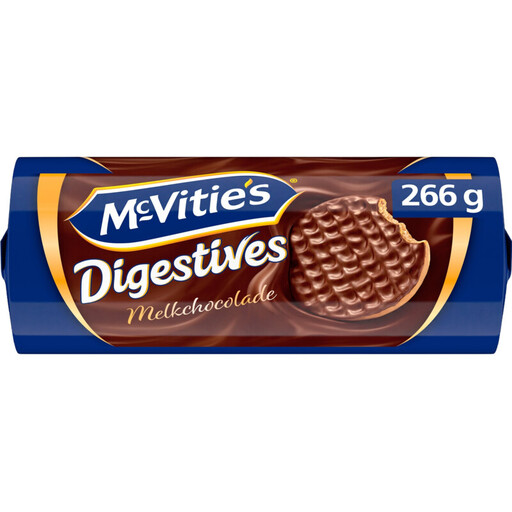 Image unavailable
McVitie's Digestives Milk Chocolate, 266 g
For anyone who enjoys a digestive with milk chocolate during their morning break; the pack contains 266 g.
According to the product description, this variety contains milk, soya, wheat and gluten. Check the allergens and portion size on the current pack.
View on Joybuy
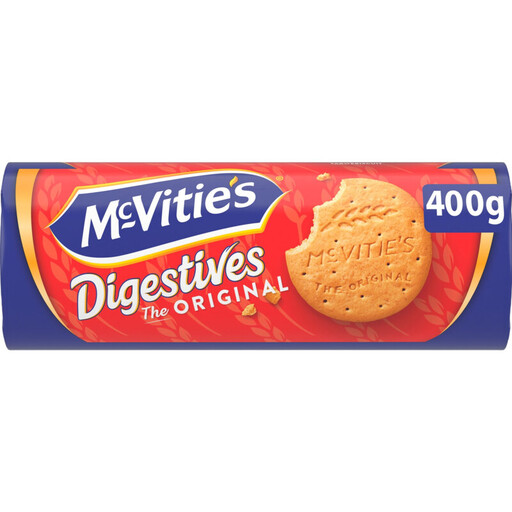 Image unavailable
McVitie's Digestive Original, 400 g
For anyone looking for a classic digestive without a chocolate coating; the pack contains 400 g.
The product description lists wheat and gluten and says that milk may be present. Check the current label for allergens, portion size and nutritional information before comparing this variety.
View on Joybuy
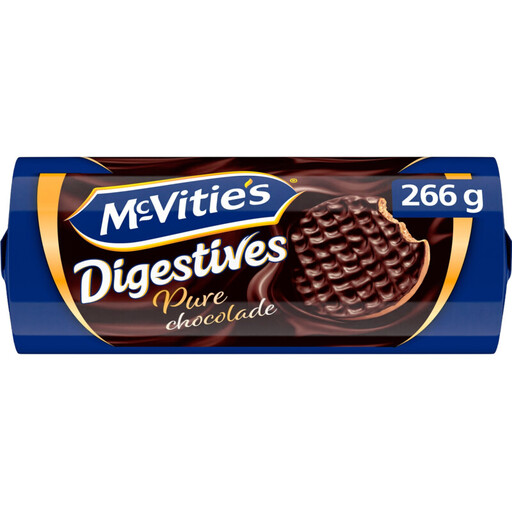 Image unavailable
McVitie's Digestives with Dark Chocolate, 266 g
For anyone who enjoys a digestive with dark chocolate; the pack contains 266 g.
According to the product description, this variety contains wheat, gluten, milk and soya. Check the current label to compare nutritional information, portion size and allergens.
View on Joybuy
Frequently asked questions
Is a digestive automatically a healthy choice for your morning break?
No, the name doesn’t tell you that. The Netherlands Nutrition Centre lists 74 kcal, 2.6 g of sugars and 1.5 g of saturated fat, among other values, for an average 15 g digestive. Check the values and portion size for the specific product you choose.
How do I compare a wholemeal digestive with a plain variety?
First compare fibre, sugars, saturated fat, salt and energy per 100 g, then per biscuit. Check the ingredients too: ‘wholemeal’ on its own doesn’t tell you how much of these nutrients a biscuit contains.
Is a digestive with 0% sugar also low in energy?
Not necessarily. Albert Heijn lists 0.3 g of sugars and 465 kcal per 100 g for AH Digestive 0% sugar. This variety contains polyols and carries a warning about excessive consumption.
Where can I check for allergens in digestive biscuits?
Read the ingredients and allergen information on the current pack, not just the front. According to the Netherlands Food and Consumer Product Safety Authority, relevant allergens must be clearly listed in the ingredients. Check for any ‘may contain’ statement too.
How should I store an opened pack of digestives?
Seal the pack well and follow the storage instructions on the packaging. For its Digestive Wholemeal, Jumbo recommends using an airtight biscuit tin or resealing the pack securely after opening.


