
If you want to serve a classic biscuit
You’re looking for a digestive to enjoy with coffee or tea, or you want to crumble biscuits for a dessert base. Decide how many you’ll need in advance and compare pack sizes.


Choose a classic digestive if you’re looking for a biscuit to enjoy with coffee or tea at your Easter brunch, or for biscuits to use as a dessert base. If the ingredients matter more to you, compare the wholemeal wheat flour content and fibre per 100 g: the options listed here differ. If you’re catering for guests with dietary requirements, check the ingredients and allergens too; a name that includes ‘wholemeal’ or a ‘vegan’ label won’t answer every dietary question.
You’re looking for a digestive to enjoy with coffee or tea, or you want to crumble biscuits for a dessert base. Decide how many you’ll need in advance and compare pack sizes.
As well as the product name, check the percentage of wholemeal wheat flour and the fibre per 100 g. A biscuit made with some wholemeal flour isn’t necessarily made entirely from wholemeal flour.
Before buying, check the ingredients and allergens on the pack you choose. Wheat is a consideration for the digestives discussed here; the possible presence of milk may also matter to some guests.
First decide whether you’ll mainly serve the biscuits as they are or use them in a dessert. Then compare the nutritional information and check allergens for the guests who’ll be eating.
| What to consider | What should you check? | Who is it important to? |
|---|---|---|
| How you’ll use them at brunch | Decide whether you’ll serve the biscuits on their own or use them as a dessert base, then choose a pack size to suit. | I want to choose one type of digestive that suits how I’m serving brunch. Around 42% of consumers prioritise versatility. |
| Fibre and wholemeal flour | Compare the fibre per 100 g and the percentage of wholemeal flour in the ingredients list. | When choosing between digestive varieties, I want to know how much wholemeal flour and fibre they actually contain. For around 33% of consumers, this is the main consideration. |
| Dietary requirements and allergens | Read the current ingredients and allergen information; check claims such as vegan or lactose-free separately. | Before serving, I need to know whether wheat or possible traces of milk could be a problem for my guests. Around 25% of consumers prioritise this check. |
Albert Heijn lists AH Digestive wholemeal with wheat flour as containing 37% wholemeal wheat flour; Jumbo lists Digestive Volkoren as containing 37.3%. The other ingredients also form part of the picture when choosing.
Check the percentage in the ingredients list and compare the fibre per 100 g too, rather than relying on the product name alone.
The two AH digestives discussed here are labelled vegan and lactose-free, but they contain wheat. Each of these labels answers a different question.
If you need gluten-free biscuits, look for a specific gluten-free claim and check the allergen information on the pack.
A difference in fibre content doesn’t, on its own, tell you anything about the other nutritional values of a digestive. Sugar, saturated fat and salt may also influence your choice.
Always compare the nutritional information for each variety on the same basis: per 100 g.
Biscuits that aren’t properly sealed can lose their crunch.
Open the pack shortly before serving, or seal any leftover biscuits well and store them in a cool, dry place.
These product ranges include different types of digestive biscuits. Compare the details on the pack you actually choose.
Albert Heijn lists a standard AH Digestive and an AH Digestive wholemeal with wheat flour, both in 400 g packs.
Jumbo lists Digestive Volkoren in a 400 g pack.
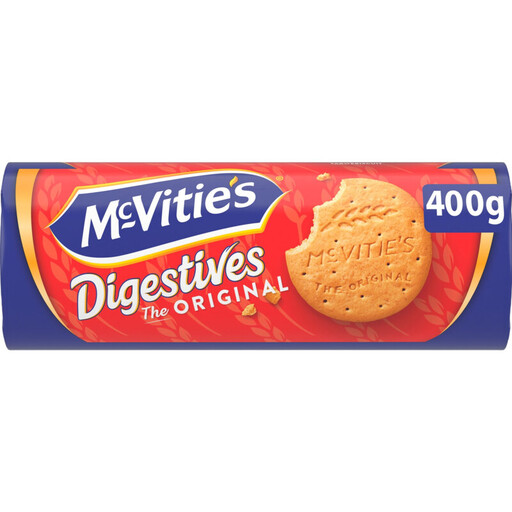
McVitie's Digestives Original is the classic branded option in this comparison, with a listed pack size of 400 g.
This product suits you if you’re looking for a classic digestive to serve with coffee or tea, or to use as a dessert base. Compare the label with those of other varieties if fibre, grain content or allergens are deciding factors.
 No image available
A classic digestive to enjoy with coffee or tea, or use as the base for a dessert.
400 g pack. Check the current label if wheat, gluten or the possible presence of milk is relevant to your guests.
Not necessarily. Albert Heijn lists its Digestive wholemeal with wheat flour as containing 37% wholemeal wheat flour, while Jumbo lists 37.3% for Digestive Volkoren. Read the full ingredients list if the grain content matters to your choice.
Don’t assume so: the AH, Jumbo and McVitie's varieties discussed here contain wheat. If you need a gluten-free option, choose one specifically labelled as such and check the current label.
Check these claims separately. Albert Heijn labels both of the AH digestives discussed here as vegan and lactose-free, while the product information for McVitie's Digestives Original says it may contain milk.
Store the biscuits in a cool, dry place and seal an opened pack well. You can also wait until shortly before serving to open them.