
Coffee drinkers looking for a classic biscuit
You want to serve a digestive with your coffee and perhaps use the same type of biscuit for a cheesecake base.


Choose a classic digestive if you want a biscuit to enjoy with coffee that can also be used for a cheesecake base. Compare wholemeal options if fibre content matters more to you. If you need to avoid gluten, choose a product explicitly labelled gluten-free and check the current packaging. Lotus Biscoff has a distinctive caramelised flavour, but it’s a different type of biscuit from a digestive.
You want to serve a digestive with your coffee and perhaps use the same type of biscuit for a cheesecake base.
First, choose the flavour of your base: a classic digestive or a biscuit with a distinct caramelised note. The pack size also matters for your recipe.
You compare the fibre content and ingredients, or look for an explicit gluten-free label. If you have an allergy requirement, always check the current packaging.
First, decide whether you’re mainly looking for a biscuit to enjoy with coffee, an ingredient for a cake or a product with specific ingredients. Then compare the packaging and nutritional information of the options that meet your needs.
| What to consider | What to check | Who is this important to? |
|---|---|---|
| Classic digestive | Check the pack size and ingredients if you also want to use the same biscuit for a cheesecake base. | If I’m serving biscuits with coffee and want to use them for a cheesecake base too, I look for a classic flavour that won’t overpower the recipe. This is the priority for around 33% of consumers. |
| Wholemeal and fibre | Compare the proportion of wholemeal wheat flour and the fibre and sugars per 100 g. | If you’re mainly looking for a wholemeal option, you’ll want to compare the fibre content without overlooking the rest of the nutritional information. This is the deciding factor for around 25% of consumers. |
| Gluten and allergens | Check for a gluten-free label, if relevant, and read the ingredients and allergen information on the current packaging. | If I need to avoid gluten, a clear gluten-free label matters more than my flavour preference. This labelling requirement takes priority for around 17% of consumers. |
| Caramelised flavour | Choose deliberately between a digestive and a biscuit with a caramelised flavour, especially if you’re using it in a recipe. | For coffee or cake, sometimes I want the biscuit to add a distinctive flavour. A pronounced caramelised flavour is the deciding factor for around 25% of consumers. |
The standard digestives described from Albert Heijn, Jumbo and McVitie's contain wheat. The name ‘digestive’ says nothing about whether a biscuit is suitable for a gluten-free diet.
If needed, choose a product explicitly labelled gluten-free and read the ingredients and allergen information on the packaging before use.
The wholemeal digestives described from Albert Heijn and Jumbo contain more fibre than the classic versions mentioned, but according to their product information they contain 20 g and 19.3 g of sugars per 100 g respectively.
Compare fibre, sugars and salt per 100 g, and check the allergen information too. The word ‘wholemeal’ is no substitute for making those comparisons.
Lotus Bakeries describes Biscoff as a crunchy biscuit with a caramelised flavour. It has a different flavour from a classic digestive, especially when you’re using the biscuit for a cheesecake base.
Choose Biscoff if you’re looking for that distinctive flavour; choose a digestive if that particular type of biscuit needs to be the base of your recipe.
Albert Heijn describes a classic AH Digestive and an AH Digestive wholemeal, made with wheat flour and both sold in 400 g packs.
Jumbo describes a Crunchy Digestive and a Wholemeal Digestive, each sold in a 400 g pack.
McVitie's Digestives Original is a classic digestive, sold in a 400 g pack.
Schär Digestive Landtaler is a separate digestive option, sold in a 150 g pack.
Lotus Bakeries describes Biscoff as a biscuit with a caramelised flavour, to enjoy with coffee or use as an ingredient.
ALDI describes Biscotto Digestive Biscuits as a 400 g pack containing around 27 biscuits.
This digestive is a good fit if you’re looking for a classic biscuit to enjoy with coffee or use as an ingredient in a cheesecake base. Check the packaging against your own requirements for ingredients and allergens.
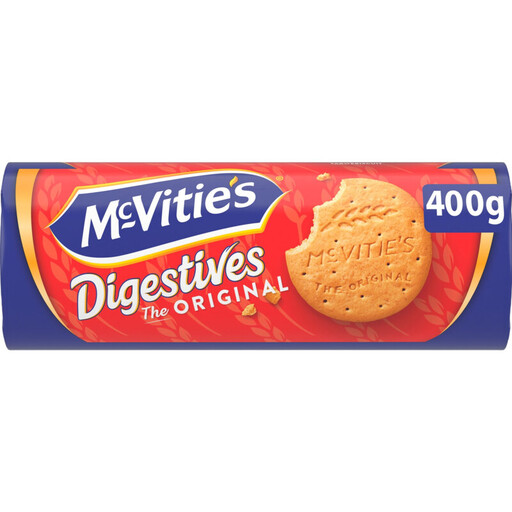 No image available
A classic digestive to enjoy with coffee or use as the base for a cheesecake.
400 g pack; the option described contains 3.7 g of fibre per 100 g. Contains wheat and may contain milk: if you have an allergy requirement, check the current label.
No, the standard digestives described from Albert Heijn, Jumbo and McVitie's contain wheat. If you need a gluten-free option, choose a product with an explicit gluten-free label, such as the Schär Digestive Landtaler described here, and check the current packaging.
Read the ingredients list and allergen information on the current packaging. The Netherlands Food and Consumer Product Safety Authority states that allergens in prepacked foods must be clearly listed in the ingredients. Also look for any warnings about the possible presence of other allergens.
Wholemeal doesn’t tell you everything about the nutritional value. The wholemeal options mentioned from Albert Heijn and Jumbo contain more fibre than the classic versions described, but they also contain sugars and salt. Compare the nutritional information per 100 g if those values matter to your choice.
Seal the pack well after opening and store the biscuits in a cool, dry place. Albert Heijn recommends an airtight tin, Jumbo advises storing them in a dark place, and McVitie's recommends a cool, dry place.