
Families looking for a plain biscuit
If you want to pack or serve a digestive without a chocolate coating, start with the plain version. Check the packaging for wheat and any other allergens.


For a classic biscuit break without a chocolate coating, choose a plain digestive. If you’re looking for a wholemeal option, choose one that’s clearly labelled as such. If someone needs to avoid gluten, only a product clearly labelled gluten-free is suitable; be sure to check for other allergens too. A digestive is still a biscuit, so if it’s a regular snack, keep an eye on the portion and vary it with other choices, such as the vegetables, fruit and wholemeal bread that the Netherlands Nutrition Centre recommends as snacks for children.
If you want to pack or serve a digestive without a chocolate coating, start with the plain version. Check the packaging for wheat and any other allergens.
If you specifically want a wholemeal option, you can choose one without assuming that it’s automatically suitable as an everyday snack. Compare the portion size and nutritional information too.
If gluten or other allergens need to be avoided, the information on the exact product packaging matters. If the biscuits are going to school or an after-school club, check the group’s rules too.
First, check whether allergies or school and after-school club rules limit your choice. Then compare the nutritional information before deciding between a plain, wholemeal or chocolate-coated digestive.
| What to consider | What should you check? | Who is this most important for? |
|---|---|---|
| Allergens and group rules | Check the ingredients, allergens and any warnings on the packaging. If you’re taking biscuits to school or an after-school club, ask what rules apply there. | When I pack biscuits for a group, I want to know whether that exact product is suitable for their allergy needs and group rules. Around 42% of consumers would put this check first. |
| Nutritional value and wholemeal options | Compare the nutritional information per 100 g with the planned portion size. Look at fibre, sugars, saturated fat and salt, among other things. | For a regular biscuit break, I want to be able to weigh the portion and, if I’m looking for wholemeal, identify that option deliberately. Around 33% of consumers would make this their first consideration. |
| Flavour and style | Choose between plain, wholemeal and chocolate-coated options, and check the ingredients again for each type. | When the biscuit break is the main thing, I want to choose between a plain biscuit and one with a chocolate coating. Around 25% of consumers would put this preference first. |
Plain digestives can contain wheat, but there are also products specifically labelled gluten-free. The category name alone doesn’t tell you which one you’re looking at.
Read the label on the product you’ve chosen. If gluten must be avoided, choose only a product clearly labelled gluten-free and check for other allergens too.
The products don’t necessarily have the same ingredients or nutritional value. McVitie's product information lists wheat gluten, milk and soya for its dark chocolate version, along with 26,6 g of sugars per 100 g.
Choose chocolate for the flavour, then compare the nutritional information and allergens for that exact version with the plain one.
Wholemeal distinguishes one type of biscuit from another, but it doesn’t tell you on its own how a portion fits into a usual snack routine. The Netherlands Nutrition Centre also recommends vegetables, fruit and wholemeal bread as snacks for children.
As well as checking the ingredients, look at the portion size and nutritional information, especially if the biscuit is given regularly.
The packaging won’t tell you what rules a particular school or after-school club has about snacks brought in from home and allergens.
Ask about the current rules before packing biscuits, and check the label again if you choose a different version or the packaging changes.
Worth considering for plain digestives and versions with a chocolate coating.
A supermarket own-brand option to look at if you’re after a digestive labelled wholemeal.
An own-brand option that includes AH Digestive wholemeal made with wheat flour.
Worth considering if you’re specifically looking for a digestive labelled gluten-free.
A brand to compare if you’re looking for a milk chocolate digestive.
This Joybuy pick is a plain digestive without a chocolate coating, for anyone looking for a classic after-school biscuit break. Before packing it, check the packaging and, where relevant, the rules at school or the after-school club.
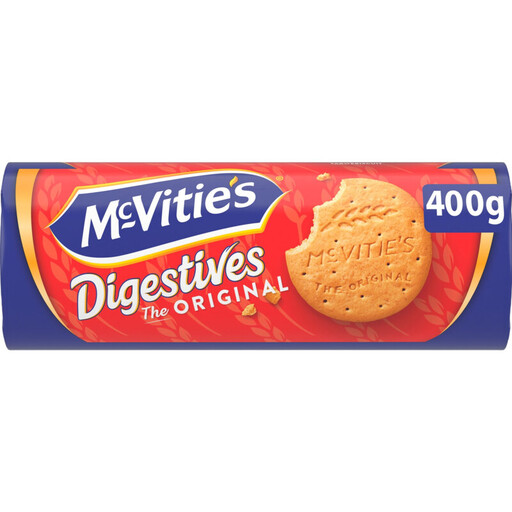 Image unavailable
A plain digestive for anyone looking for a biscuit without a chocolate coating. The product information lists 15,1 g of sugars and 3,7 g of fibre per 100 g. The biscuit contains wheat; if it matters to your choice, check the latest packaging for milk information too.
Not unless it’s clearly labelled gluten-free. The product information for McVitie's Digestive Original lists wheat flour and wholemeal wheat flour. If gluten needs to be avoided, choose a product labelled gluten-free and check the packaging for other allergens too.
Check the ingredients and allergens on the current packaging, and ask about the group’s rules. According to the Netherlands Food and Consumer Product Safety Authority, the relevant allergens must be clearly identifiable on the labels of prepacked foods; the label doesn’t replace local group rules.
No, the wholemeal label alone doesn’t determine that. The Netherlands Nutrition Centre recommends vegetables, fruit and wholemeal bread, among other things, as snacks for children. So when choosing a digestive, consider the portion size, nutritional information and how often you give your child one.
Follow the storage instructions on the specific packaging. The product information for McVitie's Digestive Original recommends storing the biscuits in a dry, preferably cool place. Chocolate versions may also advise keeping the pack tightly closed after opening.