
Vandaag of morgen in huis

Kwaliteit gegarandeerd

Welkomstaanbiedingen ontgrendelen: GRATIS bezorging | Tot 80% korting | Gratis 30 dagen JoyPlus-proefperiode
Download de app
Buying a pacifier sounds simple—until you have to choose between Natural, LOVI, Dental, silicone, glow-in-the-dark and different age sizes. The wrong size can be awkward, while a damaged pacifier may pose a safety risk. Parents also sometimes pay extra for a feature that adds little practical value.
As a Joybuy Product Recommendation Officer, I filter the most important product information for you. This makes it easier to compare Difrax pacifiers based on verifiable criteria: age, shape, material, airflow, packaging and ease of use.
An attractive design says nothing about whether the size is right. Difrax offers various sizes, including Newborn, 0–6 months, 6+ months, 12+ months and 20+ months. The teat and shield are designed to correspond to the recommended age range.
A newborn pacifier is therefore not automatically suitable for a six-month-old baby. Always check the age recommendation on the packaging and product page.
A glow-in-the-dark pacifier can be useful when you are looking for a Difrax pacifier in the cot at night. The luminous button or shield must first absorb light during the day. Visibility then gradually decreases and depends on how much light it has received.
The glow feature does not replace supervision and does not automatically make a pacifier more durable. Treat it as a practical extra—not as the most important purchasing criterion.
Brands describe Natural, Dental and Dynamic models as offering different benefits. According to Difrax product information, these models were developed in collaboration with, among others, speech therapists and dentists. This remains a brand claim, not a guarantee that every baby will accept a particular shape.
An orthodontic pacifier or symmetrical teat may feel comfortable for your baby, but acceptance varies from child to child. Focus primarily on the shape your baby holds comfortably and the appropriate age size.
Choose according to the recommended age:
Please note: an age recommendation is not a substitute for supervision. Stop using the pacifier as soon as the teat shows signs of damage.
Many Difrax models in the range feature a silicone teat. According to the product information, silicone is odourless, flavour-neutral and durable. Several models are also described as BPA-free.
Check the following for each individual product:
Silicone is not the same as natural rubber. Parents specifically looking for rubber should choose a product made from a different material.
The butterfly shape of many Difrax pacifiers includes a recess around the nose. The air holes in the shield are designed to promote airflow around the mouth. According to the product description, this may help reduce contact with moisture and skin irritation, but it is not a medical effect.
If your baby has sensitive skin, clean the shield regularly and check for redness or pressure marks. A soft shield, as found on some Difrax LOVI pacifiers, may feel more comfortable for certain babies.
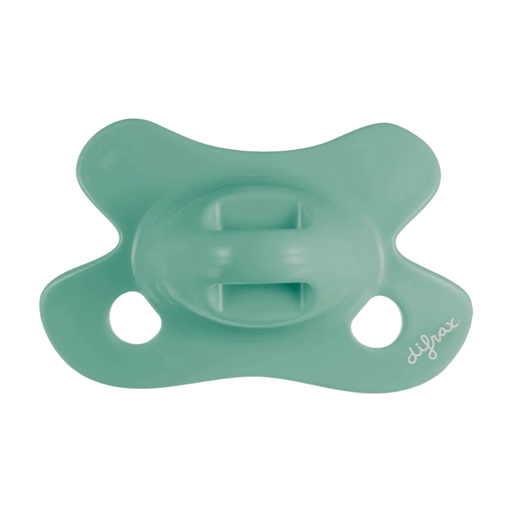
Why it’s a good fit: A straightforward choice for newborns and parents who want to start with a reliable basic pacifier. The product description also states that this model is suitable for premature babies.
The Newborn size prevents you from choosing based solely on colour or a broad age category. The model features a nose recess and air holes.
BPA-free according to the product information, with a silicone teat and suitable for cleaning or sterilisation.
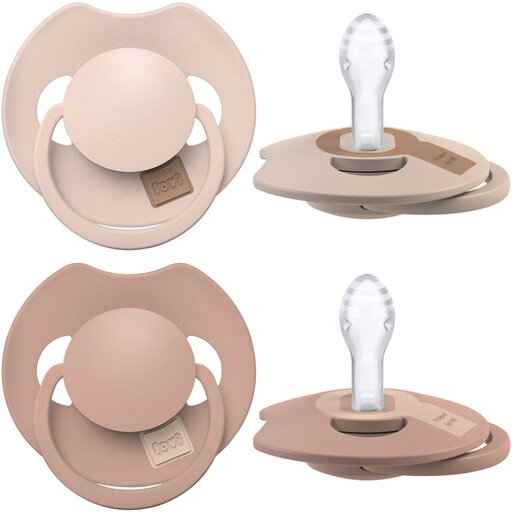
Why it’s a good fit: According to Difrax, the symmetrical shape and dynamic silicone teat are designed to support a natural sucking rhythm. The twin pack is convenient for use at home and on the go.
You choose based on shape and age rather than relying on the claim that one pacifier works for every baby. Ideally, try one shape first before buying multiple packs.
100% medical-grade silicone according to the product information, BPA-free, a lightweight shield and a sterilisation box included.
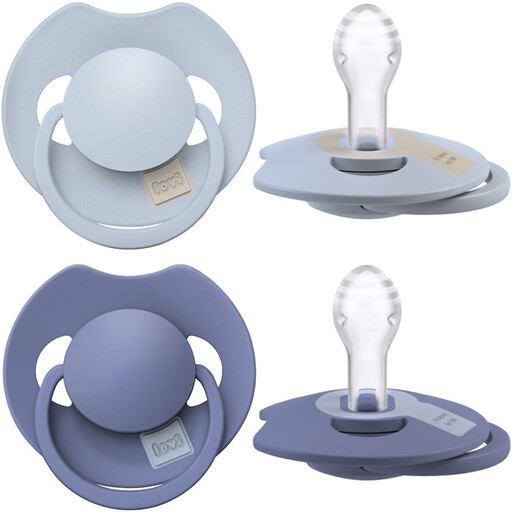
Why it’s a good fit: An option for babies aged 6 to 18 months when a lightweight, soft shield is preferred. Always observe how your baby responds to the shape and material.
The product information specifies the age range and includes a nose recess. This lets you compare relevant features instead of choosing based solely on colour or brand name.
According to the product listing: 100% medical-grade silicone, BPA-free, odourless and a lightweight shield with airflow.
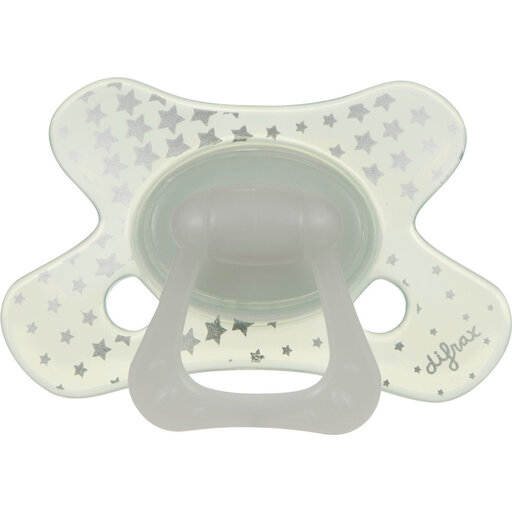
Why it’s a good fit: For parents of a toddler who regularly searches for a pacifier at night. Place the pacifier in daylight during the day before relying on the glow feature.
The age recommendation is clearly stated as 12+ months. This prevents you from buying a glow model without checking whether the size suits your child.
Silicone teat, nose recess, air holes and one pacifier per pack according to the product listing.
Browse a current selection of baby pacifiers and compare models by age, shape, material and pack size.
Clean a new pacifier before first use. The correct method varies by model. Product information for several Difrax Natural models mentions boiling, microwave sterilisation with a suitable Difrax steriliser and placing the pacifier on the top rack of the dishwasher. Other models may specifically state that they are not dishwasher-safe.
Always follow the instructions on the packaging. Also incorporate the following checks into your routine:
Look for models marked Newborn. According to the product information, Difrax Natural Newborn models are designed for newborns and may also be suitable for premature babies. Check the packaging and, if in doubt, seek advice from your midwife, child health clinic or doctor.
For daily use, the supplied product information generally recommends replacement after approximately six weeks. Replace the teat sooner if you notice cracks, splits, stickiness or other damage. Once your child has teeth, daily checks are especially important.
According to the product description, Difrax LOVI Dynamic models are offered as an option for breastfed babies, thanks to their symmetrical shape and dynamic teat. This is information supplied by the brand, not a guarantee of acceptance. Give your baby time to adjust and discuss any persistent difficulties with a lactation consultant or healthcare professional.
