Who is this choice relevant to?

Detail-focused dew photographer

Wants to capture small drops and their reflections in close-up, so compares magnification, focusing and room for lighting rather than looking only at megapixels. The close-up capabilities mentioned are specific to each model: OM Digital Solutions and Ricoh Imaging Europe list a minimum distance of 1 cm for certain compact cameras.

Camper in changeable weather

Wants a camera that’s easy to carry and suitable for use outdoors in damp conditions. Check the protection offered by the exact model; a camera’s features don’t automatically apply to a different body-and-lens combination.

Macro photographer looking to expand

Wants to choose the lens and control focusing, and is open to buying a separate macro lens and carrying more equipment. Check that the lens fits the chosen camera body and is included with your purchase.

What should you look for when choosing?

What to consider What should you check? Who is this most important for?
Drop magnification Compare the close-up mode or the physical reproduction ratio of the exact lens. If possible, take a test shot to see how the drop looks in the frame. If I want small drops to appear large in the frame, I look at magnification and framing, not just the minimum focusing distance. Around 33% of consumers give drop magnification top priority.
Protection from moisture Check the stated water and dust protection for the exact model. If you’re buying a separate body and lens, don’t assume the combination is waterproof. When camping in changeable weather, I want to know exactly how well the camera I’m taking with me is protected. Around 27% of consumers prioritise protection outdoors.
Portability and lighting Check what’s in the box, including the battery and any macro lighting. Consider how much room the camera leaves for lighting at close range. If I want to carry as few separate items as possible on a walk, the complete kit matters. Around 20% of consumers give ease of carrying top priority.
Sharpness and lens choice Check which lenses are compatible and whether one is included in the kit. For focus bracketing, check whether the body offers this feature and what processing steps are needed. Control over the shot matters if you want to choose your own macro lens or combine several focus positions. Around 20% of consumers prioritise this level of control.

Common buying mistakes

  • Assuming ‘macro’ or ‘1 cm’ guarantees a drop will fill the frame

    Focusing distance and reproduction ratio describe different features. A camera can focus at close range without a small drop filling the frame.

    Compare the magnification of the exact lens or close-up mode, and assess the crop with a test shot.

  • Assuming a mirrorless camera body on its own is a complete macro kit

    The close-up capabilities listed for the Nikon Z50II and Canon EOS R50 apply to specific lenses; those lenses aren’t automatically included with a body or standard kit.

    Check the body, lens mount and full contents of the offer separately.

  • Assuming protection or accessories included with one version come with every version

    The LG-1 light guide and extra battery are included with the specific TG-7 micro adventure kit. What a compact camera is protected against also doesn’t automatically apply to a different body-and-lens combination.

    Check the specifications and box contents for the exact model and kit.

Relevant camera brands

OM SYSTEM

The Tough TG-7 is a fixed-lens compact camera designed for close-ups during outdoor activities.

  • OM Digital Solutions lists close-up capability from 1 cm for the TG-7, as well as water and dust protection, including waterproofing to 15 m and an IP6X dust-resistance rating.
  • The LG-1 light guide and extra battery are listed with the specific micro adventure kit; they aren’t automatically included with every TG-7.

PENTAX

According to Ricoh Imaging Europe, the WG-90 is a rugged compact camera with a close-up function for outdoor use.

  • Ricoh Imaging Europe lists a digital microscope function from 1 cm and six macro LEDs for this model.
  • Product information about features doesn’t in itself confirm whether a specific offer is available.

Nikon

The Z50II can be paired with a separate NIKKOR Z DX MC 35mm f/1.7 macro lens.

  • Nikon Netherlands lists a maximum physical reproduction ratio of 0.67× on DX for this lens and describes it as compatible with the Z50II.
  • The body and macro lens are separate items, unless the offer explicitly includes both.

Canon

The EOS R50 can be paired with the separate RF 35mm F1.8 IS Macro STM lens.

  • Canon Netherlands lists a maximum magnification of 1:2 for the lens and says it is compatible with the EOS R50. Canon also lists focus bracketing for the body.
  • Check whether the lens and the features you want are included with the specific body or kit offer.

Joybuy product picks

The product picks shown are mini and action cameras. The information available for these models isn’t enough to assess them as macro options for photographing dew drops, so check the close-up distance and magnification before choosing one for this purpose.
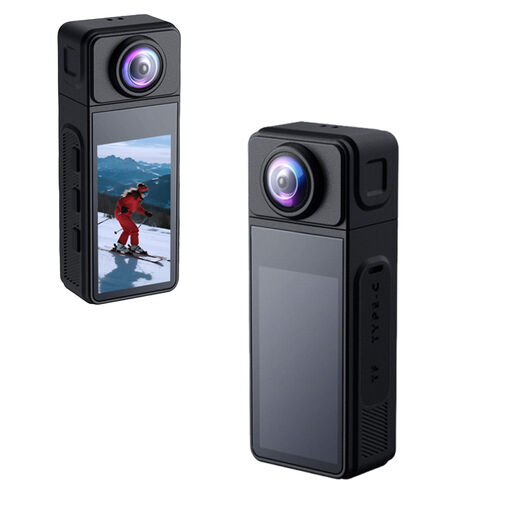
KINSI Mini Action Cam 2K

KINSI Mini Action Cam 2K

For photographing dew drops, check the close-up distance and magnification; these determine whether a small subject will appear large enough in the frame.

The product name lists a 270° rotating lens, a 1.86-inch IPS screen, Wi-Fi, a TF card slot and a 1/4-inch thread.

View at Joybuy
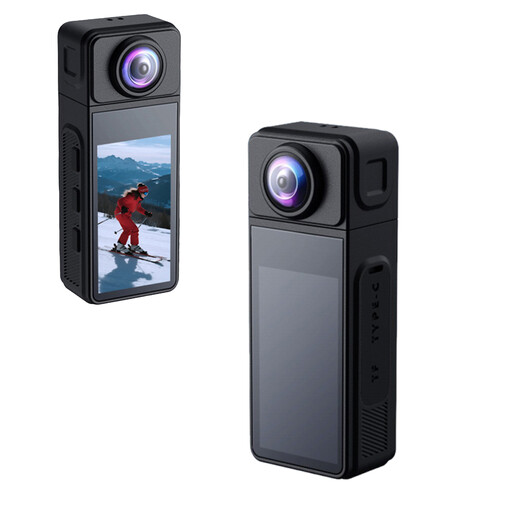
NAXSIR 2K Mini Action Camera

NAXSIR 2K Mini Action Camera

If you’re considering this camera for capturing small details in nature, check the close-up distance and magnification first.

The product name lists a 270° rotating wide-angle lens, a magnetic body and electronic image stabilisation.

View at Joybuy
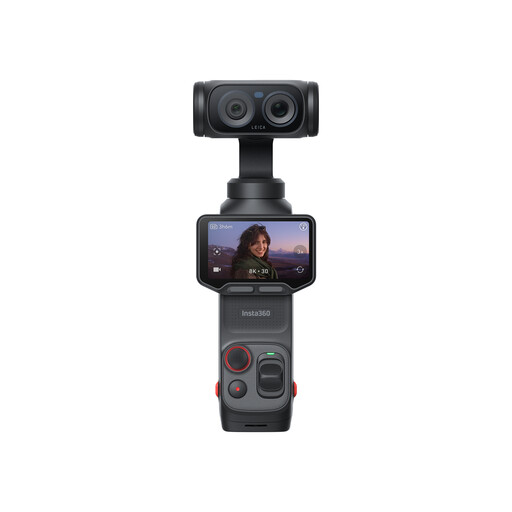
Insta360 Luna Ultra Standard Bundle Cosmic Black

Insta360 Luna Ultra Standard Bundle Cosmic Black

For photographing dew drops, it’s worth checking the close-up distance and magnification of the camera you choose.

The product name identifies this version as the Standard Bundle in Cosmic Black.

View at Joybuy
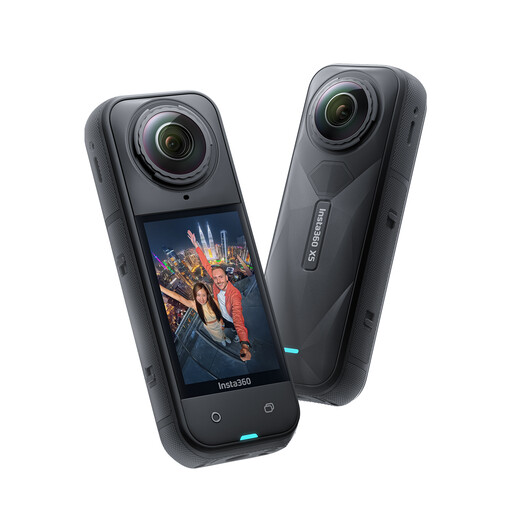
Insta360 X5 Waterproof 8K 360° Action Camera

Insta360 X5 Waterproof 8K 360° Action Camera

If you’re using the camera in damp camping conditions, check the terms that apply to the waterproofing of the version you’ve chosen.

The product name lists 8K and 360°. The stated waterproofing to 15 m applies with firmware version 1.3.0 or later.

View at Joybuy
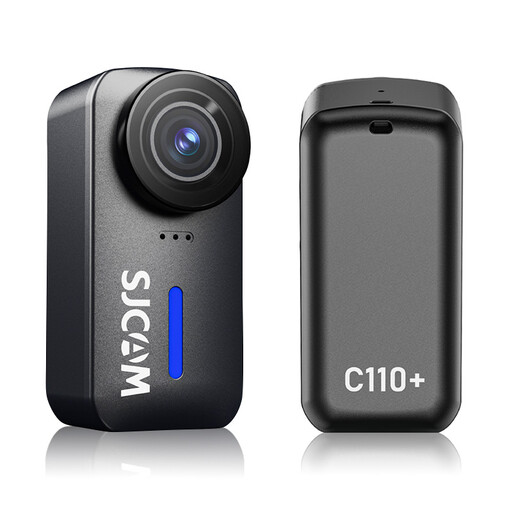
SJCAM C110+ 4K Action Camera

SJCAM C110+ 4K Action Camera

For close-ups of dew drops, check the magnification and focusing distance; the product name alone doesn’t tell you either.

The product name lists photos up to 20 MP and a 170° ultra-wide-angle lens. The stated waterproofing to 30 m applies with the supplied housing.

View at Joybuy

Frequently asked questions

Is a focusing distance of 1 cm enough to photograph a dew drop so it fills the frame?

Not necessarily. The distance manufacturers quote for certain close-up functions doesn’t indicate that the camera can magnify a subject enough to fill the frame. Check the crop with a test shot, and consider how much room there is to light the drop.

How can I get more of the drop in focus?

Start by focusing carefully. If a single macro shot doesn’t give you enough depth of field, you can use suitable equipment to capture several focus positions and combine them. Canon describes this as focus stacking; check which bracketing and processing steps your camera supports.

Do I need to buy a macro lens separately?

It depends on the specific offer. Nikon and Canon describe compatible lenses, but that doesn’t mean a lens is included with a body or standard kit. Check the lens mount and everything included in the set.

What warranty and cooling-off period apply when buying online in the Netherlands?

According to the Dutch government, the statutory guarantee means you’re entitled to a product that works as it should; there is no fixed statutory guarantee period in the Netherlands. For many eligible consumer purchases made at a distance, you have 14 days to change your mind. The exact rules depend on the purchase and the applicable terms.

Can I photograph dew drops in a nature reserve at sunrise?

It depends on the reserve’s rules. Natuurmonumenten generally allows access to its reserves between sunrise and sunset. According to Natuurmonumenten, you don’t need permission to take photographs for your own enjoyment as long as you follow the site rules; permission is required for professional or commercial productions and workshops. Check the local rules with other land managers.
