Who is this camera guide for?

Photographers of whole dessert plates

You mainly take overhead or front three-quarter shots. Make sure the field of view suits the distance and space in your home studio. Canon Netherlands describes wide shots of plates and close-ups as different food photography needs.

Photographers of dessert details

You want to capture tiny finishing touches and textures in close-up. Magnification and the space between the lens, dessert and lighting are key considerations. Nikon Netherlands specifies 1:1 magnification for the Z MC 50mm f/2.8.

Home photographers working with changing light

You want consistent shots where colour and a fixed viewpoint matter. Cameranu explains how a tripod keeps your viewpoint steady while you adjust the setup; Canon Netherlands explains how to set the white balance in challenging lighting conditions.

What should you look for when buying?

What to consider What should you check? Who is this important for?
Whole-plate composition Check the field of view of the exact camera and lens combination, and measure how much space you have above the table. If I want to photograph the whole plate and its styling, the framing needs to suit the distance I have available. Around 33% of consumers say capturing the complete plate composition is their top buying priority.
Small details Compare the maximum magnification with the space left for the dessert and lighting. If you want to capture crumbs, icing or small decorations in close-up, focus on how much the lens can magnify. Around 27% of consumers prioritise these details.
Colour and lighting Check whether you can adjust the white balance and whether the complete setup will sit securely on your tripod. If I want to keep my shots as consistent as possible in changing light, colour settings and a fixed viewpoint are important. Around 20% of consumers give reproducible colour and exposure top priority.
Complete setup Make a note of the equipment you already own and check exactly what’s included in the set you’re considering. If you want to limit extra purchases, first check whether your existing camera and lens can capture the framing you want. Around 20% of consumers prioritise making use of existing equipment or keeping additional components to a minimum.

Common buying mistakes

  • Expecting a standard zoom to perform like a dedicated macro lens

    Canon specifies a maximum magnification of 0.25× in MF mode for the RF-S 18–45mm. Nikon specifies 1:1 for the separate Z MC 50mm f/2.8. These are specifications for different lenses, not a direct comparison of camera quality.

    Decide how small the detail you want to photograph is, then check the magnification of the lens in the exact set you’re considering.

    A macro lens may be a separate purchase if it isn’t included in your chosen kit.

  • Choosing a longer macro lens without measuring your home studio

    Nikon states that the Z MC 50mm f/2.8 gives the equivalent field of view of a 75mm lens on a DX camera. In a small studio, the tighter framing may make it harder to fit a whole plate into the shot.

    Measure the maximum distance between the camera and table, and check whether the lens can handle both your detail shots and the plate composition you want.

    Depending on your setup, you may also need a wider lens for shots of the whole plate.

  • Comparing camera bodies alone when lighting or viewpoint is the real issue

    A tripod helps you keep your chosen viewpoint while adjusting your setup. Canon Netherlands explains how to set the white balance in challenging lighting conditions.

    First, take test shots with your current camera, a fixed viewpoint and controlled lighting. Then work out what specific limitation a different body or lens would solve.

Camera brands to consider

Canon

Canon offers an APS-C mirrorless camera system with a choice of RF and RF-S lenses, as well as a compact camera with a fixed lens.

  • Canon Netherlands specifies magnification of up to 1:2 for the RF 35mm F1.8 MACRO IS STM.
  • According to Canon, the RF-S 18–45mm kit zoom reaches a maximum of 0.25× in MF mode. Canon also states that the EOS R50 does not have in-body image stabilisation.

Nikon

The Z system is an option if you want to pair an interchangeable-lens camera with a separate macro lens.

  • Nikon specifies 1:1 magnification for the Z MC 50mm f/2.8.
  • On a Z DX body, Nikon says this lens gives the equivalent field of view of a 75mm lens. Check that you have enough space in your studio to frame a whole plate.

Sony

The E-mount system offers an interchangeable-lens APS-C body, with a separate macro lens among the available options.

  • Sony lists the α6700 as E-mount compatible and specifies 1:1 magnification for the APS-C E 30mm F3.5 Macro.
  • Sony gives a minimum focusing distance of 2.4 cm for this macro lens. Check that there’s still enough room for your lighting when taking close-ups.

OM SYSTEM

This Micro Four Thirds option may be worth considering if you want to use in-camera focus stacking for still-life close-ups.

  • The OM SYSTEM manual explains how to combine shots taken at different focus distances using focus stacking. OM SYSTEM specifies 1.0× magnification for the M.Zuiko 60mm F2.8 Macro on Micro Four Thirds.
  • Check that the lens’s field of view suits the space you have for a shot of the whole plate.

Camera options at Joybuy

Joybuy camera options that may suit this type of photography. For each model, check that the controls, lens options and close-up capabilities meet your needs for still-life dessert photography in your studio.
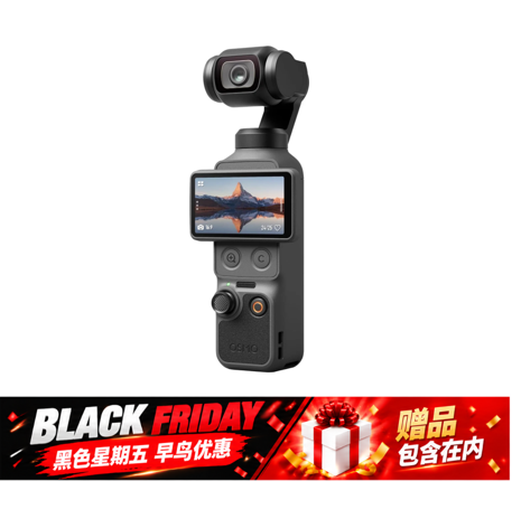
DJI Osmo Pocket 4 Standard Combo

DJI Osmo Pocket 4 Standard Combo

The product title mentions photography and vlogging. Check whether this camera is suited to the still-life close-ups and framing you need for dessert photography.

The product title lists a 1-inch CMOS sensor, 2× lossless zoom, 4K/240fps, 107 GB of built-in storage and a 2-inch rotating screen.

View product

DJI Osmo Pocket 3 Creator Combo

DJI Osmo Pocket 3 Creator Combo

The product title positions this model for vlogging and photography. Check whether its close-up capabilities suit your dessert compositions.

The product title lists a 1-inch CMOS sensor, 4K/120fps video, 3-axis stabilisation, fast focusing and a 2-inch rotating touchscreen.

The Creator Combo title also mentions a microphone. Check exactly which components are included in the set on offer.

View product

DJI Osmo Pocket 3

DJI Osmo Pocket 3

The product title mentions photography and vlogging. Check the field of view and close-up capabilities before choosing this model for a home studio.

The product title lists a 1-inch CMOS sensor, 4K/120fps video, 3-axis stabilisation, fast focusing and a 2-inch rotating touchscreen.

View product

Songdian Pocket Camera 4K 44MP, 16× Zoom, Pink

Songdian Pocket Camera 4K 44MP, 16× Zoom, Pink

The product title mentions photography and video. Check whether the close-up capabilities suit the details you want to capture.

The product title lists 4K, 44 MP and 16× zoom. The product description mentions autofocus and 16× digital zoom.

View product

Sony ZV-E10 with 16–50mm zoom lens, black

Sony ZV-E10 with 16–50mm zoom lens, black

The included zoom lens offers a range of focal lengths for framing your compositions. Check separately whether its close-up capabilities suit the dessert details you want to capture.

The product description lists a 24.2 MP APS-C sensor and an E PZ 16–50mm lens.

View product

Frequently asked questions

Do I need a macro lens to photograph a whole dessert plate?

Not necessarily. Start by considering the field of view and the distance you have above or beside the plate; a standard zoom may be suitable. Choose a lens with dedicated macro magnification if you want to capture small details in close-up.

How can I keep the colour and framing consistent across several dessert photos?

Use a tripod to keep your viewpoint steady, and set the white balance deliberately in difficult or changing light. Check the colours again whenever you change your lighting setup. Cameranu explains the benefits of a tripod when adjusting your setup, while Canon Netherlands covers white balance settings.

Which extra components should I check besides the camera body?

Check exactly what’s included in the kit before you choose: a macro lens isn’t automatically included. Factor in the cost of any lens you still need, as well as a suitable tripod.

Are cameras always covered by exactly two years of statutory warranty in the Netherlands?

No. According to the Government of the Netherlands, there is no fixed statutory warranty period in the Netherlands; the period depends on what you can reasonably expect from the product. If you have an issue with your statutory warranty, contact the seller. This applies to consumer purchases; different terms may apply to business purchases.

Can I always return a camera bought online within 14 days?

Not in every case. According to the Government of the Netherlands, consumers buying from a business at a distance often have a 14-day cooling-off period, but there are exceptions, and this does not automatically apply to online purchases from private sellers. Check how you made your purchase and the returns information you received with your order.
