
Yearbook designer
You create pages with lots of text and photos, and want to choose a computer that suits the layout software and display you use.


Choose your desktop based on the yearbook software you use and how much layout and photo editing you do. Then check the RAM, SSD capacity and display connections. A compact Windows PC, configurable mini PC or Mac mini could be suitable, but the exact configuration, included accessories and software compatibility will determine whether the complete workstation meets your needs.
You create pages with lots of text and photos, and want to choose a computer that suits the layout software and display you use.
You edit photos for the yearbook, so you’re mainly comparing RAM, available storage and the display you use.
You alternate between sitting and standing, and are looking for a desktop that leaves enough room to position your display and input devices properly.
A good fit if: you work locally in InDesign or Photoshop and want to assess a pre-configured Windows PC.
Bear in mind: a compact case doesn’t automatically mean a display and keyboard are included, or that you can upgrade components later.
A good fit if: space is limited and you want to choose the configuration, memory, storage and connections yourself.
Bear in mind: a kit may come without an operating system, memory and storage, so check everything included in the package, not just the model name.
A good fit if: you want to use macOS and can connect your display and peripherals to the configuration you choose.
Bear in mind: check that your yearbook software and files are compatible with the chip and macOS version you choose; Adobe does not specifically mention the M6 chip in the InDesign requirements consulted.
| What to consider | What should you check? | Who should consider this? |
|---|---|---|
| Layout software | Check the requirements for the version used by your school, including the operating system and processor. For the versions of InDesign and Photoshop discussed here, Adobe recommends 16 GB RAM. | If you lay out lots of pages and are choosing a computer mainly for yearbook work, you’ll want to know whether the configuration suits the software you use. Around 33% of consumers make layout their top purchasing priority. |
| Photos and storage | Compare the RAM and SSD capacity with your photo archive, project files and the free working space you need. | If you edit lots of yearbook photos, you’ll need room for both source material and working files. Around 27% of consumers give photo editing top priority. |
| Desk and display | Check the dimensions, display outputs and included components. Also consider whether your display and input devices can be positioned comfortably for both sitting and standing. | If your desk is small and you adjust its height, you’ll want to save space and position your display properly. Around 20% of consumers put their workstation setup first. |
| File management | Ask your school which files can be stored locally, who will have access and what storage and backup arrangements apply. | If several people are working on the yearbook or you’re using pupil materials, you’ll want a computer that complies with your school’s policies. Around 20% of consumers name file management as their top priority. |
A compact desktop or kit may come without a display, keyboard or other components. Some kits also lack an operating system, memory and storage.
Check the exact configuration and the contents of the box. Only factor in components you still need for your workstation.
Source photos and layout files take up space; the capacity you need depends on your own files and workflow.
Estimate the space you need for photos, project files and free working space separately. Also agree with your school where materials will be stored.
According to Arboportaal, a well-designed workstation also depends on how adjustable it is and whether you alternate your posture.
Check the positioning of your display, input devices and cables when working both seated and standing.
HP offers compact Windows desktops in a range of pre-configured options.
NUC mini PCs are available as ready-to-use systems or as kits you can configure yourself.
The Mac mini is a compact macOS desktop designed to be used with a separate display.
The ThinkCentre Neo 50q Gen 4 Tiny is a compact desktop range with a variety of configurable options.
Dell offers compact business desktops in its Dell Pro range.
This selection includes compact mini PCs and an all-in-one PC to compare for a desktop workstation used for yearbook layout.
 No image available
The listed 24 GB of unified memory is above Adobe’s 16 GB recommendation for the versions of InDesign and Photoshop discussed here; check that your software is compatible with the chip you choose.
Apple M6 chip with 12-core CPU and 12-core GPU; 24 GB; 512 GB SSD.
 No image available
The listed 16 GB RAM matches Adobe’s recommendation for the software versions discussed here. Also check the system requirements for the yearbook software you use.
16 GB LPDDR4X; 256 GB SSD; HDMI 2.0; Windows 11 Pro.
 No image available
The listed 16 GB RAM matches Adobe’s recommendation for the software versions discussed here; check that the computer you choose meets the other requirements of your workflow.
16 GB LPDDR5; 512 GB NVMe SSD; Radeon 660M graphics.
 No image available
The listed 24 GB RAM is above Adobe’s 16 GB recommendation for the software versions discussed here; check the complete configuration against your software and displays.
24 GB LPDDR5; 512 GB PCIe 4.0 SSD; Radeon 760M graphics; supports output to three displays.
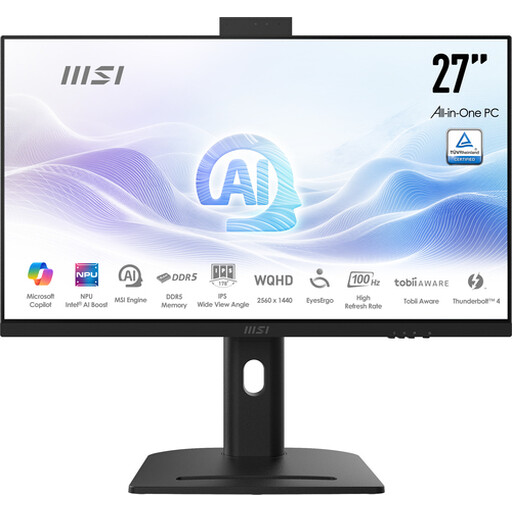 No image available
The built-in display could be a good fit if you’re looking for a desktop with a screen in one device; check that its dimensions and connections suit your sit-stand desk.
27-inch IPS display with 2560 × 1440 pixels; 16 GB DDR5-SDRAM; 1 TB SSD; Intel Core Ultra 5 125H.
For the versions of both programmes discussed here, Adobe lists 8 GB as the minimum and 16 GB as the recommendation. Also check the requirements for the versions and other programmes you actually use; this doesn’t guarantee performance for every yearbook project.
Arboportaal recommends an adjustable workstation, with the display directly in front of you and its top just below eye level, as well as changing your posture regularly. Check that your display, computer and cables stay practical when you adjust the desk height.
Not without checking the exact configuration. ASUS distinguishes between a ready-to-use mini PC and a NUC 14 Pro Kit. According to ASUS, the kit comes without a pre-installed operating system, memory or storage.
Ask the printer which PDF settings they require. For an InDesign file ready for print, Adobe recommends checking that links are up to date, fonts are available, bleed and margins are suitable, colour settings are correct and the file has been checked for errors.
Don’t assume so: according to the Dutch Data Protection Authority, consent is required from pupils aged 16 and over, and from parents when pupils are under 16. The school must be able to demonstrate that consent has been given, so agree how this will be handled for the yearbook in question.