
Student working with maps and research data
You create maps at home, process data and study runoff in urban areas. Check which software and configuration your course specifies for this work; QGIS is available for several operating systems.


Start with the software and tasks specified by your course. A compact desktop could suit a permanent study space for maps and data, but it won’t necessarily be suitable for demanding 3D work. If you also need to use your own computer during sessions on campus, a desktop won’t replace a portable device. Be sure to check the exact configuration and which peripherals are included.
You create maps at home, process data and study runoff in urban areas. Check which software and configuration your course specifies for this work; QGIS is available for several operating systems.
If your course requires software such as Civil 3D or large 3D files, check the requirements for the specific application. Memory alone won’t tell you whether the graphics hardware is suitable.
If you need to use your own computer between lectures or during assessments, portability matters. A desktop stays in one place and can’t replace a portable device.
A good fit if: you mainly use maps, research files and study materials in one place, and have limited desk space.
Trade-off: you’ll need a separate monitor, and the options for graphics upgrades vary by model.
A good fit if: your course requires local modelling or a more graphics-intensive workflow, and you can choose a configuration that meets the software requirements.
Trade-off: your chosen setup may take up more desk space. The word ‘upgradeable’ doesn’t guarantee that a particular configuration is suitable for your software.
A good fit if: you need to use your own device during lectures or between sessions on campus, or you already have a laptop that meets your course requirements.
Trade-off: check the requirements for your own course; advice from one educational institution won’t necessarily apply to every student.
| Consideration | What should you check? | Who is this important for? |
|---|---|---|
| Maps and research files | Ask which programmes and file sizes your course uses, then compare them with the operating system, RAM and SSD in the exact configuration. | If I create maps and process data at home, I want the computer I choose to work with the programmes used on my course. Consumers who prioritise map and data work make up around 33% of consumers in this choice breakdown. |
| Working on campus | Check whether you need to use your own device during lectures or assessments, and whether your current laptop meets the requirements. | If I need to complete assignments during sessions on campus, I need a device I can take with me. Consumers who prioritise campus portability make up around 25% of consumers in this choice breakdown. |
| Civil 3D or demanding 3D tasks | Check the software version, type of task, graphics card and video memory in the exact PC. For Civil 3D 2026, Autodesk lists 8 GB of RAM as the minimum and 32 GB as the recommended amount; this isn’t a general requirement for every student. | If my course requires demanding modelling, I want the graphics capabilities to match those specific tasks. Consumers who prioritise demanding 3D software make up around 17% of consumers in this choice breakdown. |
| Total workstation costs | Check whether a monitor, keyboard, mouse and suitable cables are included, then compare the cost of the complete workstation. | If I still need to set up my study space, I want to know which items I’ll need in addition to the computer. Consumers who prioritise total workstation costs make up around 17% of consumers in this choice breakdown. |
| Desk space | Measure the available space and check the connections, mounting options and upgrade possibilities for the specific model. | If I have limited desk space, I want to know whether the computer and monitor will fit in my permanent workspace. Consumers who prioritise limited desk space make up around 8% of consumers in this choice breakdown. |
A permanent workspace at home won’t replace a computer you need during a lecture or assessment.
First, check your course requirements and see whether your current laptop meets them.
If you also need to work on your own computer while out and about, you may still need a portable device.
For Civil 3D 2026, Autodesk lists separate requirements for memory and graphics hardware, so looking at RAM alone won’t give you the full picture.
Compare the requirements for your software version and tasks with the exact graphics card and video memory in the PC.
A configuration without the peripherals you need, or with a connection that doesn’t work with your monitor, could leave your study space incomplete.
Check which items are included with each configuration and which connections your existing monitor needs.
You may still need a monitor, keyboard, mouse or suitable cable to complete your setup.
The ThinkCentre Neo 50q Gen 5 is a Tiny desktop range designed for a compact permanent workspace.
The Pro Mini 400 G9 is a micro desktop range available in several configurations.
Veriton includes compact desktops and business towers; the VN4710GT is a specific compact model.
OptiPlex Micro is a compact desktop range with mounting options for a permanent workspace.
The ExpertCenter D5 SFF is worth comparing if you’re looking for a small-form-factor desktop with upgrade options.
These desktop computers are designed for a permanent study space. Compare the listed model and configuration details with your course’s software requirements; none of these desktops is designed to be taken to sessions on campus.
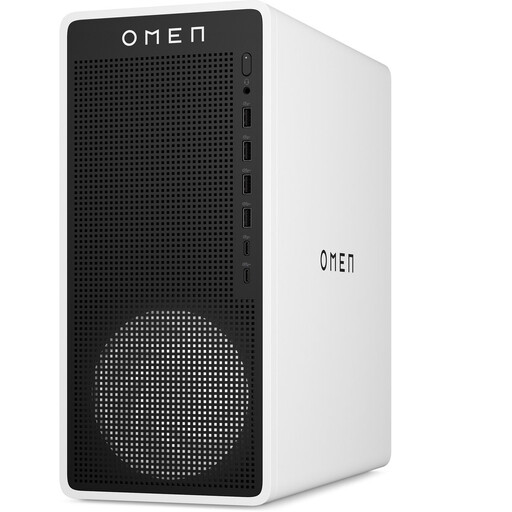 No image available
A desktop for a permanent study space; check whether the exact configuration meets your course’s software and graphics requirements.
The product name lists model TG03-0057nd C3YP0EA#ABH.
According to the product information, leave at least 10 cm of clear space around the PC for ventilation.
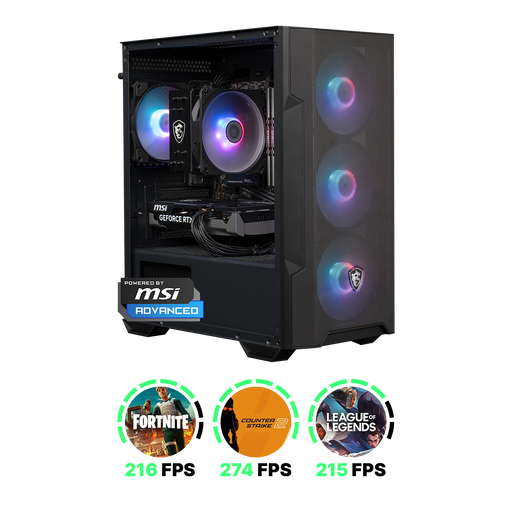 No image available
A desktop for a permanent study space; compare the listed configuration with the programmes and tasks on your course.
The product name lists an RTX 5060, R5, 16 GB and 1 TB.
 No image available
A desktop for study use; check the listed configuration against the software requirements for your course tasks.
The product name lists Ryzen 7 5700X, RTX 5060 Ti 8 GB, 16 GB DDR4 and 480 GB NVMe.
Windows 11 Home is listed as pre-installed, but the product name says it isn’t activated.
 No image available
A desktop for study use; match the configuration to your course’s software and tasks.
The product name lists Ryzen 7 7800X3D, RTX 5080, 32 GB DDR5 and 1 TB NVMe.
Windows 11 Trial is listed in the product name.
 No image available
A desktop for study use; check whether the listed configuration meets your course’s software requirements.
The product name lists Intel Core 5 210H, RTX 5050, 16 GB, a 1 TB SSD and Windows 11 Home.
Not just because of the subject you’re studying. First, check the software and tasks used on your course. For Civil 3D 2026, Autodesk lists separate minimum and recommended GPU requirements, as well as additional requirements for large datasets, point clouds and 3D modelling.
Check the installation instructions for your computer’s operating system and the workflow specified by your course. QGIS is available for several operating systems; the US Environmental Protection Agency describes SWMM as desktop software for modelling drainage systems.
A desktop stays in one place, so it won’t replace a device you need to take with you. Check your course requirements and whether a laptop you already own meets them.
Check that you have a monitor and input devices, and that the connections are compatible. Follow the instructions for your chosen configuration; the Acer Veriton configuration mentioned here is sold without a keyboard and mouse.
In the Netherlands, the seller is responsible for the statutory guarantee if a consumer product is faulty or doesn’t conform to the contract. A manufacturer’s guarantee doesn’t replace this right; the appropriate solution depends on the circumstances.