Start with the operating system your development and testing software needs, then check that the exact desktop configuration supports both monitors at the same time. A compact desktop may suit a dedicated workspace; choose memory and storage to match your projects and local test environments. Also check which screens, cables and peripherals you still need.
Who is this choice relevant to?
Programmers with two existing monitors
If you want to view code and test results side by side, check whether both screens can work simultaneously with the connections on your chosen desktop. Microsoft Support explains how to set up multiple screens in Windows.
Developers running demanding local tests
If you run larger projects or local test environments, compare your software’s requirements with the desktop’s memory and storage. Android Developers notes that larger projects may need more memory and processing power.
Developers with a fixed software stack
If you rely on specific development or testing tools, first check whether they run on Windows or macOS. This will determine which desktop configurations are suitable.
What should you look for when choosing?
First check your software and whether both screens can be used at the same time. Then compare the capacity and upgrade options with your projects.
| What to consider |
What to look for |
Who is this important for? |
| Two screens at the same time |
Check the support offered by the exact configuration and compare its video outputs with the inputs on both monitors. In Windows, choose ‘Extend’ if you want to see different windows on each screen. |
I want to view code and test output side by side on my existing monitors. Around 40% of consumers say support for two screens is their main buying concern. |
| Capacity for testing |
Compare the memory and SSD capacity with your editor, projects and any local test environments. The specifications alone won’t tell you how long your tests will take. |
If I run larger projects or several local environments, I want the capacity to match my workload. Around 30% of consumers put this testing workload first. |
| Software compatibility |
Check the required tools, supported operating system versions and any requirements for local virtualisation before choosing a desktop. |
I need to be able to use my development and testing software on the desktop’s operating system. Around 20% of consumers name this compatibility as their main buying concern. |
| Expansion and workspace |
Check what’s included and the documented upgrade options. Also consider which monitors, cables and peripherals you still need. |
I want to know what already fits my workspace and what I might be able to add later. Around 10% of consumers make this their main buying priority. |
Common buying mistakes
-
Assuming two video outputs guarantee support for two screens
The number of ports doesn’t prove that the desktop supports both monitors at the same time. The output types must also match the inputs on your screens.
Before ordering, check the display support for the exact configuration and compare the connections on the desktop and monitors.
You may need suitable cables or adapters.
-
Confusing a desktop with a complete workspace
A desktop doesn’t necessarily come with monitors, cables or other peripherals. Compare what’s in the box with what you already have.
Before buying, check which components are included and what else you need for your two-screen setup.
Missing monitors, cables or peripherals could mean it takes longer to set up your workspace.
-
Confusing the manufacturer’s warranty with your statutory rights
When a consumer in the Netherlands makes a purchase, their statutory rights apply alongside any manufacturer’s warranty. ACM ConsuWijzer explains that these rights depend in part on what you could reasonably expect from the product.
Keep your proof of purchase and, if something goes wrong, check what rights you have against the seller too.
Brands to consider
Apple
Mac mini desktops may suit you if your development software runs on macOS and you’re looking for a compact desktop.
- Apple documents support for up to three external displays via Thunderbolt and HDMI connections on the Mac mini with M6.
- The supported combination depends on the connections and display settings. Also check that the capacity of the configuration you choose suits your projects.
HP
HP offers both larger Windows desktops and compact business ranges to compare.
- HP lists support for up to two monitors, 32 GB RAM and a 1 TB SSD for the OmniDesk 16L M03-0614nd.
- These specifications apply to that OmniDesk configuration. Don’t assume every HP mini desktop offers the same display support.
Lenovo
The ThinkCentre M70q Gen 5 Tiny is a compact Windows option to consider if maintenance or upgrades matter to you.
- Lenovo lists 16 GB memory and a 512 GB SSD for configuration 12TD0083EZ, and describes access for maintenance and upgrades.
- Check the video outputs and simultaneous display support for the specific configuration you’re considering.
Dell
The business micro desktop range could be another option to explore for a compact Windows workspace.
- The product page consulted says the OptiPlex 7020 Micro has been discontinued. This doesn’t confirm the availability or display support of a successor.
Joybuy products
These Joybuy products include compact Mac mini configurations and larger Windows desktops. Check software compatibility and support for your two monitors separately for each desktop.
 No image available
Apple Mac mini M6, 16 GB, 256 GB SSD
Could suit a macOS workspace if your development tools run on that operating system. Check that the capacity suits your projects.
The product name lists an M6 chip with a 12-core CPU and 12-core GPU, 16 GB memory and a 256 GB SSD.
Check the display combination and connections for your monitors before choosing this configuration.
View at Joybuy
No image available
Apple Mac mini M6, 16 GB, 512 GB SSD
Could suit you if your development tools run on macOS and the stated capacity meets your project needs.
The product name lists an M6 chip with a 12-core CPU and 12-core GPU, 16 GB memory and a 512 GB SSD.
Check the display combination and connections for your monitors before choosing this configuration.
View at Joybuy
No image available
Apple Mac mini M6, 24 GB, 512 GB SSD
Could suit you if your development tools run on macOS and your projects would benefit from the stated memory capacity.
The product name lists an M6 chip with a 12-core CPU and 12-core GPU, 24 GB memory and a 512 GB SSD.
Check the display combination and connections for your monitors before choosing this configuration.
View at Joybuy
 No image available
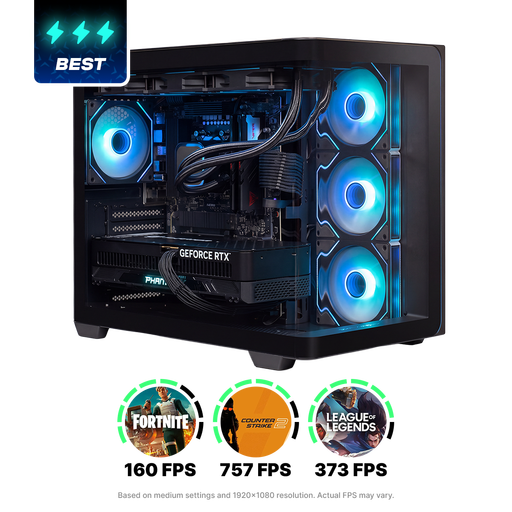
Almighty Shark R900, Ryzen 9 9900X3D, 32 GB, 2 TB SSD
A larger Windows desktop to consider if you need Windows and the stated memory and storage capacity suit your projects.
The product name lists a Ryzen 9 9900X3D, 32 GB DDR5, a 2 TB SSD and an RTX 5090.
Check the video outputs and support for two monitors on this configuration.
View at Joybuy
 No image available
ASUS ROG G700TF-07265F666W, Core Ultra 7 265F, 32 GB, 1 TB SSD
A larger desktop to compare if the stated processor class, memory and storage meet your project needs.
The product name lists an Intel Core Ultra 7 265F, 32 GB DDR5, a 1 TB SSD and NVIDIA GeForce RTX 5070 12 GB.
Check the operating system and video outputs on the exact configuration to make sure they suit your development software and two monitors.
View at Joybuy
Frequently asked questions
How do you use two screens as separate workspaces in Windows?
Connect both screens, check in the display settings that Windows recognises them, then arrange them there. Choose ‘Extend’ to use different windows on each screen. This setting can’t add hardware support that isn’t there.
Is 16 GB of memory always enough for unit tests?
It depends on your projects and tools. Check the requirements if you run larger projects or local test environments alongside an editor. Android Developers notes that larger projects may need more memory and processing power.
What should you check besides the desktop?
Check whether monitors, suitable cables and other peripherals are included. Also compare the desktop’s connections with those on both screens, so you know what else you need for your workspace.
When shopping online in the Netherlands, do you always have 14 days to change your mind?
For an online consumer purchase, there is generally a statutory 14-day cancellation period starting the day after delivery, with some exceptions. This period does not automatically apply to a business purchase made by a business owner.


