Start with a workflow that lets you find scenes, clips and comments again, then check whether the exact desktop configuration suits your editing software and source footage. A compact desktop may be a good fit if it has the connections you need and the version you choose is up to the job. A configurable tower offers different configuration options, but a workstation name or a standalone graphics card alone doesn’t prove that your editing software will run better on it.
Who is this buying guide for?
Volunteer editor with lots of reference footage
You need to find footage and time-stamped comments from the theatre group. As well as considering the computer, look for a workflow with searchable markers or a well-organised media library. Adobe explains how to search by markers in Premiere, while Blackmagic Design describes folders in DaVinci Resolve’s media library.
Editor working with multiple cameras or separate audio
You combine different camera angles or separately recorded audio, and want to check how your editing software synchronises sources. Adobe documents multicamera sequences in Premiere; check that the features described suit your files and software version.
Manager of a shared editing suite
You want to match the computer to the screens and storage you already have, while keeping project files and source footage transferable. Adobe recommends considering storage for your system, cache and media when editing video. You should also plan a separate copy of your originals.
What should you look for in a desktop for your theatre showreel?
Compact desktop
Choose this option if: you want a small desktop computer and your existing screen, storage and peripherals are compatible with the connections on the exact version you’re considering. Apple lists a media engine for the Mac mini (2024) with M4 Pro, supporting formats including H.264, HEVC and ProRes.
Trade-off: check the display outputs and allow room for media and cache. The specifications don’t tell you how your project will play back.
Configurable Windows tower
Choose this option if: you want to match the memory, storage and graphics card to your software and footage, or you’re looking for expansion options. Compare the exact configurations: the HP Z2 Tower G1i version reviewed has different components from the Lenovo ThinkStation P3 Tower Gen 2 version mentioned here.
Trade-off: a tower labelled as a workstation isn’t automatically the right choice. Versions within the same product range can vary considerably.
| What to consider |
What should you check? |
Who is this more important for? |
| Finding reference footage |
Check that your editing software supports markers, metadata and review comments in the way you need. |
If I want to link comments to specific scenes, I need to be able to find those moments quickly. Around 33% of consumers say finding reference footage and scenes is their top priority. |
| Editing and synchronisation |
Compare the resolution, codec, number of camera angles and software version with the capabilities of the exact configuration. Also check whether a proxy workflow suits your project. |
When I combine footage from multiple cameras or separately recorded audio, I want to check that my software can synchronise the sources. Around 27% of consumers prioritise editing playback and synchronisation. |
| Working storage and originals |
Allow room for media and cache, and decide how you’ll store a separate copy of your originals. |
I want to leave room for source footage and working files without confusing those copies with a backup. Around 20% of consumers make storage and keeping originals their top priority. |
| Complete workstation |
Check the ports, memory, storage, graphics card and which components are included in the exact version. |
If I’m setting up a shared editing suite, I want to know whether the computer will connect to our screens and equipment. Around 20% of consumers prioritise the complete configuration and connections. |
Buying pitfalls when choosing an editing computer
-
Assuming a workstation name means it’s configured for editing
Versions within the same product range can differ in memory, storage and graphics card. The model name doesn’t necessarily tell you which components you’ll get.
Note the full model or order number, then compare the listed configuration with your software and source footage.
Upgrading the memory, storage or graphics capabilities later may mean extra work. Check in advance that the version you choose suits your plans.
-
Assuming a fast working SSD is a backup
Working media and cache serve a different purpose from a separate copy that lets you restore source footage or project files.
Plan for media, cache and a separately stored copy of your originals, and check that you can restore that copy.
A separate storage location takes up space and needs attention to keep copies up to date and organise recovery.
-
Comparing only the computer case with your current setup
A compact computer needs to work with your screen and other equipment. The storage you need will also depend on your editing workflow.
Compare the connections on the exact version with your equipment, and factor in the screen, cables and external storage when setting up.
Depending on your existing setup, you may also need a compatible screen, cables or external storage.
Brands to consider
Apple
Mac mini for a compact editing setup with an external screen; the documented M4 Pro version has a media engine and multiple display outputs.
- Apple lists hardware support for formats including H.264, HEVC and ProRes in the Mac mini (2024) specifications.
- Check the exact chip and memory version, software compatibility and your overall setup. The specifications don’t predict how your project will play back.
HP
The Z2 Tower G1i is a configurable Windows workstation option. The C69C6EA#ABH version reviewed has 64 GB RAM, a 1 TB SSD and an RTX 2000 Ada with 16 GB of video memory.
- The configuration listed makes it clear which components are included in this version.
- These are the specifications for one version, not performance figures for every Z2 model. Compare them with your software and footage.
Lenovo
ThinkStation P3 Tower Gen 2 for anyone looking to compare or configure a Windows tower.
- Lenovo lists several versions in the product range, so you can compare specific configurations.
- The versions listed vary: one has 8 GB RAM and integrated graphics, while another has 32 GB RAM and integrated graphics. The product range name doesn’t guarantee a dedicated GPU or a particular amount of memory.
Dell
Dell Pro Precision and Pro Max towers are additional Windows systems to compare.
- Dell describes a range of options for memory, storage and graphics cards across its tower range.
- Information about the product range doesn’t tell you which components are included in a specific model, and isn’t an independent performance test.
Desktops on Joybuy
These Joybuy desktops are suitable for a permanent editing setup. For each version, check that the specifications and connections suit your editing software, source footage and existing setup.
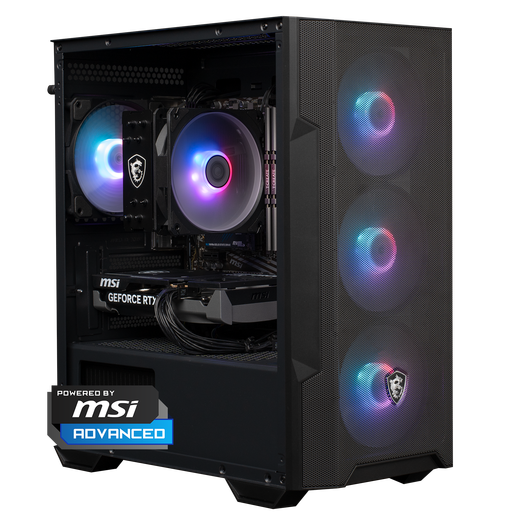 Image unavailable
Shark Max Bite R501 Gaming PC, RTX 5060, R5, 16 GB, 1 TB
A desktop option; the product title lists these components, but doesn’t tell you how the PC will perform with your editing project.
RTX 5060; R5; 16 GB DDR4 memory; 1 TB NVMe SSD.
Joybuy
 Image unavailable
Panoramic Gaming PC, Ryzen 7 5700X, RTX 5060 Ti 8 GB, 16 GB RAM, 480 GB SSD
A desktop with the configuration listed in the product title; check those details against the requirements of your software and files.
AMD Ryzen 7 5700X; GeForce RTX 5060 Ti with 8 GB; 16 GB DDR4 RAM; 480 GB NVMe PCIe SSD.
Joybuy
 Image unavailable
Mac mini, Apple M6, 12-core CPU, 12-core GPU, 16 GB, 256 GB SSD
A compact desktop option; check the listed version, connections and compatibility with your editing software.
Apple M6 chip; 12-core CPU; 12-core GPU; 16 GB memory; 256 GB SSD.
Joybuy
Image unavailable
Mac mini, Apple M6, 12-core CPU, 12-core GPU, 16 GB, 512 GB SSD
A compact desktop option; check the listed version, connections and compatibility with your editing software.
Apple M6 chip; 12-core CPU; 12-core GPU; 16 GB memory; 512 GB SSD.
Joybuy
Image unavailable
Mac mini, Apple M6, 12-core CPU, 12-core GPU, 24 GB, 512 GB SSD
A compact desktop option; check the listed version, connections and compatibility with your editing software.
Apple M6 chip; 12-core CPU; 12-core GPU; 24 GB memory; 512 GB SSD.
Joybuy
Frequently asked questions
Will a more powerful computer help if the theatre group leaves lots of comments on each scene?
Not necessarily. Clear naming and a workflow for comments make it easier to find scenes again. Adobe describes searchable markers in Premiere and importing review comments as time-stamped markers. Check that this workflow suits your software and how you work together.
Can I edit demanding source footage on a less powerful computer?
You may be able to use a proxy workflow if your software and source footage support it. Adobe explains how to edit with lighter copies and switch back to the originals for the final export. This doesn’t guarantee that every computer can handle every project.
How should I organise storage and keep my editing project safe?
Keep source footage, working media and media cache clearly separated in your workflow, and store a separate copy of your originals. Adobe recommends fast storage for media and cache; work out how much capacity you need based on your own footage.
In the Netherlands, are you only entitled to a standard two-year legal guarantee on a desktop bought for personal use?
No. The Dutch government states that there is no fixed statutory guarantee period in the Netherlands: as a consumer, you’re entitled to a product that meets the expectations you’re entitled to have of it. A manufacturer’s or seller’s guarantee is separate. If you’re buying on behalf of an association, check which contractual status and terms apply; consumer rights don’t automatically apply to every purchase.
Can a theatre association include recognisable audience members or performers in a public showreel without further consideration?
Don’t assume that you can. According to the Dutch Data Protection Authority, making and publishing recognisable images from an event requires a lawful basis under the GDPR; consent is one possible basis. The appropriate basis in any given case depends on the people involved and how the images will be used.


