
Student mixing in a DAW
Your priority is making sure your mixing software and plug-ins work on the desktop. Compare the system requirements with the exact computer configuration; Steinberg and Cockos publish requirements for their software.


Start by choosing a desktop that suits the DAW, plug-ins and editing files you actually use. Then check the exact configuration, connections and peripherals you’ll need. A compact Mac desktop may suit a macOS workflow and a permanent workstation, while some Windows desktops offer options for expansion. The form factor alone won’t guarantee a smooth audio mix.
Your priority is making sure your mixing software and plug-ins work on the desktop. Compare the system requirements with the exact computer configuration; Steinberg and Cockos publish requirements for their software.
You switch between picture and sound during post-production. So take your editing software, files and screen set-up into account too. Blackmagic Design describes Fairlight as part of DaVinci Resolve.
For example, you might use an audio interface and want to check in advance that its connections and drivers work with your equipment and software. Steinberg recommends ASIO-compatible audio hardware for low latency with Cubase 15.
First check the software and project files you work with. Then compare audio connections, screen use and any components you still need.
| What to consider | What should you check? | Who is this important for? |
|---|---|---|
| Software and storage | Compare the operating system, processor, memory and available storage with the requirements of your software and files. Steinberg lists 8 GB RAM as the minimum for Cubase 15; this is a software minimum, not a guarantee that every film project will run smoothly. | If you want to use your DAW, plug-ins and projects without compatibility surprises, check the exact configuration. Around 36% of consumers give software compatibility top priority. |
| Picture and sound | Check your editing software’s requirements, the space available for video files and whether the screen set-up suits your work. | If you want to compare the mix with the film picture while editing, consider both parts of your workflow. An estimated 29% of consumers prioritise working with picture and sound together. |
| Audio equipment | Compare the desktop’s connections with your interface and check the relevant driver. A smaller buffer can reduce latency, but it puts more demand on the computer. | If you want to keep using your own interface and reduce latency while recording, check the ports, drivers and buffer settings. Around 21% of consumers put connecting existing audio equipment at the top of their list. |
| Workstation and expansion | Make a list of the components you already have, then check the storage, connections and expansion options for the exact configuration. | If you still need storage or other components, you’ll want to see the complete workstation and possible upgrades. Around 14% of consumers give top priority to the total purchase and expandability. |
Software requirements describe compatibility, but on their own they don’t tell you how a particular project with audio and video will run on a specific computer.
Compare the requirements of all the programmes and plug-ins you use with the exact desktop configuration and your own project files.
A product family can include several configurations; an optional connection or expansion feature won’t necessarily be available on every model.
Before buying, check the full configuration, the ports included and which components come with it.
A missing connection or limited storage could mean you need extra equipment or a different configuration.
A smaller buffer can reduce latency, but it also increases the load on your computer and can cause glitches or dropouts.
Adjust the buffer to suit the stage of your work and check that recording and playback remain stable.
Mac desktops are worth considering if you want to use a macOS environment. With a compact Mac mini, you’ll need to put the rest of your workstation together separately.
The ThinkCentre neo 50t Gen 5 is a tower family to consider if you’re weighing up desktop space and expansion options.
The Dell Pro Micro QCM1250 and Pro Slim QCS1250 are compact and slim desktop families respectively, worth comparing for a Windows workstation.
The ProDesk 4 Mini G1i and ProDesk 4 SFF G1i are business desktop families in different sizes, designed for a permanent workstation.
The NUC 15 Pro is a mini PC family worth comparing if a compact set-up and configurable options matter to you.
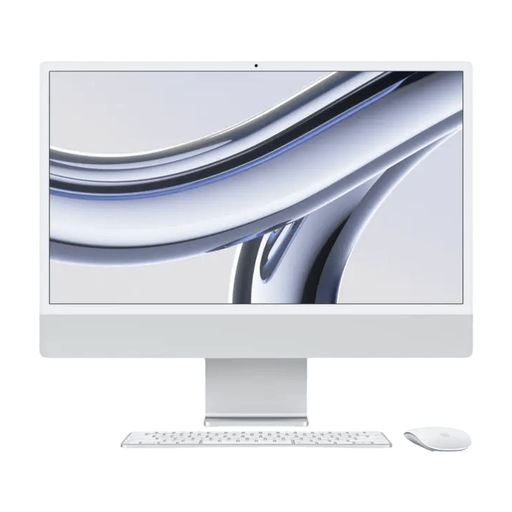
This selection from Joybuy includes an Apple desktop and a Windows tower. Compare them for software compatibility, configuration and the space available in your workstation.
 No image available
An option to compare if you use Apple desktop software that’s compatible with this configuration.
M3 chip, 16 GB memory and 512 GB storage; the product name lists the colour as silver.
 No image available
A Windows desktop to compare if the exact configuration suits your software and workstation.
The product name lists an Intel Core Ultra 7, 32 GB DDR5 memory, a 1 TB SSD, NVIDIA GeForce RTX 5070 and Windows 11 Home.
Start with the DAW, plug-ins and existing projects you use. Cockos describes REAPER as available for Windows and macOS; Steinberg publishes the system requirements for Cubase 15. Also check that your audio interface and the exact desktop configuration suit your workflow.
First check the driver for your audio hardware, then adjust the buffer setting in your software. Steinberg and Focusrite explain that a smaller buffer can reduce latency, but puts more demand on the computer and may cause glitches.
Not simply because it’s a student film or a community screening. The Dutch Government says you may only use someone else’s copyright-protected music with the creator’s permission; you may not distribute or make public a private copy for personal use. Arrange permission or other usage rights that cover the music and the planned screening.