What should you look for when choosing?
First decide whether you’ll mainly be editing a single spoken-word track or working with multiple tracks and plug-ins. Then check the storage, connections and files you’ll need for the exhibition.
| What to consider |
What to look for |
Who it matters to |
| Simple spoken-word editing |
Check the operating system and your editing software’s requirements; keep active projects on fast local storage. |
If I mainly cut and export speech, I don’t want to choose more capacity than my project needs. Around 40% of consumers prioritise simple spoken-word editing. |
| Multiple tracks and plug-ins |
First decide on your DAW, the number of tracks and the effects you’ll use. Then compare the exact CPU, RAM and SSD configuration with the software requirements. |
If you’re working with voices, music or effects at the same time, you mainly need capacity suited to that workload. Around 30% of consumers are most concerned about buying a system for multi-layer mixing. |
| Connecting everything at the venue |
Make a list of your monitor, input devices and audio equipment, then compare their connections with those on the exact desktop model. |
For an exhibition, I want to know whether the computer will actually connect to the screen and audio equipment at the venue. Around 20% of consumers prioritise connections for their setup. |
| Handing over the project and export |
Agree who will manage the editable project, and create a separate playback file in a suitable format. |
If someone else needs to be able to restore the project, I don’t want to confuse the source project with the track used for playback. Around 10% of consumers are most concerned about handover and the complete setup. |
Joybuy product picks
These compact desktops and mini PCs are worth considering for editing a lesson track and storing a project locally. For each model, check that the operating system, software and connections suit your setup.
 No image available
Mac mini Apple M6, 16 GB, 256 GB SSD
Suited to an existing macOS workflow; check that your editor, plug-ins and audio equipment work with your setup.
Apple M6 chip with 12-core CPU and 12-core GPU; 16 GB memory; 256 GB SSD.
View at Joybuy
No image available
Mac mini Apple M6, 16 GB, 512 GB SSD
An option for an existing macOS workflow; check that your software and audio equipment are compatible.
Apple M6 chip with 12-core CPU and 12-core GPU; 16 GB memory; 512 GB SSD.
View at Joybuy
No image available
Mac mini Apple M6, 24 GB, 512 GB SSD
Consider this model if you use macOS and want to match the memory capacity to your software and project.
Apple M6 chip with 12-core CPU and 12-core GPU; 24 GB memory; 512 GB SSD.
View at Joybuy
 No image available
FIREBAT Mini PC A6 AMD Ryzen 7 7735HS
A compact desktop option if you want to edit a lesson track on your computer; check that the operating system and audio equipment work with the model you choose.
AMD Ryzen 7 7735HS; 16 GB RAM; 512 GB SSD.
View at Joybuy
 No image available
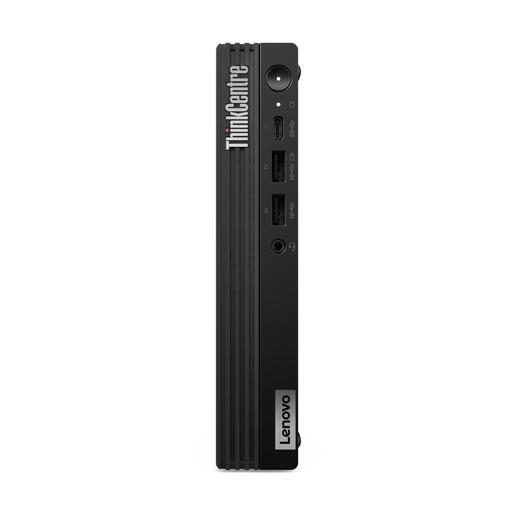
Lenovo ThinkCentre M70q Gen 5 Intel Core i7-14700T
A compact Windows desktop if you want to use existing USB equipment; check that the connections suit the equipment at the exhibition.
Intel Core i7-14700T; 16 GB DDR5; 512 GB SSD; Windows 11 Pro.
The power adapter is not included as standard and must be purchased separately.
View at Joybuy
Frequently asked questions
Do you always need 16 GB RAM for a spoken lesson track?
No, 16 GB isn’t a general requirement for this task. Audacity doesn’t specify any particular CPU or GPU requirement on its Windows download page; Ableton lists 8 GB RAM as the minimum for Live 12 and recommends 16 GB or more for a more demanding workload. Choose based on your software and the project you’ll actually be making.
Can you save an active editing project directly to a USB stick?
Audacity advises against saving active projects to external storage, USB sticks or network storage. Edit and save the active project on fast local storage, then create a separate export for the playback setup.
Do you need a separate audio interface?
Not for every recording you’re only editing. If you’re recording with microphones or monitoring through an interface, check the inputs, connections and drivers you need. The Audacity manual notes that multichannel recording requires suitable hardware and drivers.
Can you use existing music in the exhibition track without permission?
Don’t assume you can: according to the Dutch government, you need the creator’s permission to use music protected by copyright, and a private copy for personal use cannot be made public. For the specific excerpt and planned screening, check what rights or permissions are available.
What should the school consider if pupils can be recognised by their voices on the track?
The school should handle recordings of recognisable pupils carefully, in line with the applicable privacy arrangements. The Dutch Data Protection Authority outlines schools’ obligations, including providing information and protecting pupil data. The institution must assess which lawful basis and arrangements apply to this recording and screening.


