Who is this desktop guide for?

Cataloguer working with two record windows

Wants to read and edit a description and source record, or a record and score, at the same time. The available screen space and window layout matter here. Microsoft Support explains how to arrange windows in Windows, while Koha Community explains how bibliographic records are structured.

Digital sheet music manager

Works with score files alongside the catalogue and needs to check that their files and software will work on the chosen operating system. According to forScore, the app supports multiple windows on macOS, but this doesn’t automatically tell you whether other cataloguing software is compatible.

Manager of a shared collection

As well as data entry, considers peripherals, restorable backups and, if the catalogue contains personal data, appropriate security. The Dutch Data Protection Authority explains that organisations must protect personal data properly.

What should you look for when choosing?

Compact Windows desktop

A good fit if: your cataloguing software supports Windows, you have limited desk space and you want to use a separate or existing screen. Microsoft Support explains how to arrange windows using Snap.

Bear in mind: with the Lenovo ThinkCentre Neo 50q Gen 5 configuration reviewed, the screen, keyboard and mouse are sold separately. Also check the ports on the exact model.

Mac mini

A good fit if: your cataloguing software genuinely runs on macOS, or you use a suitable Mac app for digital sheet music. Apple explains how to position windows side by side; according to forScore, the app supports multiple windows on macOS.

Bear in mind: support for multiple score windows doesn’t mean the app can also replace your library catalogue or loans management system. Check software, screens, cables and input devices separately.

Windows tower

A good fit if: you have room for a larger case and physical ports or expansion slots are important to you. The Acer Aspire TC-1780 model reviewed lists PCI Express expansion slots and Windows 11 Home.

Bear in mind: check the actual video outputs on the tower you choose, and whether a keyboard and mouse are included.

What to consider What should you check? Who is this most relevant to?
Screen layout Test your own catalogue interface on the screen you plan to use. If you want two screens, check the outputs on the exact desktop model and make sure your screens can connect to them. I want to read records, or a record and score, at the same time without constantly switching between them. Around 36% of consumers say screen layout is their main concern.
Cataloguing software Check which operating systems are supported, which catalogue fields you need and how the software handles multiple records or windows. If I need to keep using my existing cataloguing software, I want to check compatibility in advance. Around 29% of consumers put software compatibility first.
Storage and recovery Compare the storage capacity with the size of your scans and catalogue files. You should also have a backup that lets you restore your files. I want to be able to store and recover collection data and scans if something happens to my computer. Around 21% of consumers prioritise data retention above all else.
Complete setup Check what’s included and which ports are available for your existing screens, cables and input devices. I want the desktop to suit my desk and the peripherals I already have. Around 14% of consumers mainly need a complete setup that meets their needs.

What to consider when buying and using a desktop

  • Assuming a mini PC is a complete workstation

    With the Lenovo ThinkCentre Neo 50q Gen 5 model reviewed, the screen, keyboard and mouse are sold separately. The computer alone may not be enough if you still need these items.

    Before buying, compare what’s included with the equipment already at your cataloguing workstation.

    Brands worth considering

    Lenovo

    ThinkCentre Neo 50q Gen 5: a compact Windows option for a workstation with a separately chosen screen.

    • For model 13B9CTO1WWNL2, Lenovo lists Windows 11 Pro, 16 GB of memory and a 512 GB SSD.
    • According to Lenovo, the screen, keyboard and mouse are sold separately with this model. The stated configuration doesn’t determine which ports other models have.

    Apple

    Mac mini: a compact macOS option if the cataloguing software you need works with macOS.

    • For the M6 base model, Apple specifies 16 GB of memory and a 256 GB SSD, and describes support for multiple external displays.
    • Check that your particular cataloguing software works on macOS; support for multiple displays doesn’t confirm compatibility.

    Acer

    Aspire TC: a tower option for anyone weighing up case size and physical expansion options.

    • The Acer Aspire TC-1780 with part number DT.BK6EH.00D lists PCI Express expansion slots, 16 GB of memory and a 512 GB SSD.
    • These details apply to that specific model; check the ports and configuration of the model you’re considering.

    Dell

    Dell Pro Micro is a compact business desktop range for desks where space is limited.

    • Dell identifies model QCM1250 as a Micro desktop.
    • Check the processor, memory and ports on the specific configuration before comparing it with another desktop.

    HP

    HP Pro Mini 400 G9 is a compact business desktop range for a workstation with a separately chosen screen.

    • HP describes the product range as compact and designed for business use.
    • Check the configuration and compatibility with your cataloguing software before choosing a model.

Desktops on Joybuy

This selection includes Mac mini configurations and Windows desktops for cataloguing with multiple windows or screens. Before choosing, check that your cataloguing software runs on the model’s operating system.

Mac mini with M6 chip, 16 GB memory and 256 GB SSD

Mac mini M6, 16 GB, 256 GB SSD

A macOS desktop for cataloguing if your chosen software works with macOS.

16 GB of memory and a 256 GB SSD. The product description lists support for up to three external displays; check that your displays and cataloguing software suit your setup.

Joybuy
Mac mini with M6 chip, 16 GB memory and 512 GB SSD

Mac mini M6, 16 GB, 512 GB SSD

A macOS desktop for cataloguing if your chosen software works with macOS.

16 GB of memory and a 512 GB SSD. The product description lists support for up to three external displays; check that your displays and cataloguing software suit your setup.

Joybuy
Mac mini with M6 chip, 24 GB memory and 512 GB SSD

Mac mini M6, 24 GB, 512 GB SSD

A macOS desktop for cataloguing if your chosen software works with macOS.

24 GB of memory and a 512 GB SSD. The product description lists support for up to three external displays; check that your displays and cataloguing software suit your setup.

Joybuy
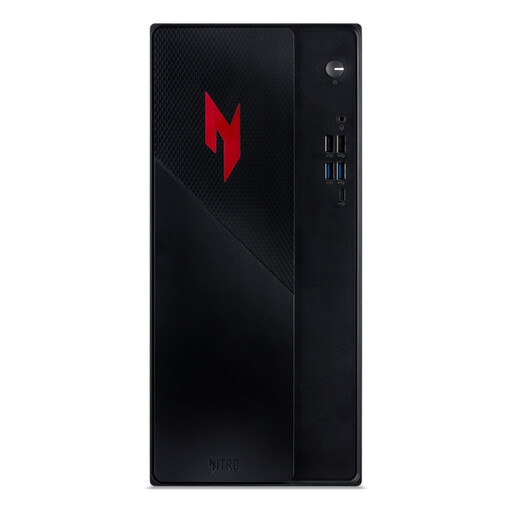
Acer Nitro 20 N20-101 desktop with 16 GB RAM and 1 TB SSD

Acer Nitro 20 N20-101, 16 GB RAM, 1 TB SSD

A Windows desktop to consider if your cataloguing software supports Windows and you want to connect multiple screens.

The product description mentions HDMI, DisplayPort and use with multiple monitors. Check that the outputs work with your screens and preferred setup.

Joybuy

ACEMAGIC E3B Mini Desktop with 16 GB memory and 512 GB SSD

ACEMAGIC E3B Mini Desktop, 16 GB, 512 GB SSD

A compact Windows desktop to consider if your cataloguing software supports Windows and you want to use multiple screens.

The product description mentions three screens at once via HDMI, DisplayPort and USB-C, and Windows 11 Pro. Check that the ports work with your screens and cables.

Joybuy

Frequently asked questions

Do I definitely need two monitors to view two records side by side?

No, you can also place windows side by side on one screen. Microsoft Support explains how to use Snap in Windows, and Apple explains how to position windows on a Mac. If the text looks too small on one screen, you could consider a second display; if so, check the outputs on the exact desktop model first.

Can a Mac mini handle both my sheet music and library records?

That depends on the apps you want to use. According to forScore, the app supports multiple score windows on macOS, but that doesn’t mean forScore also provides the library catalogue you need. Check your cataloguing software’s operating system requirements, data entry features and workflow separately.

How can you prevent losing your catalogue if your computer breaks?

Set up a backup and check that you can restore your catalogue files from it. Microsoft explains backup and recovery for Windows and says the Windows Backup app discussed doesn’t work with work or school accounts. So check that the service is suitable for the account you use.

What are the warranty rules in the Netherlands for a desktop bought online?

When a consumer buys a product, it must meet the expectations a buyer can reasonably have of it under normal use. The Netherlands Authority for Consumers and Markets explains that statutory warranty applies alongside a commercial or manufacturer’s warranty. If a product is faulty, the seller is your point of contact. Online purchases generally come with a 14-day cooling-off period after delivery, subject to legal exceptions.

Are there privacy requirements for your sheet music catalogue?

If an organisation processes personal data in its catalogue, such as borrowers’ details, the Dutch Data Protection Authority says it must protect that data properly. A catalogue containing only information about musical works doesn’t, by itself, make it clear whether personal data is being processed.
