
Research editor
You gather local figures and documents, and want to keep track of their sources, versions and drafts. KVK Regiodata provides figures on regional economic developments.


Start by choosing a desktop that suits the way you work. A compact model may be all you need for documents, spreadsheets and browser research, while the exact memory and storage configuration matters most if you regularly have lots of files open at once. Check that your software, screen and input devices are compatible, too. For source material and drafts, the Consumers’ Association recommends keeping a separate back-up as well as synchronising your files.
You gather local figures and documents, and want to keep track of their sources, versions and drafts. KVK Regiodata provides figures on regional economic developments.
You switch between browser research, writing and spreadsheets. Microsoft Support describes Word, Excel and PowerPoint, among others, as productivity apps. So compare the desktop’s configuration with the programmes you use.
Your choice also depends on the space available on your desk, your existing screen and the desktop’s ports. Compact desktops and the Mac mini require a separate screen.
For a written market profile based on local sources, the key considerations are file management, working with several programmes at once, recovery options and how you set up your workspace.
| What to consider | What to look for | Who should prioritise this? |
|---|---|---|
| Local sources and versions | Check the SSD capacity of the exact model and choose a separate back-up method as well. | If I want to find figures, documents and draft versions on my computer, I prioritise well-organised file management; around 33% of consumers make source management their main priority. |
| Switching between programmes | Make a note of the programmes you use and compare the memory, processor, operating system and storage of the exact model. | If you research sources, write and work with spreadsheets at the same time, you’ll want a configuration suited to that combination; around 27% of consumers make multitasking their main priority. |
| Recovering files | Check how to restore files and where you’ll keep a copy separate from your working files. | If I want to be able to restore drafts and source material after losing them, a separate back-up process is important; around 20% of consumers put data protection first. |
| Screen and workspace | Check what’s included and whether the video and USB ports are compatible with your existing equipment. | If you want to keep using an existing monitor or prefer an integrated set-up, consider how your workspace is arranged; around 13% of consumers make this their main priority. |
| Image editing, if needed | Find out which image-editing software and materials you use, then compare their requirements with the specifications of the exact desktop model. | If I edit photos or videos as well as writing, the configuration needs to suit this additional task; around 7% of consumers make image editing their main priority. |
For the Lenovo ThinkCentre model reviewed, Lenovo says the screen is available separately; a keyboard and mouse are not included either.
Compare the complete set-up and the available ports before choosing a model.
Changes or deletions can also affect synchronised files. Alongside OneDrive, the Consumers’ Association recommends using a separate back-up feature that lets you restore files.
Decide how you’ll make a copy and check that you can actually restore your source files and drafts.
Microsoft ended mainstream support for Windows 10 on 14 October 2025. Microsoft also describes a conditional ESU option for consumers, available until 12 October 2027.
Check which operating system the desktop runs and which support option applies to that specific purchase.
The ThinkCentre Neo 50q Gen 5 is a compact Windows desktop for a workspace with a separate screen.
The Pro Micro QCM1250 is a compact, configurable Windows desktop.
The Pro Mini 400 G9 is a compact business Windows desktop available in several configurations.
The Mac mini is a macOS option that requires a separate screen; the iMac combines the computer and screen.
This selection includes compact desktops for use with a separate screen, as well as all-in-one PCs with a built-in screen.
 No image available
Suited to a macOS workspace with a separate screen and local files.
12-core CPU and 12-core GPU; 24 GB of memory; 512 GB SSD.
 No image available
A compact Windows desktop for source research and document work with a separate screen.
16 GB LPDDR4X 3200MT/s; 512 GB SSD; Windows 11 Pro.
 No image available
A compact desktop for working with source material, text and spreadsheets at the same time.
24 GB LPDDR5 RAM; 512 GB SSD; Radeon 760M graphics.
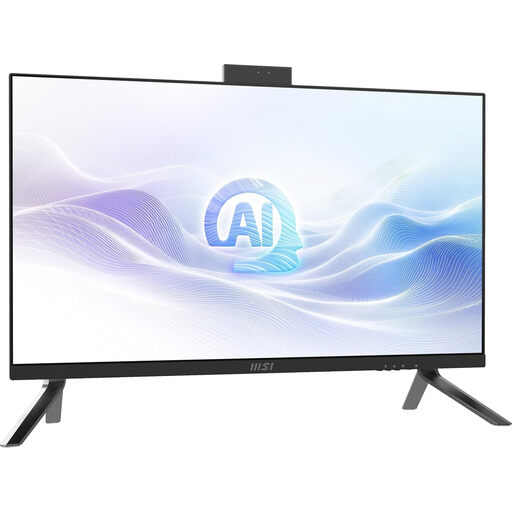 No image available
Suited to an integrated workspace if you want to choose your computer and screen together.
27-inch screen with 2560 × 1440 pixels; 32 GB DDR5; 1 TB SSD; Windows 11 Pro.
 No image available
An integrated desktop option for source research and editorial work, with a built-in screen.
27-inch QHD screen with 120 Hz; 16 GB LPDDR5X; 1 TB SSD; Windows 11 Home.
Not for the writing and source research described here alone. If you also edit photos or videos, first work out which software and materials you use. This additional task may affect your choice of configuration.
Before buying, check whether a screen, keyboard and mouse are included, and whether you can connect your existing screen to the model you’ve chosen. Lenovo lists these items as sold separately for the ThinkCentre model reviewed.
Not necessarily. Alongside OneDrive synchronisation, the Consumers’ Association recommends using a separate back-up feature that lets you restore files.
When you buy as a consumer, you’re entitled to a product that works as it should. According to the Dutch government, there is no fixed statutory warranty period; if something goes wrong, you can contact the seller. Check any additional warranty terms separately. Consumer rights do not necessarily apply in the same way to business purchases.
First check which privacy rules apply to the publication. The Dutch Data Protection Authority says the GDPR applies when someone creates and publishes images on behalf of a business or organisation for professional or commercial purposes. Consent can provide a legal basis, but it is not the only possible basis.