First, choose a desktop that can run your IDE, programming language and test environment. Then decide whether you’ll mainly run tests locally or keep an IDE, database and containers open at the same time. A compact Windows PC and a Mac mini could both work, but your choice depends on software compatibility, configuration and ports. Extra processor cores or storage aren’t necessary for every project.
Who is this desktop guide for?
Developer who runs lots of local tests
If you often run tests after changing code, consider the processor and what you’ll be running locally at the same time. Microsoft Learn and JetBrains outline software requirements, but these don’t provide a performance test for your project.
Developer using an IDE and test services
If you keep a database or containers open alongside your editor, for example, check the installed memory and storage available for your tools and project files. JetBrains and Docker publish separate requirements for their software.
Developer with a fixed software environment
If your development tools or tests need to run on Windows or macOS, check compatibility before comparing desktop models. Microsoft Learn lists the supported Windows versions for Visual Studio 2022; also check the requirements for your other tools.
What should you consider when choosing?
Start with the software you need to use, then work out which tasks will run locally at the same time. Finally, check that the ports suit your workspace.
Compact Windows desktop
A good fit if: your development tools or local test environment require Windows; compare the full configuration and available ports.
Bear in mind: a mini case saves space, but it doesn’t tell you how quickly tests will run or how easy the PC is to upgrade.
Mac mini
A good fit if: your IDE and tests work on macOS, and the ports suit your monitor and peripherals.
Bear in mind: Windows-specific workflows won’t necessarily transfer to macOS; check your tools and storage needs.
Mini PC for parallel workloads
A good fit if: you regularly run several processes or test services at once; Lenovo lists a Core i7-14700T option for the ThinkCentre M70q Gen 5.
Bear in mind: the processor specification doesn’t predict how quickly your planner will run tests; also check the exact configuration and included power adapter.
| Purchasing concern |
What to look for |
Who is this important for? |
| Local tests |
Compare the processor with your own test setup; extra cores are most relevant if you actually run tests in parallel. |
If I want to run tests locally after small changes, I focus on the workload my desktop will actually need to handle. Around 40% of consumers who prioritise local testing have this as their main purchasing concern. |
| IDE and other programmes |
Check the installed RAM and SSD space for your IDE, database, containers and project files. JetBrains lists 8 GB total RAM and 3 GB available for IDE processes for IntelliJ IDEA. |
If I keep a database or containers open alongside my editor, I want to know whether the configuration has enough capacity. Around 30% of consumers prioritise development programmes used at the same time. |
| Software compatibility |
Check that your IDE, programming language, runtime and test framework support the operating system and processor architecture. |
If my tests or development tools are tied to Windows or macOS, the desktop needs to work with them. Around 20% of consumers for whom compatibility is the main purchasing concern fall into this group. |
| Workspace and ports |
Check the monitor outputs, USB ports and network port, and find out which power adapter and accessories are included with the exact model. |
If I want to connect my monitor and peripherals straight away, the complete setup matters, not just the size of the case. Around 10% of consumers put ports, space and the complete workspace first. |
Pitfalls to avoid
-
Assuming an IDE’s minimum requirements cover your whole workflow
The system requirements for IntelliJ IDEA describe the IDE; they don’t automatically account for the resources needed by tests, databases and other programmes running at the same time.
Work out which programmes you’ll use simultaneously, then compare the actual installed RAM and SSD capacity.
-
Assuming a product range has one fixed configuration
Product ranges can include different processors, memory and storage options. The specifications for one product code won’t necessarily apply to every version.
Before buying, compare the full model or product code with the specifications for that exact version.
-
Assuming the power adapter is included
The product information for the ThinkCentre listing we reviewed refers both to a charger that must be bought separately and to an included power adapter.
Before buying, confirm which power adapter and power cable are included with the exact version.
Relevant brands for this desktop guide
HP
The Pro Mini 400 G9 is a compact Windows desktop range. For configuration 6D494EA#ABH, HP lists Windows 11 Pro, an Intel Core i5-12500T, 16 GB RAM and a 512 GB SSD.
- This specific configuration gives you clear details to compare the operating system, memory and storage.
- These specifications apply to product code 6D494EA#ABH, not every version in the range.
Apple
The Mac mini with M6 is a compact macOS desktop. Apple lists 16 GB of unified memory and a 256 GB SSD for the base model.
- The stated base configuration gives you clear memory and storage details to compare with your project needs.
- Check your preferred memory and storage option, ports and development tool compatibility; the specifications don’t prove how well it will run tests for your particular use.
Lenovo
The ThinkCentre M70q Gen 5 Tiny is a compact PC range. Lenovo lists several model codes and processor options, including the Core i7-14700T.
- The different processor options give you a starting point for matching configurations to your workload.
- Specifications vary by model code. Check the exact configuration and which power adapter is included.
Joybuy products
This selection includes Windows desktops and a Mac mini for programming and local testing. Check that your development tools and test environment work with the operating system listed for each model.
 No image available
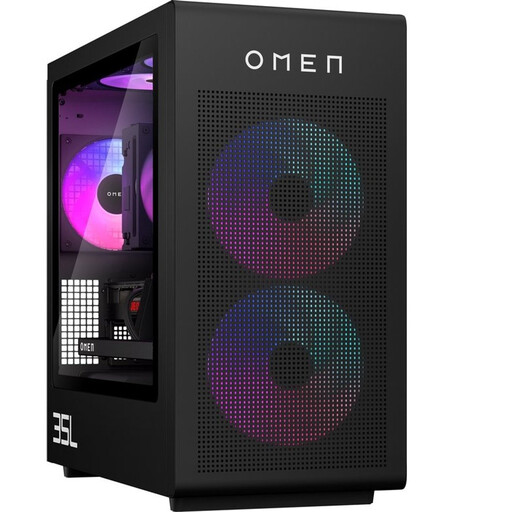
OMEN 35L Gaming Desktop GT16-0162nd D49NFEA#ABH
A Windows desktop configuration to consider if you run local tests on a Windows PC.
Windows 11 Home; Intel Core i7-14700F; 16 GB RAM; 1 TB NVMe SSD. Leave at least 10 cm of space around the case and don’t use the PC in an enclosed cabinet.
Joybuy
 No image available
SOYO Y5Pro mini PC
A compact option to consider if you’re short on space and use a wired network connection.
Windows 11; 8 GB DDR4; 256 GB SATA SSD; HDMI and Type-C video outputs. The product information lists an Intel Core i5-8250U/8350U: confirm which processor version this model has before buying.
Joybuy
 No image available
RGB Gaming PC, Ryzen 5 5500, RTX 5060
This Windows configuration is worth considering if you’re looking for a desktop for local projects and tests.
Ryzen 5 5500 with 6 cores and 12 threads; 16 GB RAM; 480 GB PCIe 4.0 SSD. The product title says Windows 11 is not activated; check what this means for your use.
Joybuy
 No image available
Panoramic Gaming PC, Ryzen 7 5700X, RTX 5060 Ti
A Windows desktop to consider if you run several processes alongside your IDE.
Ryzen 7 5700X with 8 cores and 16 threads; GeForce RTX 5060 Ti with 8 GB; 16 GB DDR4 RAM; 480 GB NVMe PCIe SSD. According to the product title, Windows 11 Home is pre-installed but not activated.
Joybuy
 No image available
Mac mini with Apple M6 chip, 16 GB, 256 GB SSD
A compact macOS desktop to consider if your development tools and tests work on macOS.
Apple M6 chip with 12-core CPU and 12-core GPU; 16 GB memory; 256 GB SSD. The description lists HDMI, USB-C and support for up to three external displays. Check that there’s enough storage for your projects and test data.
Joybuy
Frequently asked questions
Do I always need a powerful desktop for automated tests?
No, it depends on which tests run locally and which might run on an external runner. GitHub describes its hosted runners as machines that execute workflow tasks; this doesn’t tell you how quickly your project will run tests locally.
Can I install an IDE and containers on any Windows mini PC without checking first?
No, check each programme’s requirements for the Windows version and settings of the PC you choose. JetBrains publishes separate requirements for IntelliJ IDEA, while Docker outlines additional requirements for Docker Desktop on Windows, depending on the backend and installation method.
How much RAM do I need to use an IDE and other programmes at the same time?
Consider your whole workflow rather than just your IDE’s minimum requirements. JetBrains lists 8 GB total RAM and 3 GB available for IDE processes for IntelliJ IDEA; also allow for the programmes you use at the same time.
What should I check when setting up a mini PC?
Check that the power adapter and ports suit your equipment, and keep the ventilation openings clear. For the Lenovo listing we reviewed, make sure you confirm exactly which power adapter and power cable are included before buying.
Can I return a desktop bought online in the Netherlands?
For an eligible online consumer purchase, you’re generally entitled to a statutory cooling-off period of up to 14 days after delivery. ACM ConsuWijzer lists exceptions; check which terms apply to your order.


