What should you look for when choosing?
Start with your IDE, programming language and the tasks you run at the same time. Then compare the configuration, connections and included components of the specific model you’re considering.
| What to consider |
What should you check? |
Who is this most relevant to? |
| Memory for multiple tools |
Compare the installed RAM with your IDE and the tasks you run at the same time. JetBrains lists 8 GB of total RAM and 3 GB available for IDE processes for IntelliJ IDEA; these are requirements for that software, not a general buying threshold. |
If you keep code, a debugger and other development tools open at the same time, you’ll want to know whether the memory in that configuration is up to the task. Around 40% of consumers make sufficient memory for running multiple tools their top priority. |
| Running and storing projects locally |
Check the processor and SSD in the exact configuration, and consider how much space your project and local tests will need. Lenovo lists a 512 GB SSD for the ThinkCentre neo 50q Gen 4 configuration 12LM006LEZ; MSI describes several upgrade options for the PRO DP21 14MQ. |
If you run the planner and tests locally, you’ll want to match the configuration to your project and storage needs. Around 30% of consumers give running and testing locally top priority. |
| Size and displays |
Compare the video outputs with the inputs on your displays, and check which cables you’ll need. ASUS lists several video outputs for the NUC 14 Pro, including HDMI and Thunderbolt 4 USB-C with DisplayPort 1.4; check the exact configuration. |
If desk space is limited but you want to keep using your existing displays, both size and connections matter. Around 20% of consumers prioritise a compact workspace. |
| Included components |
Check the operating system, memory, storage and included peripherals for each configuration. Lenovo states that the monitor and keyboard are sold separately with the ThinkCentre mentioned above; the ASUS NUC 14 Pro Kit comes without a pre-installed operating system, memory or storage. |
If you want to get started straight after buying, you’ll want to know what you already have and what’s still missing. Around 10% of consumers consider the total picture of what they need to buy the most important factor. |
Joybuy product picks
These desktops and mini PCs are options to compare when looking at configurations for programming, running development tools at the same time and storing project files locally.
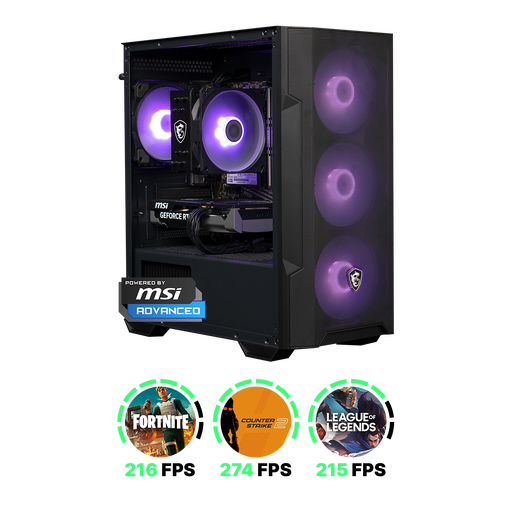 Image unavailable
Shark Max Bite R500 Gaming PC
For anyone using code and a debugger at the same time, the product name lists 16 GB RAM and 500 GB storage.
The product name also mentions a Ryzen 5 processor and RTX 5060.
View at Joybuy
 Image unavailable
RGB Gaming PC Ryzen 5, 16 GB, 480 GB SSD
For running development tools at the same time, the product name lists 16 GB RAM and a 480 GB SSD.
The configuration lists an RTX 5060 and Windows 11 as not activated; check how activation works before use.
View at Joybuy
 Image unavailable
Panoramic Gaming PC Ryzen 7 5700X
For locally stored projects, the product name lists 16 GB DDR4 RAM and a 480 GB NVMe PCIe SSD.
The name also mentions a GeForce RTX 5060 Ti with 8 GB and Windows 11 Home, pre-installed but not activated; check how activation works.
View at Joybuy
 Image unavailable
Gaming Desktop PC Ryzen 7 7800X3D
If you keep several development tools open, you can compare the listed memory configuration: 32 GB DDR5 RAM.
The product name lists a 1 TB NVMe SSD, a GeForce RTX 5080 and Windows 11 Trial.
View at Joybuy
 Image unavailable
ACEMAGIC AK1PLUS Mini PC
For a compact workspace, the product name lists 16 GB LPDDR4X RAM and a 256 GB SSD.
The listed configuration includes an Intel Celeron N5095 (4C/4T), an M.2 2280 SATA SSD, HDMI 2.0 and Windows 11 Pro.
View at Joybuy
Frequently asked questions
Do I need a powerful gaming PC to debug a tournament planner?
Not just because you have a debugger open. The configuration you need depends on your development environment, tests and other software running at the same time. Check the requirements for those programmes before choosing extra hardware.
Will the debugger work straight after installing Visual Studio Code?
According to Microsoft, Visual Studio Code includes debugging for JavaScript, TypeScript and Node.js. Other languages and runtimes may need a debugger extension; also check which development tools your programming language requires.
How much RAM do I need for IntelliJ IDEA?
JetBrains lists 8 GB of total RAM and 3 GB available for IDE processes for IntelliJ IDEA. These are requirements for the IDE itself; also allow for your project and other programmes you use at the same time.
Which components might be missing from a mini desktop?
It depends on the configuration. Lenovo states that the monitor and keyboard are sold separately with the ThinkCentre neo 50q Gen 4 configuration 12LM006LEZ; the ASUS NUC 14 Pro Kit comes without a pre-installed operating system, memory or storage. Check the component list for the exact model.
What can I do if my desktop is faulty after purchase?
According to the Dutch government, if a product bought by a consumer is faulty, the seller must provide a solution; the manufacturer’s warranty does not replace this responsibility. The exact solution depends on the problem and the circumstances that apply.


