Start with the requirements of your design software, the files you work with and the screen you already have. An all-in-one combines the computer and screen, while a mini PC or tower lets you choose the screen separately. Before deciding, check the exact configuration, the connections you need and the verified colour information. Apple and HP list configurations with 16 GB of memory, among other options, but a high screen resolution alone is no proof of colour accuracy.
Who is this buying guide for?
Poster designer working with multiple layers
If you combine photography, text and illustrations, compare your software’s requirements with the memory and storage configuration of the exact desktop model. Adobe lists 8 GB RAM as the minimum for Photoshop 27.x and recommends 16 GB or more. Lenovo Netherlands describes design work such as poster and layout design.
Print poster designer
If you want to assess the composition on screen and take the final print into account, choose your screen carefully. A stated 4K resolution is no proof of colour accuracy. HP lists this resolution for the OmniStudio X 27cs1625nd, but verified colour information is important for colour-critical work.
Student with an existing screen
If you already have a suitable screen, compare a compact computer’s connections, memory and storage for the exact configuration. Apple lists HDMI and Thunderbolt connections, among others, for the Mac mini M6.
What should you look for when buying?
All-in-one
A good fit if: you don’t yet have a suitable screen and want to choose your computer and screen together.
The trade-off: you choose the built-in screen along with the computer; resolution alone says nothing about colour accuracy.
Mini PC with separate screen
A good fit if: you want to use a screen you already own or choose your own monitor.
The trade-off: if you don’t already have them, factor in the monitor, connections and input devices you’ll need.
Tower with separate screen
A good fit if: you have the space and want to assess the computer and screen separately.
The trade-off: configurations can vary within a product range, so check the exact model and its availability.
| What to consider |
What should you check? |
Who is this most relevant to? |
| Memory and storage |
Compare your software’s requirements with the memory and SSD in the exact configuration, and leave room for your working files. |
If you work with large images or layered files, you’ll want a setup that suits your software and files. Around 40% of consumers say smooth handling of design files is their top priority. |
| Screen for layout and colour |
Check the size, resolution and verified colour information for the exact screen configuration. |
If you assess text, images and the finished poster on screen, you’ll want to know what the screen actually displays. Around 30% of consumers prioritise assessing the screen. |
| A screen you already own |
Compare the video connections and check which cables and input devices you’ll need. |
If you already have a suitable screen, you’ll want to reuse it without overlooking any connections or peripherals you need. Around 20% of consumers prefer a compact computer with an existing screen. |
| Choosing a tower yourself |
Check the model number, memory, SSD, screen requirements and availability for the exact configuration. |
If you want to choose the computer and screen separately and have enough desk space, you’ll want to assess each part of the setup. Around 10% of consumers make a separate tower setup their top priority. |
Pitfalls to avoid when choosing
-
Assuming a 4K screen means accurate colour
A stated 4K UHD resolution doesn’t tell you how accurately the screen displays colours. This matters if you’re assessing a poster for print.
For colour-critical work, ask for verifiable colour specifications for the exact screen configuration, and discuss the print requirements with your printer.
-
Assuming every configuration in a desktop range is the same
Memory and storage can vary between configurations. Adobe lists 8 GB RAM as the minimum for Photoshop 27.x and recommends 16 GB or more; that recommendation doesn’t automatically apply to every design app.
Compare the full model or configuration number with the requirements of the software you use.
If you later need a different configuration, it could mean an extra expense.
-
Comparing only the computer itself
With a mini PC or tower, you choose the screen separately; an all-in-one has a built-in screen. This means your complete workstation can involve more than just the computer.
Compare the whole setup and check what’s included with the exact order.
If you don’t have a suitable screen or the peripherals you need, you’ll have to arrange these separately.
Brands and desktop ranges to compare
Apple
The Mac mini is a compact computer for anyone choosing a screen separately. This option is especially relevant if you already have compatible peripherals.
- For Mac mini M6 configurations in the Netherlands, Apple lists options starting with 16 GB unified memory and a 256 GB SSD, as well as HDMI and Thunderbolt connections.
- Check the storage configuration and make sure your screen and input devices connect to the model you choose.
HP
The OmniStudio X 27cs1625nd is an all-in-one with a built-in screen; the Pro Tower 400 G9 is a tower for which you choose a screen separately.
- HP lists a 27-inch 4K UHD screen, 16 GB RAM and a 1 TB SSD for the OmniStudio X 27cs1625nd. For the Pro Tower 400 G9 configuration 99P69ET#ABH, HP lists 16 GB RAM and a 512 GB SSD.
- Resolution is no proof of colour accuracy. HP listed the Pro Tower configuration mentioned above as unavailable; check the current availability of the exact model.
Lenovo
The ThinkCentre neo 50t Gen 5 is a tower for anyone who wants to assess the computer and screen separately.
- The Netherlands configuration 12UDCTO1WWNL1 lists 8 GB RAM and a 256 GB SSD.
- For Photoshop 27.x, 8 GB meets Adobe’s minimum but falls below its recommendation of 16 GB or more. Lenovo’s claims about cooling and quiet operation are manufacturer claims, not independent measurements.
Joybuy products for poster design
This selection includes desktops for use with a separately chosen screen: tower PCs and compact Mac minis. Check the configuration of each model and arrange a suitable screen if you don’t already have one.
 No image available
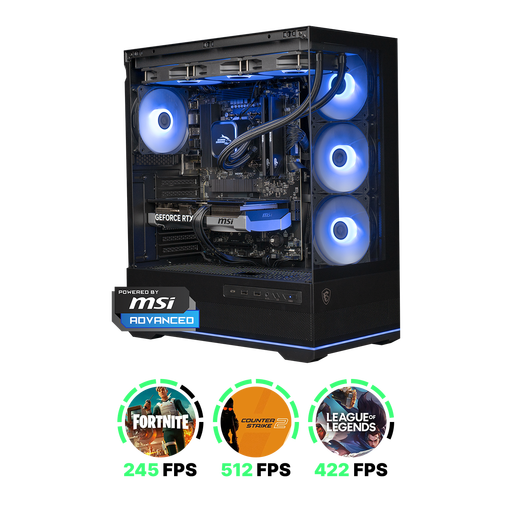
Shark Ultimator R700 Gaming PC, RTX 5070, R7, 16 GB, 1 TB
A tower PC for anyone who wants to choose the computer and screen separately. Check that the listed configuration suits your design software and files.
The product name lists RTX 5070, R7, 16 GB and 1 TB. Check the exact memory and storage details before comparing them with your software’s requirements.
Joybuy
 No image available
RGB Gaming PC, RTX 5060, Ryzen 5, 16 GB, 480 GB SSD
A desktop PC for anyone who wants to consider the computer and screen separately. Compare the configuration with the software and files you use.
The product name lists 16 GB and a 480 GB SSD. Windows 11 is listed as not activated.
Joybuy
 No image available
Panoramic Gaming PC, AMD Ryzen 7 5700X, RTX 5060 Ti 8 GB, 16 GB DDR4 RAM, 480 GB NVMe PCIe SSD
A tower PC for anyone who wants to use a separately chosen screen. Check that the configuration suits your software and storage needs.
The product name lists 16 GB DDR4 RAM and a 480 GB SSD. Windows 11 Home is listed as not activated.
Joybuy
 No image available
Apple Mac mini M6, 12-core CPU, 12-core GPU, 16 GB, 256 GB SSD
A compact computer for anyone who wants to use an existing screen or choose a monitor separately.
The configuration lists 16 GB and a 256 GB SSD. Apple lists HDMI and Thunderbolt connections, among others; check that they’re suitable for your screen.
Joybuy
No image available
Apple Mac mini M6, 12-core CPU, 12-core GPU, 16 GB, 512 GB SSD
A compact computer for anyone who wants to use an existing screen or choose a monitor separately.
This configuration lists 16 GB and a 512 GB SSD. Check that the screen connections are compatible with your existing or chosen monitor.
Joybuy
Frequently asked questions
Does your desktop need 16 GB RAM for this poster?
Not for every design task. Adobe lists 8 GB RAM as the minimum for Photoshop 27.x and recommends 16 GB or more. Also check the requirements of the other software you use.
What do you need to connect before you can design on a mini PC?
Check that your screen is compatible with a video output on the configuration you’ve chosen, and arrange the input devices you need. Apple lists HDMI and Thunderbolt connections, among others, for the Mac mini M6.
How can you stop your working files from using up all your available space?
Compare the SSD configuration with the space your files and software need, and leave some storage free for your work. Adobe lists separate storage requirements for Photoshop, including a recommended amount of free disk space.
What can you expect from the seller if a desktop bought online develops a fault?
According to ACM ConsuWijzer, you have a legal guarantee in addition to any manufacturer’s warranty if, under normal use, the product doesn’t do what you could reasonably expect. If your complaint is valid, the seller must put things right; the legal guarantee period isn’t simply a fixed manufacturer’s warranty period.
Can you put a photo you found online on your festival poster?
Check the usage rights first. According to Dutch government information, photos may be protected by copyright. Use your own image or check whether permission or a licence allows the intended use.


