First, choose a desktop that works with your editing software, plug-ins and audio interface. Then work out how much space you need for source recordings, both language versions and previous project versions. A Mac mini suits a macOS workflow and a compact workspace, while a compact Windows desktop may be a better fit for Windows software or existing peripherals. For each model, check the exact configuration, connections and included components.
Who is this choice relevant to?
Editor working on two language versions
You edit the same episode in two languages and want to keep the source recordings and edits neatly organised together. Adobe explains that a multitrack session can refer to separate audio files and recommends keeping the session together with its source files.
Editor with existing audio equipment
You already have editing software, plug-ins or an audio interface and want to check first that they work with your chosen Windows or macOS desktop. REAPER and Audacity document platform support and limitations separately.
Creator who often restores previous versions
You want to be able to retrieve previous edits, so you need to consider project folders, storage space and a separate back-up. Microsoft explains how File History can keep previous versions of selected files and folders.
What should you look for when choosing?
Mac mini with macOS
Best for: a compact workspace and editing software, plug-ins and an audio interface that support macOS.
Bear in mind: choose your storage configuration carefully; Apple lists 256 GB SSD storage for the base model.
Compact Windows desktop
Best for: anyone using Windows software or existing Windows peripherals who has limited desk space.
Bear in mind: expandability and included accessories vary by model and configuration, so check the product details.
Larger, expandable Windows desktop
Best for: anyone who wants to allow for possible future storage or hardware upgrades and is less concerned about having a compact case.
Bear in mind: a larger case alone does not mean a desktop will be quieter or offer more upgrade options. Compare the specifications of the exact model.
| What to consider |
What should you check? |
Who should pay particular attention? |
| Software and equipment |
Check the exact DAW version, plug-ins, drivers, connections and operating system. |
If you want to keep using your existing editing software and audio interface, you’ll want to know whether everything works together. Around 29% of consumers prioritise compatibility. |
| Storage and versions |
Allow for source recordings and exports, and check where your DAW saves media files. Also plan a back-up you can restore from. |
If you want to find the source files and previous versions of both language edits, look beyond the session files alone. Around 29% of consumers give storage and version recovery top priority. |
| Multitrack editing |
Try a representative project with your tracks and plug-ins, and check the requirements for the software version you use. |
If you edit multiple tracks and use several programmes at once, tailor your choice to the scale of your own projects. Around 24% of consumers prioritise multitrack editing. |
| Workspace and connections |
Compare the ports and included components with your monitor and audio equipment. Also check where you’ll place the desktop and how much ventilation space it needs. |
If you have limited desk space or record next to your computer, size, connections and potential fan noise all matter. Around 18% of consumers make a suitable workspace their top priority. |
Common buying mistakes
-
Copying only the session file
A multitrack session may refer to audio files stored outside the session file itself. Without those files, you won’t be able to restore the complete edit.
Keep the source files and session together in one project folder, and check that you can restore a copy of it.
-
Mistaking internal SSD space for a back-up
Having more storage space on the same computer doesn’t automatically give you a separate recovery point.
As well as space for your work, plan a back-up with restorable versions and check which project folders it includes. Microsoft describes how File History can back up to an external drive or network location.
-
Assuming a mini PC is a complete workstation
For the ThinkCentre M70q Gen 5, Lenovo states that a monitor and certain input devices are sold separately.
Check what’s in the box and the connections on the exact configuration before planning to use your existing equipment.
-
Assuming one configuration’s specifications apply to every variant
Memory and storage vary between configurations. A review of a Mac mini M6 with 32 GB of memory and 2 TB of storage does not describe the base model with 16 GB and 256 GB.
Compare the full configuration and use test results only for the model and conditions they cover.
Relevant brands to consider
Apple
The Mac mini is for anyone looking for a compact macOS desktop; configurations vary by chip, memory and SSD capacity.
- Apple lists 16 GB of unified memory and a 256 GB SSD for the base Mac mini M6 configuration.
- A Dutch review of a differently configured M6 model says that user upgrades aren’t possible. The configuration tested had 32 GB of memory and 2 TB of storage; its performance is not evidence of how the base model performs.
Lenovo
The ThinkCentre M70q Gen 5 Tiny is for anyone comparing compact Windows desktops with the option to upgrade memory and storage.
- Lenovo lists tool-free access for servicing and upgrading memory modules and storage in this product range.
- The 12TD0017MH configuration lists a Core i5-14400T, 16 GB of memory and a 512 GB SSD. Lenovo listed this configuration as unavailable; a monitor and certain input devices are sold separately.
Dell
The Pro Micro QCM1250 is a compact Windows desktop to consider when comparing configurations and business service options.
- A Dutch configuration lists a Core Ultra 5 235T, Windows 11 Pro, 16 GB of DDR5 memory and a 512 GB SSD.
- Configurations and service plans vary; these specifications don’t indicate how the desktop will perform for a particular podcast editing project.
HP
The Pro Mini 400 G9 is a compact Windows option for a limited workspace.
- The 6D494EA#ABH configuration lists a Core i5-12500T, 16 GB of memory and a 512 GB SSD.
- HP listed this particular configuration as unavailable. Its specifications and availability don’t automatically apply to other Pro Mini configurations.
Joybuy products
The Joybuy options shown are desktops and mini PCs whose product information specifies storage capacity. For each configuration, check that the operating system and connections suit your editing software and audio equipment.
 No image available
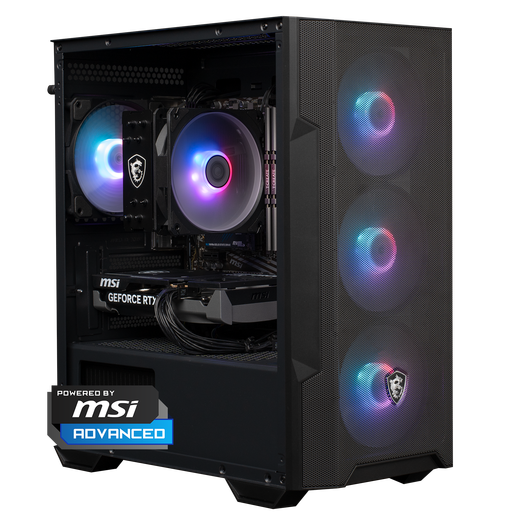
Shark Max Bite R500 Gaming PC, RTX 5060, Powered by MSI
A Windows desktop option if your editing software and equipment work with the Windows configuration listed.
The product information lists an AMD Ryzen 5 5500, 16 GB of DDR4 memory, a 500 GB NVMe SSD and Windows 11 Home.
The description states that the charger is not included as standard.
View at Joybuy
 No image available
Shark Max Bite R501 Gaming PC, RTX 5060, Powered by MSI
A Windows desktop option for anyone who wants to consider the stated storage capacity when saving project files.
The product information lists an AMD Ryzen 5 5500, 16 GB of DDR4 memory, a 1 TB NVMe SSD and Windows 11 Home.
The description states that the charger is not included as standard.
View at Joybuy
 No image available
FIREBAT R3 Mini PC, AMD Ryzen 5 7430U, 16 GB RAM, 512 GB SSD
A mini PC option to compare if a compact workspace matters and the stated SSD capacity suits your project folders.
The product title lists an AMD Ryzen 5 7430U, 16 GB of RAM and a 512 GB SSD.
View at Joybuy
 No image available
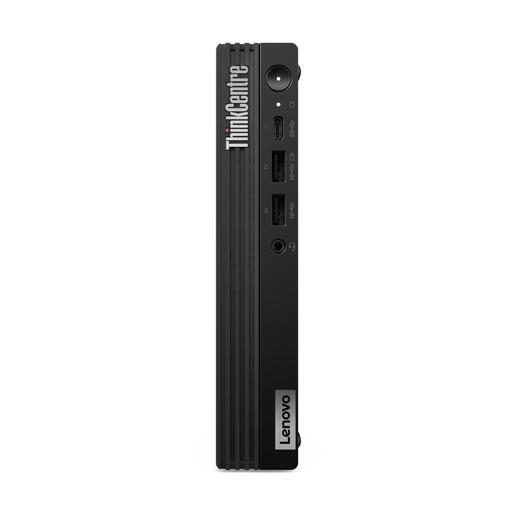
Lenovo ThinkCentre M70q Gen 5, Intel Core i7-14700T, 16 GB DDR5, 512 GB SSD
A compact Windows desktop option if your software and audio equipment work with the Windows 11 Pro configuration listed.
The product title lists an Intel Core i7-14700T, 16 GB of DDR5 memory, a 512 GB SSD and Windows 11 Pro.
The description states that the power adapter is not included.
View at Joybuy
Frequently asked questions
Do I need a separate graphics card for podcast editing?
Not for the audio editing described here alone. Audacity doesn’t list a specific CPU or GPU requirement for its Windows version. However, check the requirements for your own DAW and plug-ins, as well as any video work you plan to do.
How do I move or restore a project with multiple versions?
Keep the session together with all the files it refers to. Adobe explains that a multitrack session doesn’t contain audio itself. On Windows, File History can keep previous versions of selected folders on an external drive or network location; check that the full project folder is included in the back-up.
Who should I contact if my desktop breaks?
For a consumer purchase in the Netherlands, the seller is your point of contact for the statutory guarantee. According to the Dutch government, the Netherlands has no fixed statutory guarantee period: what you can reasonably expect from a product depends, among other things, on the product and the circumstances. If you’re considering an additional guarantee, compare its terms with the extra cover it provides.
Can I publish identifiable voices from a podcast publicly without permission?
Buying a desktop doesn’t give you permission to do that. The Dutch Data Protection Authority explains that, in most cases, you need permission to publish other people’s personal data publicly. The GDPR also allows other legal bases and exceptions, including personal or household use in certain circumstances; assess each publication individually.


