
Photo editor using two screens
You want to review a photo on one screen while using windows or selections on the other. First, check that both monitors can work independently. Microsoft Support explains how to arrange multiple screens in Windows.


First, choose a desktop whose exact configuration can drive your two monitors independently. Its ports must support their resolutions and refresh rates. Then consider whether a compact Mac mini or a configurable Windows tower is a better fit for your software and workspace, and how much of your budget you want to leave for monitors and colour management.
You want to review a photo on one screen while using windows or selections on the other. First, check that both monitors can work independently. Microsoft Support explains how to arrange multiple screens in Windows.
You assess product colours for publication or print, so you need to consider screen profiles, calibration and the intended output as well as the computer. Adobe points out that factors such as monitor characteristics, calibration, ambient light and paper can all affect how colours appear.
You import and edit lots of images and want to match the memory and storage to the software you use. Adobe recommends 16 GB RAM or more for Photoshop; this isn’t a general requirement for all photo-editing software.
A good fit for: anyone who wants to use macOS and has limited desk space.
Keep in mind: the memory and SSD configuration needs to suit your files; monitors and cables are separate parts of your workstation.
A good fit for: anyone who uses Windows or wants to choose their memory and storage configuration.
Keep in mind: check the video outputs on the exact configuration; the monitor, keyboard and mouse are optional extras on the Lenovo configuration reviewed.
| What to consider | What should you check? | Who should care? |
|---|---|---|
| Two independent screens | Compare the support offered by the exact desktop configuration with the connections, resolutions and refresh rates of both monitors. Also check which cables or adapters you’ll need. | If you review photos on one screen and use windows or selections on the other, you’ll want to drive both monitors independently; around 33% of consumers put a two-screen setup first. |
| Colour assessment | Assess the monitors and their colour profiles separately from the desktop, and make sure your checks suit web publishing or print. | If you assess product colours for publication or print, you’ll want to check for colour differences between the screen and the output; around 27% of consumers say colour assessment is their main buying concern. |
| Working with photo files | Compare your photo software’s requirements with the computer’s RAM, SSD and GPU configuration. Adobe recommends 16 GB RAM or more for Photoshop. | If you import and edit lots of images, you’ll want a configuration that suits the software and files you use; around 20% of consumers put this workload first. |
| Complete workstation | Compare like for like: the computer, two monitors, any necessary cables and any input devices sold separately. | If you still need monitors or input devices, you’ll want to weigh up the cost of the complete workstation; around 20% of consumers say the total purchase is their main concern. |
With a specific model, the number of screens and possible combinations depend on factors such as resolution and refresh rate. So seeing two ports doesn’t automatically confirm that your monitors will work independently.
Before you order, check the screen specifications for the exact computer configuration and both monitors.
You may need different cables or adapters.
For the ThinkCentre configuration reviewed, Lenovo states that a monitor, keyboard and mouse are optional and sold separately.
Compare what’s included in the complete workstation and check which components you already have.
Two monitors and any input devices may need to be purchased separately.
According to Adobe, colour reproduction is also affected by monitor characteristics and settings, calibration, ambient light and the intended output material.
Assess the screens, their profiles and your publishing or printing process separately from the desktop.
You may need suitable monitors or additional tools for colour management.
The Mac mini is a compact macOS desktop for anyone who wants to connect two separate screens.
The ThinkCentre Neo 50t Gen 6 is a Windows tower for a dedicated two-screen workstation.
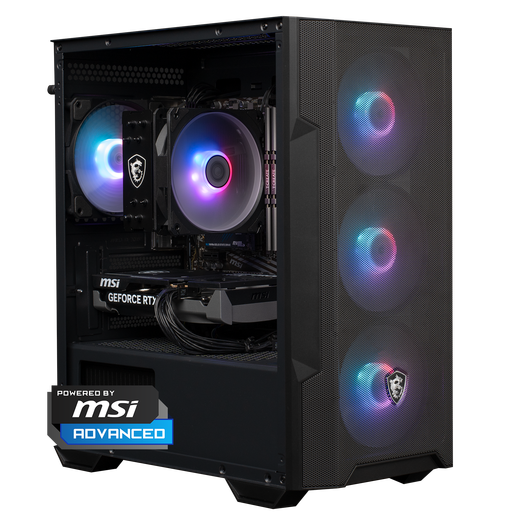
The Pro Tower QCT1250 is a configurable Windows desktop for anyone who values choice when it comes to components.
This selection includes desktops whose product information mentions photo or content editing. For each model, check the exact configuration and connections before assuming it can drive your two monitors independently.
 No image available
The product description mentions photo and video editing; check the video outputs on this configuration for your two monitors.
The product name lists 16 GB RAM, an RTX 5060 and a 500 GB NVMe SSD. According to the product information, the charger must be purchased separately.
 No image available
The product description mentions photo and video editing; check the video outputs on this configuration for your two monitors.
The product name lists 16 GB RAM, an RTX 5060 and a 1 TB NVMe SSD. According to the product information, the charger must be purchased separately.
 No image available
Check the connections on the exact configuration before choosing this PC for a two-screen setup.
The product name lists an RTX 5060, Ryzen 5, 16 GB RAM, a 480 GB SSD and Wi-Fi.
 No image available
This compact macOS desktop could suit a small workspace; check that it supports the screen combination you plan to use.
The product name lists a 12-core CPU and GPU, 16 GB memory and a 256 GB SSD. Apple lists support for up to three external screens on the M6; the combinations depend on resolution and refresh rate.
No image available
This compact macOS desktop could suit a small workspace; check that it supports the screen combination you plan to use.
The product name lists a 12-core CPU and GPU, 16 GB memory and a 512 GB SSD. Apple lists support for up to three external screens on the M6; the combinations depend on resolution and refresh rate.
Connect both screens and check whether Windows recognises them under Settings > System > Display. Arrange them to match their physical positions and select Extend if you want to show something different on each screen.
No, it isn’t a requirement for every photo-editing application. For Photoshop on Windows, Adobe lists 8 GB as the minimum and recommends 16 GB or more; check the requirements for the software you actually use.
According to Adobe, factors such as differences between monitors, ageing, calibration, ambient light and colour profiles can all affect how colours appear. Check the colour management settings on both screens; using the same desktop won’t automatically make their displays match.
For a consumer purchase in the Netherlands, a product must meet reasonable expectations; according to the Dutch government, there is no fixed statutory warranty period. For an online consumer purchase, a 14-day cooling-off period from delivery generally applies, with exceptions for certain products. Don’t assume the same consumer rules apply to a business purchase.
According to the Dutch Data Protection Authority, photos in which people can be recognised contain personal data. So check which privacy obligations apply before processing or publishing such images for business purposes.