
Manager of large scan batches
You process large numbers of newspaper pages with OCR yourself, balancing processing speed against memory use for each simultaneous task. OCRmyPDF explains how page size and parallel tasks affect peak memory use.


A desktop can be useful, particularly if you process large batches of scans yourself or manage your own search index. If you mainly search existing newspapers, first see whether the OCR, metadata and search tools available through services such as Delpher meet your needs, as the KB describes. For local processing, choose based on your largest pages, the number of simultaneous OCR tasks, your index, and storage for files and backups. OCRmyPDF links peak memory use to page size and the number of concurrent tasks, while the KB notes that scan and text quality affect recognition.
You process large numbers of newspaper pages with OCR yourself, balancing processing speed against memory use for each simultaneous task. OCRmyPDF explains how page size and parallel tasks affect peak memory use.
You want to search OCR text and metadata locally, so you need to work out whether your memory and storage can support your collection and index. The KB describes the data available through Delpher, while Elastic explains the role of the file cache in Elasticsearch.
You mainly want to search historical newspapers and first need to find out whether an existing collection makes digitising your own material unnecessary. The KB and Delpher describe searchable newspaper archives and the search tools available.
Choose this if: you mainly want to find and analyse newspapers without processing scans yourself. Try the search tools available through services such as Delpher first.
Trade-off: you won’t need to maintain your own OCR workflow or index, but you’ll be limited to the available collection, OCR and metadata. The KB notes that reuse terms vary between newspapers.
Choose this if: you want to run smaller OCR batches or a local search index, and the configuration you choose is compatible with your software.
Trade-off: before buying, check the memory, upgrade options, storage and connections on the exact model. A product family name doesn’t tell you everything about a specific configuration.
Choose this if: your personal collection is growing and the model you choose offers the upgrade options your workflow needs.
Trade-off: Lenovo notes that upgrade options and ports vary by model. Check the exact configuration and plan for separate backup storage too.
| Consideration | What to look for when buying | Who should consider this? |
|---|---|---|
| Processing OCR batches | Test a representative page and the number of simultaneous tasks you want to run before choosing a processor or memory configuration. | If I regularly process large scans, I want to know how many tasks I can run at once without disrupting my workflow. Around 36% of consumers are primarily looking for OCR throughput. |
| Searching your own index | Decide which software and index fields you’ll use, then test searches on a representative part of your collection. | If I want to search OCR text and metadata locally, my desktop also needs enough capacity for the index and other programmes running at the same time. Around 29% of consumers prioritise their own search index. |
| Storing scans, your index and backups | Work out the size of your source files and test output. Check the storage expansion options for the exact model and plan for separate backup storage. | If I want to keep and expand my own scans and index, I need to know how much space my files actually take up. Around 21% of consumers are primarily looking for storage and room to grow. |
| Trying an existing archive first | Try your most important searches and check the terms for access and reuse before setting up your own workflow. | If I mainly want to search newspapers, I want to find out first whether an existing collection can answer my research question. Around 14% of consumers primarily want to check whether an existing archive is sufficient before buying a desktop PC. |
OCRmyPDF links peak memory use to the pixel count of the largest page and the number of simultaneous tasks. A powerful processor alone won’t tell you how many tasks your memory can handle.
Test a representative batch of scans, then decide how many tasks you want to run at once and how much memory you’ll need.
The KB describes scans, OCR text, word coordinates and metadata, among other things. Search errors and historical spelling can also affect what you find.
Check exactly which data you’ll receive and test your most important searches before scaling up the hardware for your own index.
Your own workflow may require extra work to collect, organise and check OCR text and metadata.
The Dell configurations described vary, and Lenovo notes that some components are available only on selected models.
Compare the full configuration, memory, storage and connections on the page for the exact model.
Being able to search a newspaper archive doesn’t remove possible copyright or privacy restrictions. The KB highlights these restrictions for its collection.
Check the collection’s reuse terms and assess rights and personal data separately if you want to make results public.
The Dell Pro Slim QCS1250 is listed with an Intel Core Ultra 5 235, 16 GB DDR5 and a 512 GB SSD. These specifications apply to that configuration.
The HP ProDesk 4 SFF G1i, configuration 9H7T5ET#ABH, is listed with an Intel Core Ultra 7 265, 16 GB RAM and a 512 GB SSD.
The ThinkCentre M70t Gen 5 is a tower PC family worth considering if expandability matters to you.
These desktops are options to consider for local OCR and indexing. Check the specific configuration against your software, a representative batch of scans and your storage requirements.
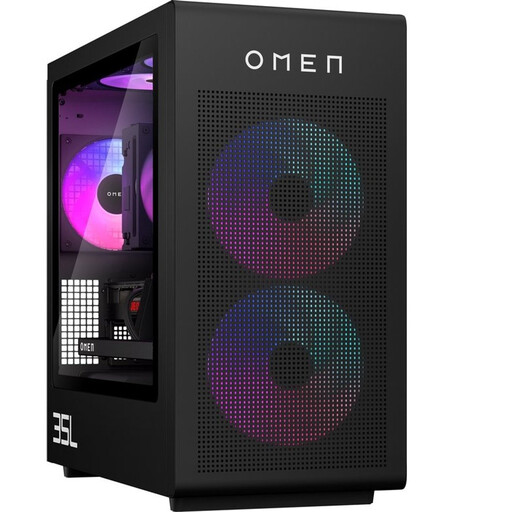 No image available
A desktop to consider for local OCR and indexing. Check the full configuration against your software and a representative batch of scans.
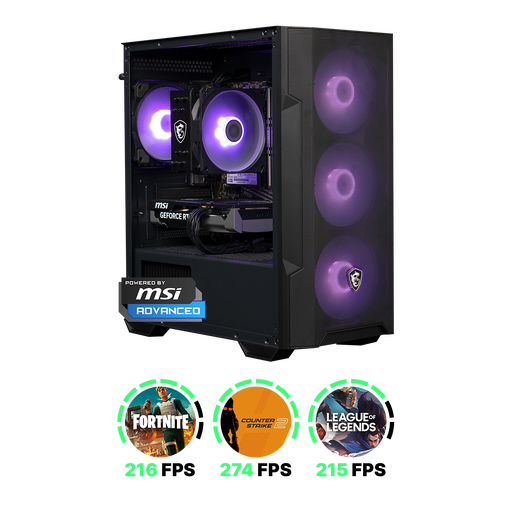 No image available
The product title lists an R5 processor, 16 GB DDR4 memory and a 500 GB NVMe SSD. Check whether this configuration suits your OCR software and index.
The title also lists RTX5060. Assess the configuration as a whole in light of your own workflow.
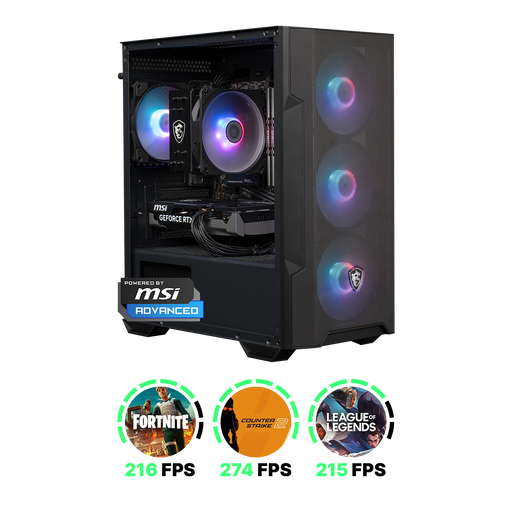 No image available
The product title lists an R5 processor, 16 GB DDR4 memory and a 1 TB NVMe SSD. Check whether this configuration suits your OCR software and index.
The title also lists RTX5060. Assess the configuration as a whole in light of your own workflow.
 No image available
The product title lists a Ryzen 7 5700X, 16 GB DDR4 memory and a 480 GB NVMe SSD. Check this configuration against your local OCR and indexing tasks.
The title also lists Windows 11 Home, pre-installed but not activated. Check that this software status works for you.
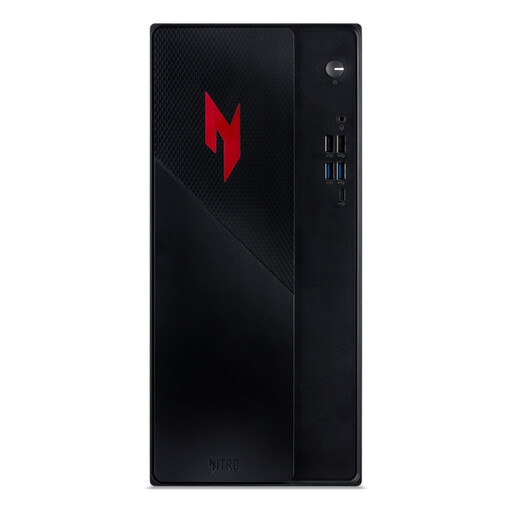 No image available
The product title lists an Intel Core 5 210H, 16 GB memory and a 1 TB SSD. Check the configuration and software requirements for your workflow.
The title also lists RTX 5050 and Windows 11 Home. Base your choice on the complete configuration, not just one component.
No, not if an existing collection and search tool already answer your research question. The KB and Delpher describe historical newspapers with OCR and searchable files, so try the collection and search tools you need first. Local processing may be useful for your own scans or index.
According to OCRmyPDF, peak memory use depends on the largest page and the number of simultaneous tasks. If necessary, try running fewer tasks at once first. Limiting the OCR image size can save memory, but check how this affects recognition of small historical print.
Not necessarily. As well as scans, the KB describes OCR text, word coordinates and metadata, among other things. The data you need will depend on your search queries. Test the available files and results before deciding whether to create your own index.
Not automatically: being searchable doesn’t in itself mean that publication is permitted. The KB highlights possible copyright restrictions and personal data in newspapers. Check the collection’s terms and assess the rights and the specific way you plan to publish separately, using information from the Dutch Data Protection Authority and Auteursrecht.nl, among other sources.