Choose a desktop based on whether your oral history project is mainly audio or also includes video. For audio work, enough storage space and reliable access to active project files are important. Audacity doesn’t specify a particular CPU or GPU requirement, but it does require fast, uninterrupted disk access. If your project also includes video, check your editing software’s memory and graphics hardware requirements before opting for a more powerful configuration.
Who is this choice for?
Editors of long audio interviews
If you mainly edit and review spoken interviews, look for enough space for active projects and reliable disk access. You don’t automatically need a powerful GPU for this: Audacity emphasises fast, uninterrupted access to the project drive.
Managers of large interview archives
If you manage source recordings, working files, transcripts and project information together, it’s worth planning storage locations and access management in advance. Sprekende Geschiedenis offers guidance on interview files, metadata and consent information, while the Dutch Data Protection Authority explains how to protect personal data.
Editors of video interviews
If you synchronise or edit footage and audio together, match the memory and graphics hardware to the video-editing software you use. Adobe provides separate memory and GPU recommendations for Premiere.
What should you look for when buying?
Mainly audio
A good fit if: your source material consists mainly of spoken interviews and you mostly edit, listen to or transcribe them.
Consider: don’t assume you need to prioritise GPU capacity; do check your software and the drive where you keep active projects.
Audio and video
A good fit if: your oral history files also contain footage that you edit alongside the audio.
Consider: check the memory and GPU requirements of your specific editing software. That extra graphics hardware isn’t automatically necessary for audio-only work.
Audacity doesn’t specify a particular CPU or GPU requirement and calls for fast, uninterrupted access to a drive or SSD. Adobe publishes memory and graphics hardware recommendations for Premiere; the Dutch Data Protection Authority highlights the need for appropriate security when an organisation processes personal data.
| What to consider |
What should you check? |
Who is this important for? |
| Space for and access to source files |
SSD capacity of the exact model, connections for archive drives and the location of active projects. |
If you want to keep source recordings and current projects locally, both space and quick access matter. Around 33% of consumers prioritise storage. |
| Suitability for audio work |
Whether your operating system is compatible with your software and whether you have reliable access to the active project drive; Audacity doesn’t specify a particular CPU or GPU requirement. |
For long audio interviews, you’ll want software that suits your workflow, without paying unnecessarily for video performance. Around 27% of consumers prioritise audio capabilities that meet their needs. |
| Video-editing capability |
Whether your source files contain video and what your software version requires in terms of memory, GPU and storage. Adobe provides memory and graphics hardware recommendations for Premiere. |
If you also edit footage, match the hardware to that software rather than choosing based on audio alone. Around 20% of consumers prioritise video editing. |
| Managing personal information |
Who needs access, where copies are stored and which security measures are suitable for your workstation and storage. |
If you manage interviews that identify individuals, it’s worth thinking about access and storage in advance. Around 20% of consumers prioritise data management. |
Pitfalls to avoid when choosing
-
Choosing a video-editing PC when your source files are audio-only
Audacity doesn’t specify a particular GPU requirement. A configuration with a dedicated graphics card isn’t automatically necessary for spoken interviews.
First check your source format and the requirements of the software you actually use. Only then compare video-editing configurations.
-
Looking only at the total SSD capacity
Source recordings and active projects take up storage space, while Audacity requires fast, uninterrupted disk access for active projects.
Plan separate locations for active projects and archive copies, and check the connections available on the exact desktop model.
-
Assuming a product range has just one fixed configuration
The HP, Lenovo and Apple models reviewed differ in their listed memory and storage. So the product range name alone doesn’t tell you which configuration you’re buying.
Before you buy, compare the full model name, product number and selected memory and storage configuration.
Brands to consider
Apple
Mac mini configurations for anyone looking for a compact macOS desktop and considering external archive storage as part of their workflow.
- For the M6 model reviewed, Apple lists 16 GB of unified memory and SSD options starting at 256 GB, with configurations available in 512 GB, 1 TB or 2 TB.
- The storage capacity varies by configuration; these specifications don’t automatically apply to every Mac mini.
HP
OmniDesk towers for anyone comparing Windows configurations with different memory and storage options.
- For the OmniDesk M03-0614nd reviewed, HP lists 32 GB of RAM and a 1 TB SSD.
- These specifications apply to this model, not to all HP desktops.
Lenovo
ThinkCentre towers for a Windows workstation where the exact business model and configuration matter.
- For the ThinkCentre M90t Gen 6, product number 12YS001VEZ, Lenovo lists 16 GB of RAM and a 512 GB SSD.
- These details apply to the model listed; other ThinkCentre configurations may differ.
Dell
Tower Plus models for anyone also factoring video editing into their hardware choice.
- For the EBT2250 configuration reviewed, Dell lists 32 GB of RAM, a 1 TB SSD and an RTX 5070 with 12 GB of video memory.
- This configuration is worth comparing with the requirements of video-editing software; a dedicated GPU isn’t proven to be necessary for audio editing.
Joybuy desktops for audio and video projects
This Joybuy selection includes compact desktops and towers with a range of listed memory and storage configurations. Compare the exact model with the requirements of your audio programme or video-editing software before choosing.
 No image available
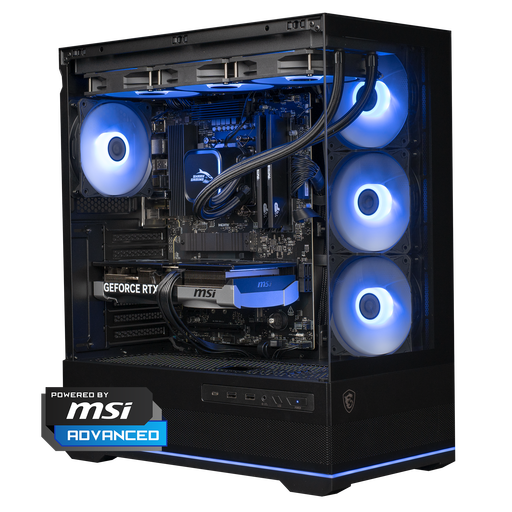
Shark Ultimator R700 Gaming PC, RTX 5070, 16 GB, 1 TB
A desktop option to compare if your oral history project also includes video; a dedicated GPU isn’t automatically necessary for audio-only work.
The product name lists an RTX 5070, 16 GB and 1 TB. The description says the charger isn’t included as standard and must be purchased separately.
View at Joybuy
 No image available
Apple Mac mini M6, 24 GB, 512 GB SSD
A compact desktop to consider if you have limited desk space; check that its storage capacity is right for your active projects and archive.
The product name lists an M6 chip with a 12-core CPU and 12-core GPU, 24 GB of memory and a 512 GB SSD.
View at Joybuy
 No image available
ASUS ROG G700TF-07265F666W, 32 GB, 1 TB SSD
A tower to compare if you also edit video; make sure the listed graphics hardware suits the software you use.
The product name lists an Intel Core Ultra 7 265F, 32 GB DDR5, a 1 TB SSD, an NVIDIA GeForce RTX 5070 with 12 GB and Windows 11 Home.
View at Joybuy
 No image available
Lenovo Legion T5 30IAX10, 32 GB, 1 TB SSD
A tower to compare if you want to plan for active projects and archive storage side by side; check how much storage your current workflow requires.
The product name lists an Intel Core Ultra 7, 32 GB DDR5, a 1 TB PCIe 4.0 SSD, an NVIDIA GeForce RTX 5070 and Windows 11 Home.
View at Joybuy
 No image available
FIREBAT Mini PC A6, 16 GB, 512 GB SSD
A compact desktop to compare if desk space is limited; check that the listed storage is suitable for your source files and active projects.
The product name lists an AMD Ryzen 7 7735HS, Radeon 680M, 16 GB of RAM, a 512 GB SSD and two M.2 slots.
View at Joybuy
Frequently asked questions about desktops for oral history
Do I need a powerful dedicated graphics card for audio interviews?
Not necessarily. Audacity doesn’t specify a particular CPU or GPU requirement for compatible Windows computers and emphasises the need for fast, uninterrupted access to a drive or SSD. Check the requirements of any other software you use, too.
Can I save an active Audacity project directly to a network or USB drive?
Audacity warns that network storage, standard external hard drives and USB sticks may not reliably provide the uninterrupted disk access required. So keep the location of your active project separate from where you store archive copies.
Does a computer bought in the Netherlands always come with exactly two years of legal protection?
No. According to the Dutch government, there is no fixed statutory guarantee period in the Netherlands. You’re entitled to a product that meets reasonable expectations, which depend on the product and circumstances. A manufacturer’s guarantee is separate.
Can I freely keep and share interviews with identifiable people?
First consider which agreements and rules apply to your situation. If an organisation processes personal data, it needs a lawful basis under the GDPR; consent is one possible basis, but not the only one. The Dutch Data Protection Authority highlights the need for appropriate security and notes that the GDPR does not set a general fixed retention period for personal data. Sprekende Geschiedenis also distinguishes between consent to take part in an interview and consent to make it available.


