Who is this desktop choice relevant to?

Managing multiple interview versions

You want to keep originals, editable projects and listening copies separate, and avoid confusion or loss. Norfolk Record Office and University of California, Irvine Oral History recommend keeping copies in different locations.

Editing long interviews

You work with speech recordings in a local project and want to check in advance that the software, storage and connections are suitable. Audacity Support explains the difference in Audacity 3.x between a project you can save and an exported audio file.

Working in a small space

You’re looking for a compact desktop, but want to check first that the screen, peripherals, software and storage suit the way you work. Apple Netherlands lists the specifications of the Mac mini configuration reviewed.

What should you look for in a desktop for editing oral history recordings?

Compact Mac mini

A good fit if: you have limited desk space, your editing software runs on macOS and the connections suit your equipment.

The trade-off: the M6 base configuration reviewed has 16 GB of memory and a 256 GB SSD. Check whether that storage is enough for your own projects. Apple Netherlands lists these specifications.

Windows tower

A good fit if: you use a Windows set-up or want to compare the storage, memory and connections of a specific configuration.

The trade-off: configurations and included components vary by model. The Lenovo configuration reviewed has 16 GB of memory and a 1 TB SSD; the selected Dell configuration has 16 GB and a 512 GB SSD. Lenovo Netherlands and Dell Netherlands describe these configurations.

What to consider What to look for when buying Who is this most relevant to?
Project versions and originals Compare the SSD capacity of the exact configuration and plan to keep copies in different locations; estimate the space you need based on your own recordings. If I want to keep originals, editable projects and listening copies separate, I need to know how much space my files take up and how to store separate copies. Around 36% of consumers prioritise preserving project versions.
Active editing Check the configuration’s internal storage and your software’s project guidance. Audacity Support advises against storing active Audacity 3.x projects on external, USB and network drives. When I edit long interviews, I want to be able to store active projects in a suitable location and distinguish exported files from editable projects. Around 29% of consumers say storage for editing work is their main consideration.
Software and equipment Check the operating system, supported software version and specific connections for your recorder, audio equipment and screen. If I want to keep using my existing editor and recording equipment, I first check that the software and connections are compatible. Around 21% of consumers prioritise compatibility.
Workspace and complete set-up Check the dimensions and, for each configuration, find out which screens, input devices and additional storage you’ll need. When desk space is limited, I want to know in advance whether the computer and required peripherals will fit my set-up. Around 14% of consumers prioritise a compact, complete workspace.

Which purchasing pitfalls can you avoid?

  • Confusing a larger internal SSD with a backup

    If your originals and projects are stored only on your desktop, they could all be lost at once. Norfolk Record Office and University of California, Irvine Oral History recommend keeping copies in different locations.

    Keep the unedited recording intact and plan to make separate copies. Factor in the extra work involved in managing them and the storage space you’ll need.

    Organising and checking separate copies takes time; this workload is part of managing multiple versions.

  • Confusing an audio export with a project you can edit again

    An exported audio file and a project containing editing information serve different purposes. If the project file is missing, you can’t necessarily continue editing from the export alone.

    For Audacity 3.x, keep the relevant project files alongside the audio export you want. For other software, check its own project guidance.

    If you don’t have an editable project version, you may need to redo some of the editing.

  • Assuming a model name always means the same configuration

    A desktop range may include different storage, memory and accessory configurations. The model name alone doesn’t tell you which components are included in the configuration you’re buying.

    Compare the full model or product number and the selected components before placing your order.

Which brands are worth comparing?

Apple

The Mac mini M6 is a compact option for a macOS set-up, provided your software and peripherals are compatible.

  • For the base configuration reviewed, Apple Netherlands lists 16 GB of unified memory and a 256 GB SSD.
  • This storage capacity doesn’t tell you how much space your interview collection needs. Check which connections you need, too.

Lenovo

The ThinkCentre M70t Gen 5 is a Windows tower; compare the full configuration with your software and storage requirements.

  • For product number 12U6CTO1WWNL3, Lenovo Netherlands specifies 16 GB of memory and a 1 TB SSD.
  • On 27 October 2026, Lenovo Netherlands listed this configuration as out of stock on its own site. Availability may change.

Dell

The Pro Tower QCT1255 is a Windows tower whose selected configuration you should assess separately.

  • According to Dell Netherlands, the Dutch configuration reviewed comes with 16 GB of memory and a 512 GB SSD.
  • Dell also offers other component choices; the model name alone doesn’t determine which configuration you’ll receive.

HP

The Pro Tower 400 G9 is a Windows tower; check the configuration using the full product number.

  • For configuration 99P69ET#ABH, HP Netherlands lists 16 GB of RAM and a 512 GB SSD.
  • On 27 October 2026, HP Netherlands marked this configuration as unavailable. Other G9 configurations don’t automatically have the same specifications.

Windows desktops on Joybuy for local project storage

This selection features Windows gaming desktops with a stated SSD capacity. Use this information as a starting point when considering local project files, and check before buying that your editing software, connections and peripherals are compatible. Product names alone don’t confirm suitability or editing performance.
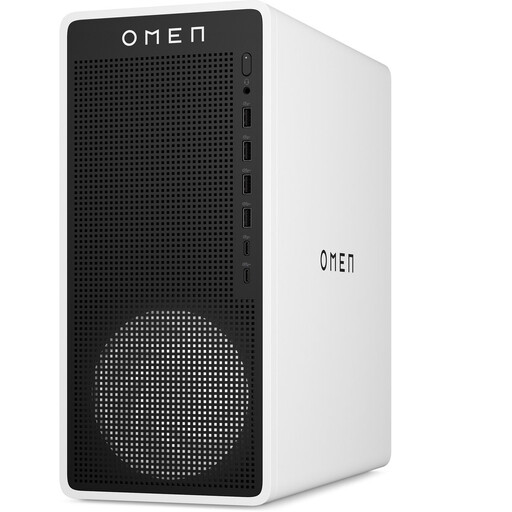
OMEN 16L Gaming Desktop TG03-0057nd C3YP0EA#ABH

OMEN 16L Gaming Desktop TG03-0057nd C3YP0EA#ABH

Could suit anyone comparing Windows desktops with local space for project files; first check that it has the software support and connections you need.

The product description lists 16 GB of DDR5 memory and a 1 TB SSD.

View at Joybuy

Shark Max Bite R500 Gaming PC RTX5060/R5/16GB/500GB, Powered by MSI

Shark Max Bite R500 Gaming PC RTX5060/R5/16GB/500GB, Powered by MSI

A Windows desktop to compare if you’re looking for a configuration with a stated 500 GB SSD; check that it meets your project storage and software requirements.

The product name lists 16 GB of memory and a 500 GB SSD.

View at Joybuy
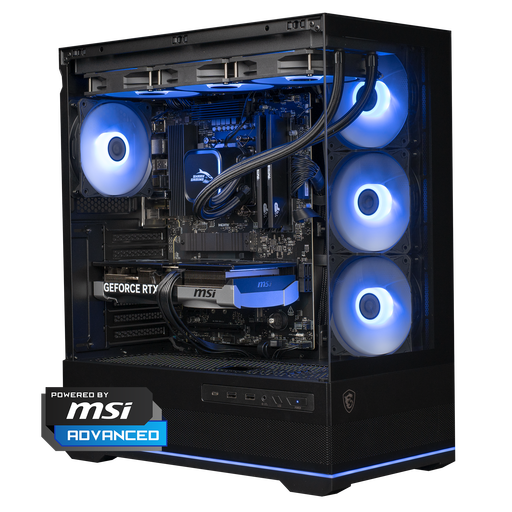
Shark Ultimator R700 Gaming PC RTX5070/R7/16GB/1TB, Powered by MSI

Shark Ultimator R700 Gaming PC RTX5070/R7/16GB/1TB, Powered by MSI

Could be included in a comparison of Windows desktops with local project storage; check the software support and connections you need.

The product name lists 16 GB of memory and a 1 TB SSD.

View at Joybuy
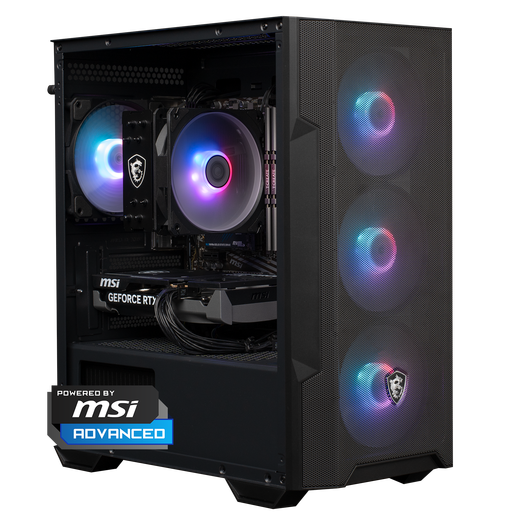
Shark Max Bite R501 Gaming PC RTX5060/R5/16GB/1TB, Powered by MSI

Shark Max Bite R501 Gaming PC RTX5060/R5/16GB/1TB, Powered by MSI

A Windows desktop to compare if you’re considering a configuration with 1 TB of local storage; use your own files to work out how much space you need.

The product name lists 16 GB of memory and a 1 TB SSD.

View at Joybuy

RGB Gaming PC RTX 5060, Ryzen 5, 16 GB, 480 GB SSD, Wi-Fi

RGB Gaming PC RTX 5060, Ryzen 5, 16 GB, 480 GB SSD, Wi-Fi

Worth comparing if you’re looking for a Windows desktop with a stated SSD capacity; check that there’s enough space for your own active projects.

The product name lists 16 GB of memory, a 480 GB SSD and Wi-Fi. The description mentions an AMD Ryzen 5 5500 processor.

View at Joybuy

Frequently asked questions about desktops for editing interviews

Should I work directly from an external backup drive while editing?

Not if you’re using Audacity 3.x: Audacity Support advises against storing active projects on external, USB and network drives. Keep the project file and the audio export you want separate, and make backups in other locations. For other software, check its own project guidance.

Is a 256 GB SSD enough for several interview versions?

It depends on the size and number of your recordings and projects. Apple Netherlands lists a 256 GB SSD for the Mac mini base configuration reviewed. Work out in advance how much space your active projects will need, and keep separate backups elsewhere.

What should I check besides the desktop itself?

Check the exact configuration and the connections you need, and make sure the screen and input devices suit your set-up. Also check which components are included with each configuration and whether you’ll need separate storage.

Can I simply publish an interview containing personal data online?

First, consider which privacy rules apply and what legal basis you have. The Dutch Data Protection Authority says that publishing other people’s personal data publicly almost always requires consent, and notes exceptions for personal or household use and journalistic purposes. Organisations must protect personal data appropriately; the desktop model alone doesn’t demonstrate that these obligations have been met.
